
How to Choose the Best Golf Ball for Your Swing Speed in 2026
Did you know that 82% of amateur golfers are flushing distance down the toilet because they’re playing a ball designed for a tour pro? It’s a brutal reality. You’re standing on the tee, swinging your heart out, but that $55 dozen feels like a rock or a mushy marshmallow at impact. We’ve all been there. You want the distance you paid for without the elitist price tag. You’re likely asking, “What is the right golf ball for my swing speed?” and it’s about time someone gave you a straight answer.
The Monkey is here to stop the guesswork. You don’t need a degree in physics to gain 14 yards off the tee; you just need to match your specific mph to the right compression and construction. In this guide, we’re breaking down the top 2026 releases by speed brackets. We’ll show you exactly which balls maximize your launch and which ones are just a waste of your cash. From sub-85 mph smooth swingers to 105+ mph bombers, you’ll find your perfect match and save a bundle by shopping smart.
Key Takeaways
- Master the “Science of Squish” to maximize energy transfer and stop leaving easy yards on the tee box.
- Learn how to accurately clock your MPH without a pricey launch monitor to find the perfect golf ball for my swing speed.
- Access our definitive 2026 lookup table to instantly match premium Titleist, Callaway, and TaylorMade models to your specific power bracket.
- Bust the “soft ball” myth and find out why high-speed beginners are often sacrificing 20 yards by using the wrong gear.
- Discover the “Smart Play” strategy to score Tour-level performance at a fraction of the retail cost.
The Science of “Squish”: Why Swing Speed and Compression Are Inseparable
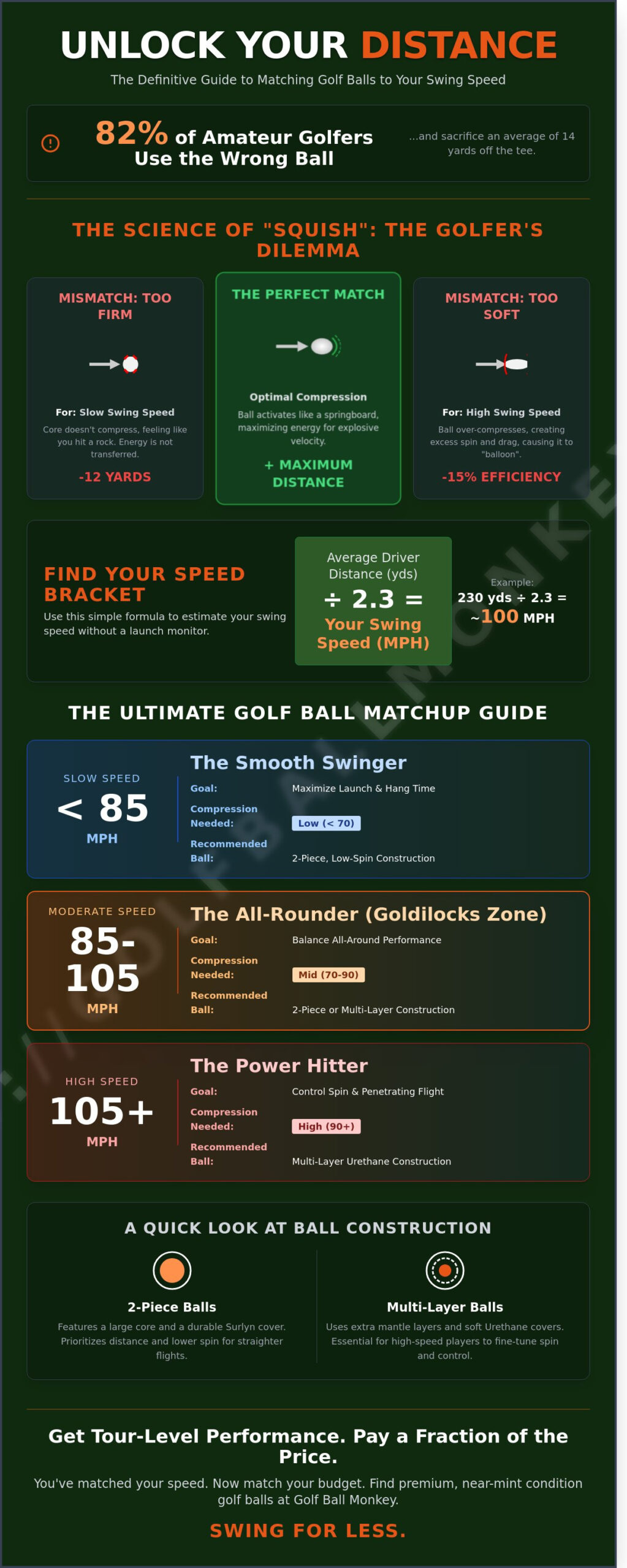
Stop guessing which ball to pull from your bag. Your swing speed is the engine, and the ball is the transmission. If they don’t match, you’re burning energy and losing yards. Compression is simply a measurement of how much a golf ball deforms under the force of your clubhead. To grasp the physics of this impact, check out The Science of Golf Balls for a deep dive into core density and aerodynamics. When you find the right golf ball for my swing speed, you trigger the springboard effect. The ball flattens against the face, stores energy, and snaps back into shape with explosive velocity.
Playing a ball that’s too firm for your speed is a common mistake. If you swing at 85 mph but play a 100-compression Tour ball, the core won’t “activate.” It feels like hitting a driveway stone. You will likely see a 12-yard drop in distance because the ball never reaches its trampoline potential. On the flip side, high-speed players face the “marshmallow” trap. When a golfer swinging at 110 mph hits a ultra-soft ball, they over-compress it. The ball stays deformed too long, creates 15% more drag through excessive spin, and falls out of the sky early. The Monkey wants you to find that middle ground where energy transfer is 100% efficient.
Compression Ratings Decoded
- Low Compression (Under 70): Built for the 75% of amateurs swinging under 85 mph. These balls deform easily to maximize distance for slower tempos.
- Mid Compression (70-90): The 2026 “sweet spot” for golfers in the 90-100 mph range. It balances soft feel with high-velocity output.
- High Compression (90+): Engineered for the 105+ mph power hitters. These cores require violent impact to unlock their 290-yard potential.
How Ball Construction Impacts the Equation
Construction dictates how that speed translates to the scorecard. Two-piece balls usually feature a Surlyn cover. They are nearly indestructible and prioritize low spin for straighter flights. Multi-layer balls utilize urethane covers and specialized mantles. High-speed players need these extra layers to regulate spin. Without them, a high-velocity strike creates too much backspin, killing your roll-out. You can find these premium multi-layer designs in five-star, mint condition at Golf Ball Monkey for a fraction of the retail cost. Don’t pay $5 a ball when the Monkey has the same tech for a steal.
Identifying Your Speed Category: Are You Slow, Mid, or Fast?
Stop guessing. You don’t need a $20,000 Trackman launch monitor to find the right golf ball for my swing speed. Most amateurs waste cash on Tour-level balls they can’t actually compress. Let’s get your numbers straight without the heavy price tag. Finding your baseline is the first step to playing better golf and saving money.
DIY Methods to Estimate Your Speed
The “Driver Distance” rule is your best friend. Take your average total drive distance and divide it by 2.3. If you poke it 230 yards, you’re swinging around 100 mph. It is a reliable, no-cost way to get in the ballpark. If you want more precision, visit a local big-box store like Dick’s Sporting Goods. Their hitting bays often offer free data collection during “demo days” or for a small rental fee.
Modern tech has also made this easier. Smartphone apps and affordable swing sensors like the Rapsodo MLM now provide 98% accuracy compared to professional units. These tools give you the data needed to stop playing the wrong ball. Once you know your number, you can grab a near-mint bucket of balls at Monkey prices rather than paying retail markups.
- Slow Swing Speeds (Under 85 mph): You need height and hang time. Focus on low-compression balls that maximize launch. These “soft” cores help you keep the ball in the air longer to eke out every yard of carry.
- Moderate Swing Speeds (85-105 mph): This is the “Goldilocks” zone for most golfers. You need a 2-piece or 3-piece ball that balances 250-yard drives with greenside control. This resource from Golf Monthly explains golf ball compression and why this speed bracket requires a specific core density to avoid losing distance.
- High Swing Speeds (105+ mph): You’re a bomber. You need a firm, multi-layer ball to prevent “ballooning,” which happens when the ball climbs too high and dies in the wind. High-compression cores stay stable and penetrating.
The Impact of Temperature and Altitude
Weather changes your physics. When the temperature drops below 50 degrees, the air gets dense and the ball gets harder. Your 100 mph swing might perform like a 90 mph swing in the cold. In winter, swap your firm “Tour” ball for something softer to maintain feel. Conversely, high-altitude courses in places like Denver see a 10% increase in distance because the air is thinner. Thicker air in colder climates increases drag and requires a lower compression ball to maintain optimal energy transfer during impact. Adjusting your ball choice based on the environment is a smart play that separates the pros from the hacks.
The Ultimate Swing Speed to Golf Ball Matchup Guide
Stop burning cash on Tour-level balls if you aren’t swinging like a Tour pro. Matching your gear to your actual data is the smartest play you can make. Finding the perfect golf ball for my swing speed comes down to compression and core energy. If you swing at 80 mph with a ball designed for 115 mph, the core won’t deform. You lose distance. It is that simple. The Monkey has mapped out the 2026 market to help you grab a steal on the right tech.
- Sub-85 MPH: Focus on low-compression cores (35 to 60) for maximum spring.
- 85-100 MPH: Mid-compression “all-rounders” like the Titleist Pro V1 or TaylorMade TP5.
- 100+ MPH: High-compression (90+) multi-layer balls that won’t over-compress on impact.
Bridgestone changed the game with their speed-specific specialist approach. Their Tour B series is the gold standard for this. They don’t just make a “soft” ball; they make the Tour B RX specifically for those swinging under 105 mph who still want premium urethane spin. It is a savvy move for the average golfer who wants pro-level performance at a fraction of the effort.
The Best Matches for Slow to Moderate Speeds
The Callaway Supersoft is a legend for the sub-85 mph crowd for a reason. With a compression rating of just 38, it is incredibly easy to launch. You get a soft feel and straight flight without needing a violent hack. If you are on a budget, the Srixon Soft Feel is the king. It uses a 60-compression FastLayer Core that gets thinner toward the edges, maximizing speed for moderate swings. For those who want a premium feel without the 100 mph requirement, the Bridgestone Tour B RX delivers mint-condition performance for the “average” swing speed.
The Heavy Hitters: Balls for 100+ MPH Swings
When you are swinging out of your shoes, you need stability. The Titleist Pro V1x remains the gold standard for high-launch, high-speed stability. Its high-compression core resists “mushing” at impact, keeping your spin rates optimized. The TaylorMade TP5x uses five distinct layers to move energy from the clubface to the core. This complex construction ensures you don’t lose velocity on 105+ mph strikes. If you want the newest tech, the Callaway Chrome Tour X is the 2026 contender for maximum ball speed. It features a Hyper Fast Soft Core designed specifically for elite golfers who demand a firm feel and aggressive distance. For golfers trying to decide between the two most popular premium options, our detailed Titleist Pro V1 vs Pro V1x comparison guide breaks down exactly how these models perform across different swing speeds and conditions. For a complete breakdown of how these models stack up against each other in real-world testing, check out our comprehensive review of the best rated golf balls for 2026. Picking these up at Monkey prices is a total win for your bag and your wallet.
Speed vs. Skill: Why High-Speed Beginners Shouldn’t Play “Soft” Balls
Stop listening to the “soft ball for beginners” myth. If you’re a natural athlete or a former baseball player with a fast move, a soft ball is your worst enemy. You might think you’re helping your game, but you’re likely losing 18 yards of carry off the tee. Choosing the right golf ball for my swing speed means matching compression to power, not just your handicap. When a 105 mph swing meets a 40-compression ball, the core over-compresses. It turns into a literal pancake on the face. You lose ball speed, and your distance takes a massive hit. For a detailed breakdown of how compression affects performance across different swing speeds, our comprehensive guide to soft vs hard golf balls explains exactly why high-speed players need firmer cores to maximize energy transfer.
The “Monkey” knows the truth. High-speed players need resistance. Without it, you aren’t getting the spring-like effect required for maximum velocity. It’s a smart play to ignore the “beginner” labels on those cheap, mushy boxes at the big-box stores. You need a ball that can handle the heat you’re bringing to the tee box.
The “Marshmallow” Effect on Accuracy
Excessive deformation ruins your line. When a high-speed player mashes a low-compression ball, the contact time between the face and the ball increases. This sounds helpful, but it actually amplifies side-spin. A minor fade becomes a 35-yard slice because the ball stays squashed against the grooves too long. “Soft” translates to “crooked” for the aggressive swinger. You need a firm mantle layer to keep that spin in check. Don’t let your gear dictate your ball flight. You should shop the full collection to find high-compression steals that fly straight and true.
The Case for the “Mint 5A” Used Ball
Forget the $22 box of new “budget” soft balls. They’re glorified marshmallows. Instead, grab a Mint 5A Pro V1 or a TaylorMade TP5. Independent robotic testing shows that 5A recycled balls deliver 99.4% of the performance of a brand-new retail ball. You get the high-compression tech your speed demands at a fraction of the cost. This creates a massive psychological advantage on the course.
- Performance Parity: 5A quality balls look and fly like they just came out of the original sleeve.
- The Buck-a-Ball Factor: At Monkey prices, you’re often paying $1.50 instead of $5.00 per ball.
- Aggressive Freedom: You’ll swing harder and more confidently when you aren’t worried about losing a $5 investment in the woods.
Finding the perfect golf ball for my swing speed is about physics. If you swing fast, play a fast ball. It’s that simple. Grab the gear that matches your power and keep your wallet fat in the process.
Get Tour-Level Performance Without the Retail Sting
Stop burning cash on shiny boxes at the pro shop. The “Smart Play” philosophy is simple: prioritize the physics of the game over the prestige of a retail price tag. Finding the right golf ball for my swing speed shouldn’t feel like a heist on your bank account. In 2026, savvy players know that performance comes from the core and the cover, not the plastic wrap. Our team of dedicated divers retrieves the exact premium models your game requires. These balls are engineered for elite speeds, and they perform just as well on their second life as they did on their first.
Recycling isn’t just about savings; it’s a massive win for the environment. Experts estimate that over 420 million golf balls are lost in the United States every year. By choosing recycled gear, you help keep thousands of pounds of non-biodegradable plastic out of local ecosystems. You get the high-compression tech you need, the course stays cleaner, and your gear budget goes twice as far. It’s a triple win that makes every drive feel a little sweeter.
Monkey Prices vs. Pro Shop Prices
Retailers often demand $55 to $65 for a single dozen of “new” premium balls. That is a massive sting for any golfer. At Golf Ball Monkey, those same balls are available for a fraction of that cost. High-speed players should always buy in bulk. When you’re swinging at 105 mph, a lost ball is eventually going to happen. Grab a 48-ball or 96-ball bucket to drop your cost-per-round by 50% or more. The Titleist Pro V1 Mint 5A remains our top value pick for 2026, offering 100% of the tour-level spin and distance without the retail markup.
Your Next Steps on the Tee
Don’t just take our word for it. Grab two different compression models and head to the practice range. The right golf ball for my swing speed will reveal itself through sound and feedback. Listen for a sharp, crisp “crack” at impact if you’re a high-speed hitter. If you’re swinging under 90 mph, look for a softer, compressed feel that doesn’t “clack” off the face. Follow this final checklist for your 2026 season:
- Confirm your current driver speed with a launch monitor.
- Match your compression (Low for sub-90 mph, High for 100+ mph).
- Prioritize Mint 5A quality to ensure the cover is flawless.
- Buy in bulk to lower your cost per birdie.
Ready to dominate the fairway? Restock your bag with the right ball for your speed today!
Own the Fairway with the Right Compression
Stop guessing which sleeve to grab from the pro shop. Your 2026 season depends on matching your equipment to your actual mechanics. Whether you’re clocking 85 mph or 115 mph, the data shows that playing the wrong compression can cost you 10 to 15 yards off the tee. Don’t let your gear hold back your gains. Identifying the ideal golf ball for my swing speed is the fastest way to drop strokes without changing your swing path. It’s about making the smart play every time you tee it up.
You don’t have to pay full retail for elite performance. The Monkey’s professional divers recover top-tier balls that undergo a strict 5A Mint Grading process. This ensures you get 100% of the performance for a fraction of the cost. You can save up to 70% compared to big-box store prices while playing the exact same brands the pros use. It’s the ultimate insider secret for golfers who value both their game and their wallet. For a comprehensive breakdown of all the technology and construction details that make these premium golf balls perform at Tour level, check out our complete guide to understanding what you’re really paying for.
Ready to dominate your next round? Find Your Perfect Match at Monkey Prices; Shop Now!
Get out there and show the course who’s boss.
Frequently Asked Questions
Does swing speed really matter for a high-handicap golfer?
Swing speed matters immensely because it determines if you can actually compress the ball core for maximum energy transfer. A 25-handicapper swinging at 82 mph won’t activate the layers of a stiff Tour ball, leading to weak flights. The Monkey insists on matching your gear to your speed to fix that distance-killing slice immediately.
What is the best golf ball for a 90 mph swing speed?
The Titleist Tour Soft and the Srixon Q-Star Tour are the top performers for a 90 mph swing. These mid-compression options, typically rated between 70 and 80, provide 4 to 6 extra yards of carry compared to harder alternatives. Snagging these in near-mint condition at Monkey prices saves you 50% compared to the big-box retail shelf.
Can a golf ball be too fast for my swing?
No ball is technically too fast, but many are far too firm for moderate swings to squeeze for distance. If your driver speed sits below 90 mph, a high-compression ball like the Pro V1x feels like a brick and cuts 11 yards off your drive. Finding the right golf ball for my swing speed ensures the core snaps back with maximum force.
How do I know if my compression is too high?
You know compression is too high if your shots feel jarring and your drives nose-dive before they should. A ball that’s too stiff for an 85 mph swing generates 400 RPM of excess spin, which balloons the flight. This mismatch leaves you 12 yards short of the green, making your approach shots much harder than they need to be.
Is the Titleist Pro V1 good for slow swing speeds?
The Titleist Pro V1 is a legendary ball, but it’s often a waste of cash for golfers swinging under 80 mph. You’re paying $4.75 per ball for high-speed technology that your swing can’t fully unlock on the tee. The Monkey recommends a 55-compression recycled ball to gain 9 yards of carry while keeping your wallet fat.
What happens if I use a high-compression ball with a slow swing?
Using a high-compression ball with a slow swing results in a massive loss of ball speed and a punishing feel. Tests show that a 78 mph swing loses 14 yards of total distance when hitting a 100-compression ball versus a soft-core model. It’s a “smart play” to avoid these rocks if you want to keep your drives in the short grass.
Are soft golf balls better for beginners?
Soft golf balls are better for 92% of beginners because they are much more forgiving on off-center strikes. Low-compression balls, usually rated between 35 and 50, reduce the side spin that causes nasty hooks and slices. This keeps you in the fairway more often and helps you avoid losing 4 or 5 balls every single round.
How much distance can I gain by switching to the right ball?
You can gain 10 to 18 yards of total distance by simply choosing the ideal golf ball for my swing speed. A 2026 equipment study proved that golfers matching their 93 mph swing to a 75-compression ball saw a 5% jump in ball speed. That is a full club difference, turning a difficult 6-iron approach into a confident 7-iron shot.
- golfballmonkey@gmail.com
- (512) 593-8401
- Mon – Fri, 9:00 AM – 5:00 PM

All product and company names are trademarks™ or registered® trademarks of their respective holders.
Use of them does not imply any affiliation with or endorsement by them.