
What Are Practice Golf Balls? The Savvy Player’s Guide to Better Reps
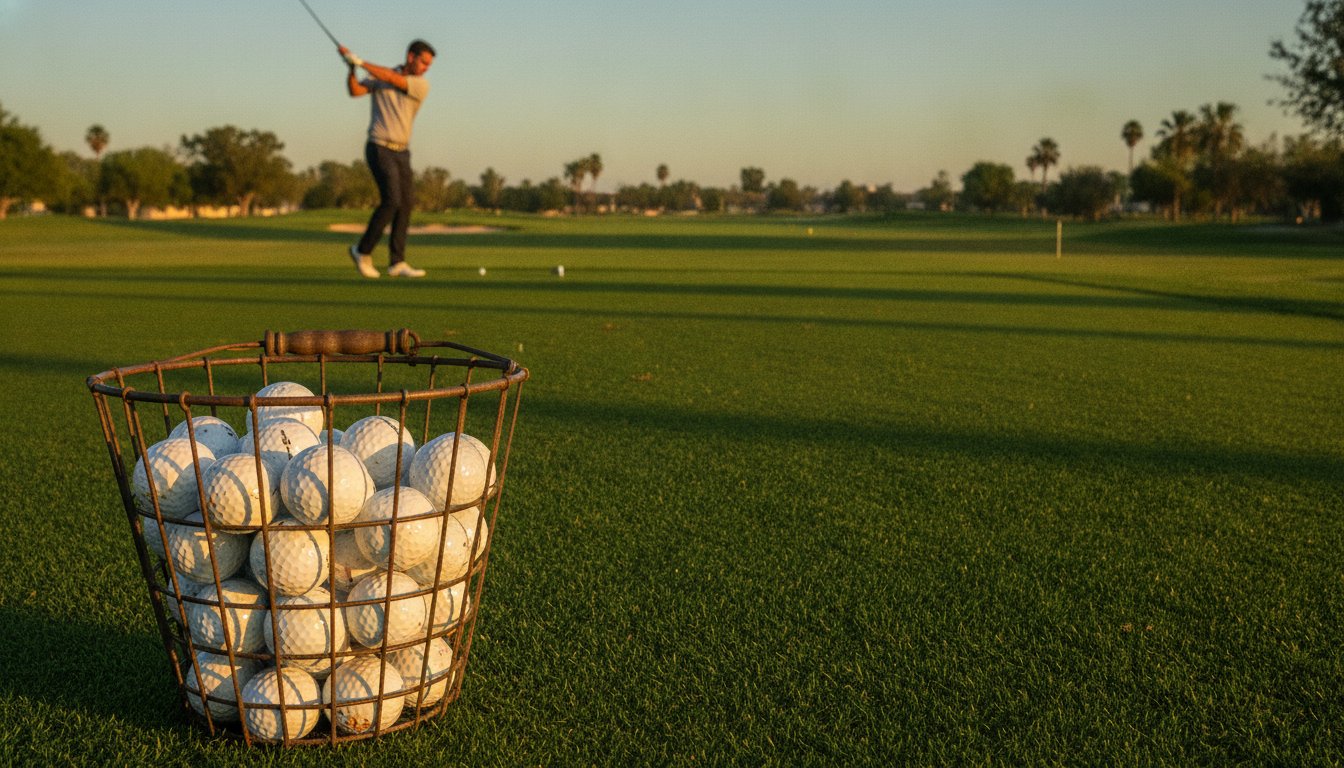
Stop treating your premium game balls like disposable range junk. It’s a painful cycle. You want the best feedback for your swing, but watching a five-dollar ball fly into the woods during a drill feels like throwing cash into a woodchipper. Many players settle for foam or plastic alternatives that fly like wet napkins; this leaves them wondering why their “perfect” backyard swing falls apart on the first tee.
If you’ve ever asked, “what are practice golf balls, and will they actually help my game?” you’re already playing smarter than the average golfer. You deserve a setup that provides tour-level data without the retail price tag. We’re here to show you how to build a better swing while keeping your budget intact. Real improvement requires real feedback, and you don’t need a tour contract to afford it.
This guide dives into the real differences between limited-flight fillers and those “Practice” stamped premium gems. You’ll discover which options offer the most realistic spin, how to spot a bargain in a shag bag, and exactly which balls will give you the honest feedback your game requires. It’s time to stock your bag like a pro without the pro-shop markup.
Key Takeaways
- Learn exactly what are practice golf balls and how to choose between synthetic foam, commercial range balls, and high-value shag options.
- Understand the “click” factor and how compression differences between practice gear and premium balls can impact your swing feedback.
- Master the 100-Yard Rule by using real, recycled balls for short-game drills to ensure your feel translates to the course.
- Save big by stocking a dedicated shag bag with bulk-bought, practice-grade balls for bunker work and high-volume reps.
Defining Practice Golf Balls: More Than Just Range Junk
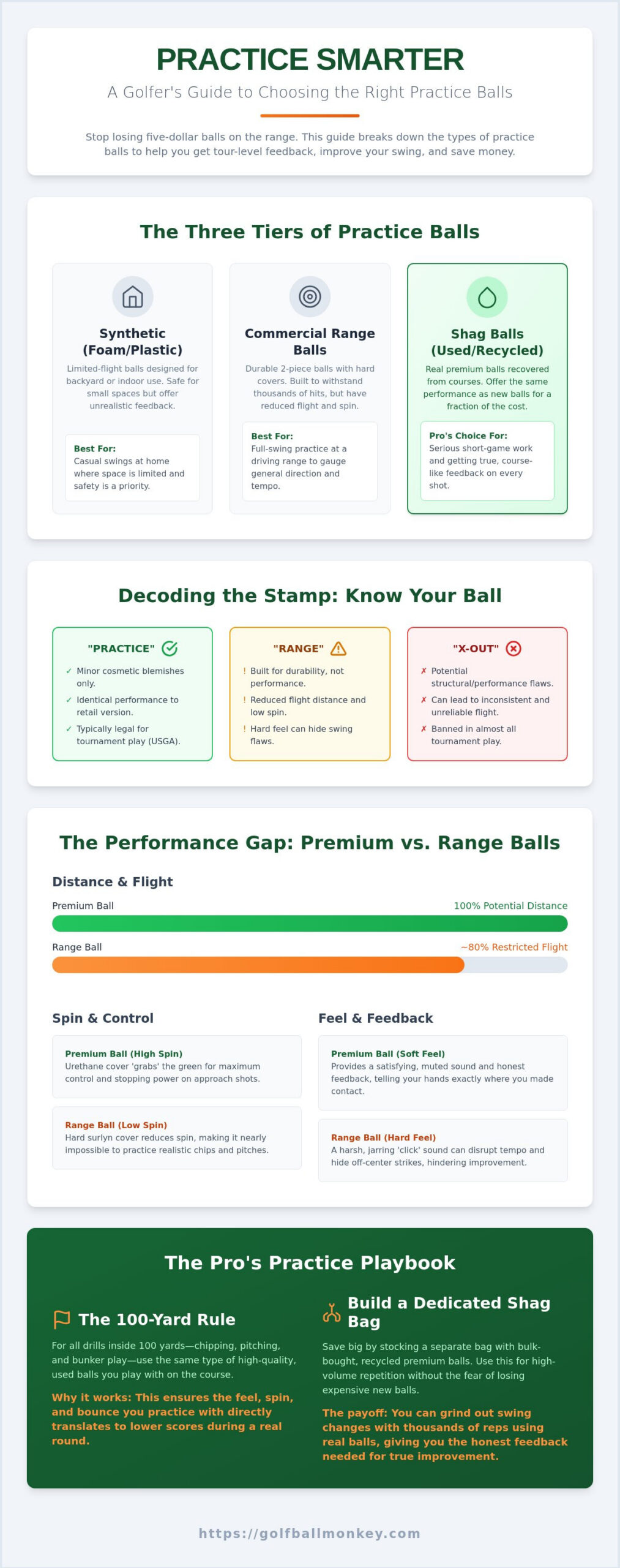
Let’s clear the air. When you ask what are practice golf balls, you aren’t looking for a single product. You’re looking for a strategy. At its core, a practice ball is any piece of equipment designed for high-volume repetition rather than competitive scoring. It’s the gear you use to grind out a swing change without worrying about losing five dollars every time you slice one into the pond. These balls generally fall into three tiers: synthetic foam or plastic for home use, commercial range balls for the driving range, and shag balls for serious field work.
The confusion often starts with the “Practice” stamp found on high-end tour balls. Major manufacturers like Titleist occasionally stamp perfectly good balls with this label due to minor cosmetic inconsistencies. These aren’t “bad” balls; they just didn’t pass the rigorous visual inspection for retail. Interestingly, the USGA treats these differently than “X-Out” balls. According to 2019 regulations, Practice/range balls that are simply stamped versions of conforming models are typically legal for play. X-Outs, however, often have structural flaws and are usually banned in tournament play.
The “Practice” Stamp vs. The Range Ball
Don’t mistake a “Practice” stamped ball for a generic range rock. A range ball is a tank. It’s usually a 2-piece construction built for durability and engineered to survive thousands of hits from every club in the bag. They often feel hard and lack the spin you need for delicate shots. In contrast, a “Practice” stamped Titleist Pro V1 is often identical in performance to the retail version. You get the same urethane cover and the same flight characteristics for a fraction of the cost. It’s the ultimate insider hack for tour-level feedback on a budget.
Shag Balls: The Insider Secret
Shag balls are the true workhorses of a savvy player’s arsenal. These are used balls collected from courses and water hazards by professional divers. At Golf Ball Monkey, these divers retrieve thousands of balls that still have plenty of life left in them. Building a dedicated shag bag allows you to practice bunkers, chipping, and pitching with the exact brands you play on Sunday. Why hit a plastic ball in your yard when you can hit a real, recycled ball for pennies? Visit the Golf Ball Monkey shop to stock up on bulk practice grades and start getting real feedback on every rep.
Practice vs. Regular Golf Balls: Does the Logo Change the Flight?
Don’t let the white paint fool you. When you’re trying to figure out what are practice golf balls versus the ones in your game bag, you have to look at the guts. A standard range ball is a completely different animal than a retail Titleist or TaylorMade. Regular balls are precision-engineered for a specific balance of speed, spin, and control. Range balls, however, are built to survive a nuclear winter. They feature thick surlyn covers and heavy-duty cores designed to be hit, washed, and hit again thousands of times without splitting.
This durability comes at a cost. The most immediate difference is the “click” factor. Range balls are notoriously hard. When you strike one, it produces a sharp, jarring sound that can mess with your mental tempo. If you’re used to the soft, muted thud of a premium urethane ball, this harsh feedback might cause you to over-swing or lose confidence in your strike. Consumer Reports tested practice balls and highlighted how various training models, from foam to limited-flight, can drastically alter your expectations for distance and trajectory.
Distance loss is another major hurdle. Many driving ranges use restricted-flight balls to keep shots within their property lines. These are often designed to fly only 75% to 80% of their standard distance. If you use these to calibrate your yardages, you’re going to be consistently long on the actual course. The spin reality is just as stark. Cheap practice balls lack the “grab” of a game ball. They won’t check up on the green, making it nearly impossible to practice realistic chips and pitches.
Feedback and Feel: Why It Matters
Hitting “rock-hard” balls hides your swing flaws. A hard ball will often fly relatively straight even on a slightly off-center strike. To actually lower your handicap, you need honest feedback. Soft-cover used balls provide the vibration and sound that tell your hands exactly where you made contact. Practicing with the same brand you play builds a consistent mental map. You can find high-quality used practice balls at Golf Ball Monkey that give you this tour-level feel for a fraction of the retail price.
Durability vs. Performance
Range balls are the tanks of the golf world, built to survive the heavy machinery of the picker. Premium practice balls have thinner covers that offer better spin but a shorter lifespan. You have to decide what matters more: a ball that lasts forever or a ball that actually tells you the truth about your swing. For most savvy players, the answer is a mix. Use the tanks for your warm-up, but switch to used premium balls when you start working on your scoring clubs.
Choosing Your Weapon: Foam, Plastic, or Real Used Balls?
Picking the right ammo depends entirely on your battlefield. If you’re wondering what are practice golf balls worth your time, you need to match the material to your environment. Not every session requires a tour-level sphere. Sometimes, you just need to keep your windows intact. Foam balls are the ultimate peace-of-mind choice for living room drills. They won’t shatter your TV or dent the drywall. This makes them perfect for kids or midnight swing sessions when you’re stuck inside. Plastic “wiffle” style balls offer slightly more aerodynamic feedback for small backyards. You’ll see a slice or hook immediately, even if the ball only travels 30 yards.
Limited flight balls sit in the middle of the pack. They feel more like a real ball but are engineered with unique dimple patterns or lighter cores to drop early. These are great for full swings in tight spaces where a real ball would end up three houses down. However, recycled real balls remain the gold standard. If you have a net or an open field, nothing beats the weight and compression of the real thing. It’s the only way to ensure your practice translates to the first tee. You need that authentic impact to know if you’re actually flushing it.
Indoor vs. Outdoor Practice Needs
Don’t fall for the false confidence trap. Foam and plastic balls are great for path drills, but they don’t respond to spin like a urethane cover. If you only practice with lightweight gear, you’ll be shocked when a real ball starts curving 40 yards offline on the course. Step up to real weight whenever your space allows for it. Check out our Golf Ball Accessories to build a setup that supports high-impact reps safely. Protect your home, but don’t protect your ego from the truth of a real ball flight.
The Cost-Per-Swing Analysis
Stop renting your improvement from the driving range. A large bucket at the range can often cost as much as a dozen high-quality used balls that you can keep forever. Buying “Shag” grade balls in bulk is the smartest play for your wallet. These are real balls with minor cosmetic scuffs that provide 100% accurate feedback for a tiny fraction of the retail price. Plus, using recycled gear is a win for the planet. It keeps plastic out of landfills and retrieves lost treasures from water hazards. It’s the most economical way to get real feedback on every single rep. Head over to the Golf Ball Monkey shop to grab a bulk bag and start owning your progress today.
How to Use Practice Balls to Actually Lower Your Handicap
Stop mindlessly bashing balls into the horizon. If you want to drop your score, you need a plan. Understanding what are practice golf balls is step one; using them to shave strokes is where the magic happens. The first rule for any serious grinder is the 100-Yard Rule. Inside this distance, range rocks are useless. They don’t spin, they don’t stop, and they don’t tell the truth about your contact. For everything from full wedges to greenside chips, you need a dedicated shag bag filled with real equipment.
Building this bag is the ultimate insider secret. Professional caddies and players spend hours on the short game area with a bag of identical balls. Why? Because consistency creates feel. If you switch from a hard range ball to a soft game ball, your brain can’t calibrate the distance. Use those “Practice” stamped tour balls to bridge this gap. They provide the exact flight and check you’ll see on Sunday without the five-dollar-a-pop anxiety. Try the “Bucket Drill” next time you’re out. Focus on hitting ten balls to the same target with the same flight before moving back five yards. It’s about consistency, not power.
Mastering the Short Game
You need at least 50 identical balls to develop a true sense of distance. Hitting different brands back-to-back ruins your rhythm. By using high-quality used golf balls, you can simulate on-course conditions for a fraction of the retail cost. Try the “Landing Spot” exercise. Pick a specific towel or leaf on the practice green. Hit 20 balls trying to land them exactly on that spot. A consistent set of balls lets you see exactly how your swing affects the outcome, rather than wondering if the ball was just a dud.
Full Swing Drills with Limited Space
Don’t wait for the weekend to fix your swing path. Foam balls are incredible for fixing an “over-the-top” move right in your hallway. Because they’re so light, any side spin is exaggerated. If you’re slicing a foam ball, you’re definitely slicing the real thing. Practice slow-motion swings to feel the clubhead position through the zone. Once you build the muscle memory, transition to real balls on the grass to confirm the feel. Ready to start your own bag? Grab a high-value bulk stash at Golf Ball Monkey and start grinding.
Building Your Ultimate Shag Bag Without Getting Robbed
Stop buying sleeves of new balls just to lose them in the weeds during a chipping session. If you want a professional-grade practice setup, you have to think in bulk. When you truly understand what are practice golf balls, you realize they are the ultimate currency for improvement. Buying in high volume is the only way to stock a shag bag without draining your bank account. You need enough ammo to find a rhythm without walking back and forth every five minutes. Stocking up on 50 or 100 balls at once turns a frustrating chore into a focused training session.
The secret to saving big is decoding the grading system. While the pros might play Mint 5A balls on Sunday, your shag bag thrives on the “Practice/Shag” grade. These balls are the unsung heroes of the practice green. They might have a scuff, a faded logo, or a previous owner’s Sharpie mark, but the core integrity is solid. They fly true and spin right. If you aren’t sure which brand fits your swing, start with a Mixed Bag (Good 3A). This strategy lets you test everything from a Srixon Z-Star to a Kirkland Signature under real-world conditions for a fraction of the retail cost. Once you find your favorite, you can commit to a specific bulk order.
Maintenance is the final piece of the puzzle. To make your practice stash last for years, keep them clean. A simple bucket of warm water and dish soap does wonders. Avoid harsh chemicals that can eat away at the cover. Store them in a cool, dry place. Leaving your bag in a hot trunk for three months can eventually alter the compression of the core. Treat your practice gear with a little respect, and it will give you honest feedback for hundreds of rounds.
Buying Bulk for the Driving Range
Serious home setups require a serious supply. If you’ve invested in a net or a simulator, you need a wholesale mindset. Buying in bulk ensures you always have a fresh supply of high-quality reps ready to go. To avoid “water-logged” duds that fly like rocks, always vet your supplier. Look for transparency in their grading process. Shop our bulk practice balls to secure a consistent, high-performing stash that won’t let you down when you’re grinding on your game.
The Golf Ball Monkey Advantage
We don’t just find balls; we rescue them. Our professional divers scour the depths to retrieve high-quality equipment that others simply leave behind. Every ball in our inventory follows the “Inspected by a Monkey” promise. This means the Monkey has personally vetted the quality and consistency of every bucket. You aren’t just getting random used gear; you’re getting a standardized grading scale you can trust. Start your journey to a lower handicap today. Grab the right gear, build your bag, and start making every rep count.
Level Up Your Practice Game Today
Practice smarter, not harder. You’ve seen how settling for plastic or foam alternatives can stunt your growth on the course by providing “fake” feedback. To really lower your handicap, you need the authentic feel and spin that only a real ball provides. Whether you’re mastering the 100-Yard Rule or grinding in your backyard net, the right equipment makes the difference. Understanding what are practice golf balls and how to categorize them is your first step toward a more efficient training routine.
At Golf Ball Monkey, our Texas-based expert divers reclaim millions of balls annually from the depths to keep your bag full. We put every find through our standardized 5A-3A grading scales so you know exactly what you’re getting. No more guessing. No more overpaying for retail rocks. Just high-quality gear that treats your budget with respect. It’s time to stop burning through cash and start burning through reps with gear the Monkey has personally vetted for quality.
Build your ultimate practice bag with our Shag & Practice balls!
Grab your bag and get to the green. Your best round is just a few focused drills away, and we’re here to make sure you have the ammo to get there.
Frequently Asked Questions
Are practice golf balls the same as regular golf balls?
Not exactly. The term “practice ball” is an umbrella for everything from foam toys to commercial range rocks. While “Practice” stamped tour balls are often identical to retail versions, generic range balls use thicker covers and harder cores. These rocks are built to survive the mechanical range picker, not to provide the soft feel you need for a delicate flop shot.
Can I use practice golf balls on the course during a round?
Yes, you can typically use them for casual play without any issues. According to 2019 USGA regulations, “Practice” stamped balls are usually legal for play if the original model is on the official list of conforming balls. However, you should avoid using “X-Out” balls in competitive tournaments. These often have structural flaws that can violate official equipment specifications during a round.
Do practice golf balls fly shorter than game balls?
It depends on the type, but many commercial range balls are restricted to roughly 75 percent or 80 percent of standard flight distance. This design helps courses with limited space keep shots on the property. If you’re using high-quality used balls for your practice sessions, you’ll see nearly 100 percent of your actual game distance. Always check the ball type before calibrating your yardages.
Why do some golf balls have “PRACTICE” stamped on them?
Manufacturers like Titleist use this stamp for balls with minor cosmetic imperfections that don’t meet strict retail standards. These aren’t structural duds. They’re high-end tour balls that perform exactly like the expensive versions in the pro shop. It’s a savvy insider secret for getting pro-level performance on a beer budget without sacrificing a single yard of distance or spin.
Are foam golf balls actually good for practice?
Foam balls are excellent for indoor swing path drills and protecting your drywall from accidental damage. They don’t replicate real weight or spin, but they’re perfect for keeping your tempo sharp during the off-season. Use them to fix an over-the-top move in your living room without worrying about the television. Just don’t rely on them for realistic short-game feel or actual distance control.
How long do practice golf balls last before they need to be replaced?
A high-quality practice ball can last for hundreds of hits until the cover scuffs or the core loses its pop. Commercial range balls are built like tanks to survive thousands of strikes. Urethane-covered practice balls wear out much faster because their covers are thinner and softer. Replace them once you notice a change in sound or a visible wobble in their flight.
Is it worth buying used golf balls for practice?
Buying used is the smartest play for your budget and the planet. When you’re figuring out what are practice golf balls worth your investment, used premium balls win every time. You get tour-level feedback for pennies while keeping plastic out of local water hazards. It’s the ultimate way to stock a shag bag without getting robbed at the register for brand-new sleeves.
- golfballmonkey@gmail.com
- (512) 593-8401
- Mon – Fri, 9:00 AM – 5:00 PM

All product and company names are trademarks™ or registered® trademarks of their respective holders.
Use of them does not imply any affiliation with or endorsement by them.