
The Environmental Benefits of Using Recycled Golf Balls: Play Green, Save Green
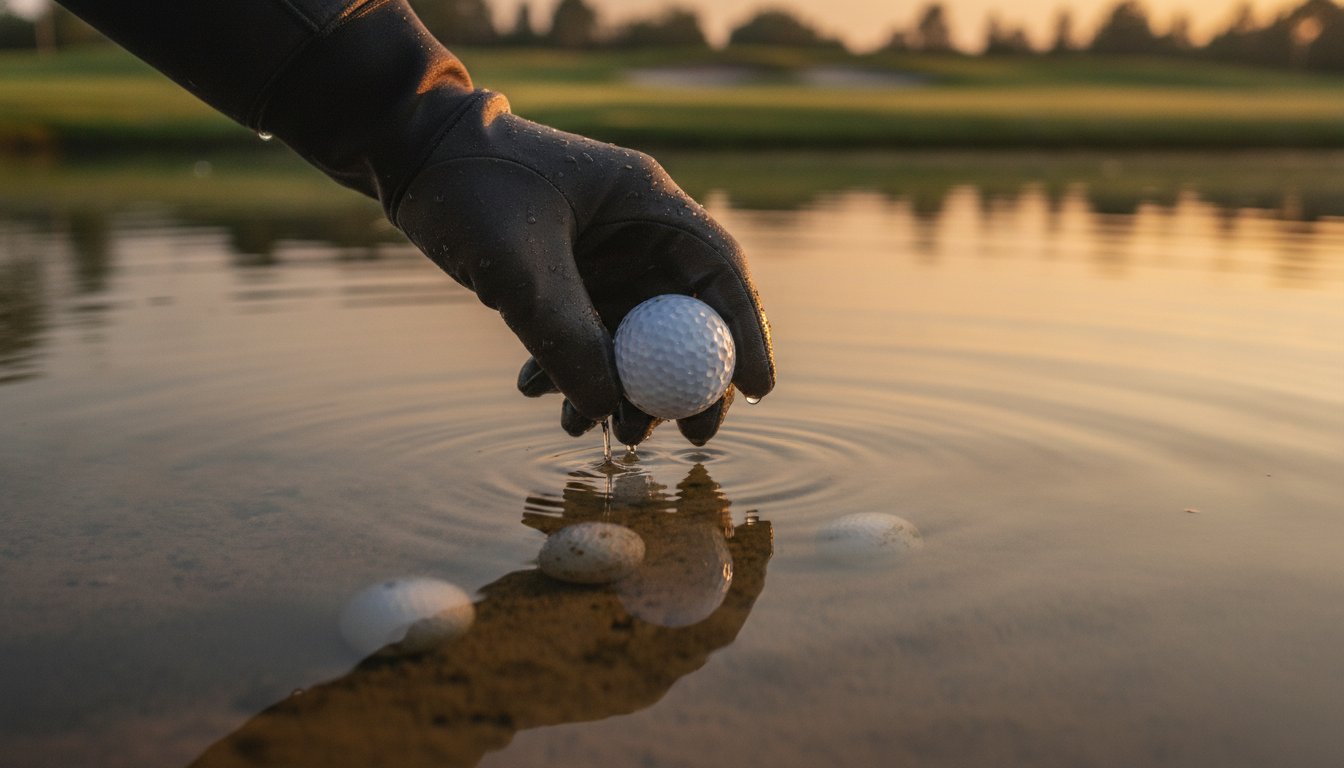
Did you know that an estimated 3 billion golf balls are lost globally every single year? In the U.S. alone, over 1.5 billion balls vanish into the rough and the drink, sitting there for up to 1,000 years while they slowly leak microplastics into our ecosystem. It’s a massive environmental hit that most players don’t even realize they’re contributing to. Understanding the environmental benefits of using recycled balls changes the way you look at every hazard on the course.
We’ve all been there. You watch a brand new, expensive ball splash into a pond and feel that double sting of a wasted five bucks and a bit of “littering” guilt. It’s frustrating, but you shouldn’t have to choose between a clean conscience and a clean strike. You want premium performance without the premium price tag or the plastic waste. We get it. Making the intelligent play means saving your green while keeping the course green.
This guide shows you how switching to recycled golf balls cleans our waterways, slashes plastic waste, and protects both your game and the planet. We’ll break down the specific ecological impact of lost gear and explain how our professional divers turn “plastic mines” into high-performance treasures. You’ll see exactly why a Mint 5A Titleist Pro V1 is the ultimate win-win for your bag and the earth.
Key Takeaways
- Learn how 300 million balls lost annually in the U.S. create “plastic mines” and why professional recovery is the ultimate rescue mission for our courses.
- Discover the specific environmental benefits of using recycled balls to prevent toxic chemical leaching and microplastic pollution in local ecosystems.
- See how professional divers harvest premium gear from water hazards, using eco-friendly cleaning methods to restore that factory-fresh shine without harsh chemicals.
- Compare the carbon footprint of new manufacturing against local retrieval to understand how you can slash energy waste with every swing.
- Realize that playing Mint 5A quality gear like the Titleist Pro V1 delivers pro-level performance while stripping away the guilt of losing expensive, new balls.
What Are Recycled Golf Balls and Why Do They Matter?
Recycled golf balls aren’t just “used” gear. They’re a direct rescue mission for the environment and your wallet. When we talk about recycling, we mean premium equipment like Titleist Pro V1s that took an accidental detour into a pond and got a second chance at glory. A recycled ball is professionally recovered, cleaned, and graded for reuse. It’s the ultimate insider hack. You get the same flight, the same spin, and a massive discount while keeping plastic out of the landfill. Stop paying retail for plastic that eventually ends up in a lake. Grab a bag of Mint 5A gear and play the smart way.
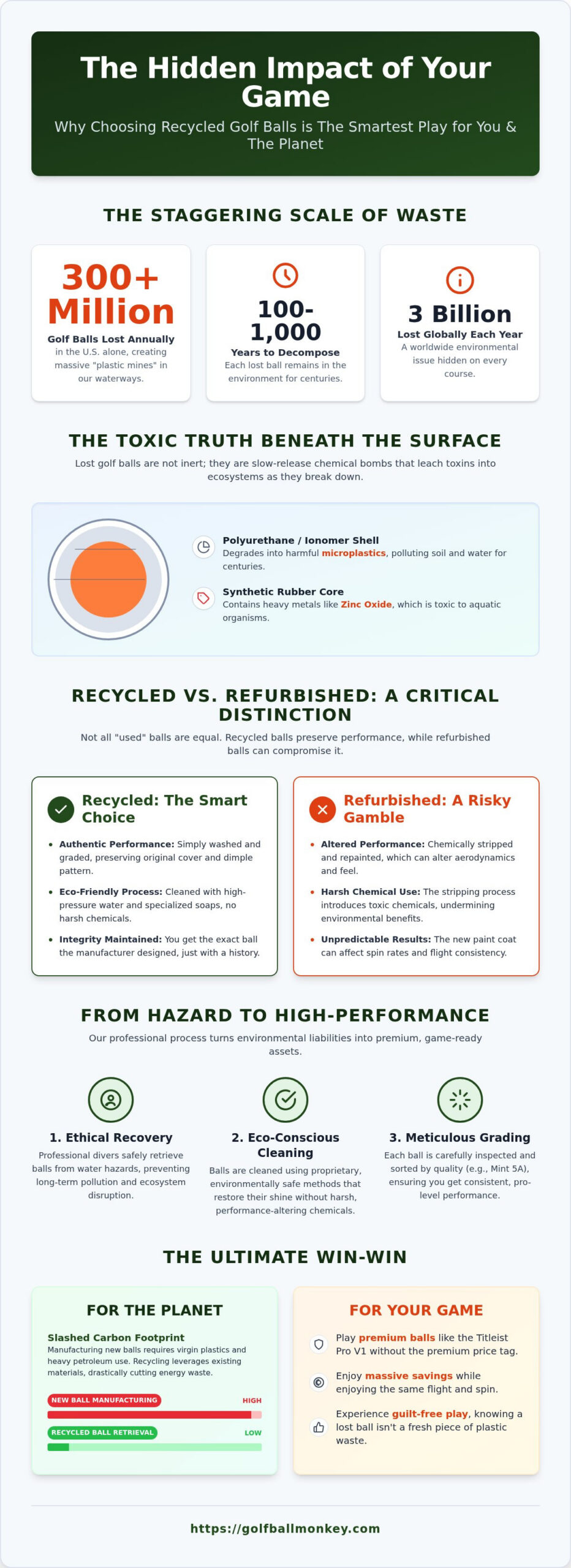
The scale of the waste is staggering. Over 300 million balls are lost in the US every single year. That is a massive pile of synthetic rubber and plastic sitting in our soil and water. Producing new balls requires virgin plastic and heavy petroleum use, which adds to a massive carbon footprint. By choosing used, you’re tapping into the environmental benefits of using recycled balls by extending the life of existing materials. It’s the intelligent play. It aligns your bank account with your values without sacrificing a single yard of distance off the tee.
Recycled vs. Refurbished: A Critical Distinction
Don’t confuse recycled with refurbished. There’s a massive difference. Recycled balls are simply washed and graded. We keep the original cover integrity exactly how the manufacturer intended. Refurbished balls are often stripped with harsh chemicals and repainted. That process can mess with dimple patterns and aerodynamic performance. We skip the chemicals and stick to high-pressure water and specialized soaps. You get a ball that performs like it just came out of the box, not one that’s been through a toxic chemical bath. It preserves the ball and the planet.
The 2026 State of Golf Waste
The game is booming. More players mean more “pond plastic” than ever before. As we move through 2026, the industry is finally waking up to the waste problem. Modern golfers are ditching the old throwaway culture. They want sustainable gear that doesn’t rot in a hazard for a century. Whether you’re looking for information on recycled and biodegradable golf balls or you’re ready to restock your bag, the shift toward eco-conscious play is real. It’s about being a savvy insider who knows that a ball’s history doesn’t dictate its future. You can find high-quality, graded options at our online shop and join the movement toward a cleaner course today.
The Toxic Truth: How Lost Balls Impact Ecosystems
Think about that ball you sliced into the pond last Saturday. It didn’t just disappear. It’s sitting there right now. It’ll stay there until the year 2126 at the earliest. Most golf balls take between 100 and 1,000 years to decompose. While they sit in the muck, they aren’t just taking up space. They’re slowly leaking synthetic chemicals into the local ecosystem. This is the dark side of the game that nobody talks about at the 19th hole. When we discuss the environmental benefits of using recycled balls, we’re talking about stopping these “plastic mines” before they poison the local flora and fauna.
Every lost ball is essentially a tiny, slow-release chemical bomb. As the outer layers degrade, they shed microplastics. These tiny particles are impossible to clean up once they enter the water column. They move through the soil and into the groundwater, affecting more than just the immediate hazard. Reclaiming these balls before they break down is the only way to mitigate the damage. It turns a potential environmental disaster into a high-performance opportunity for the next golfer who wants to play with recycled gear and save some cash.
The Chemistry of a Golf Ball
A standard ball is a complex cocktail of synthetic rubber and plastic polymers. The core usually contains heavy metals like zinc oxide to give it that high-energy bounce. The shell is typically made of ionomer or polyurethane. Over decades, water pressure and UV light break these materials down. As the cover cracks, these chemicals leach out. Zinc oxide toxicity in marine life refers to the heavy metal’s ability to disrupt respiratory and reproductive systems in aquatic organisms even at low concentrations. It’s a slow-motion chemical spill happening in every water hazard. Research like the Life Cycle Assessment of a Golf Course highlights how these materials contribute to the overall environmental footprint of the sport.
Impact on Local Waterways
When thousands of balls settle in a single pond, they create a concentrated zone of waste. This “plastic mine” effect alters the sediment health and can even shift pond PH levels. It gets worse. Fish and waterfowl often mistake deteriorating ball fragments or microplastics for food. These synthetic bits can’t be digested. They lead to blockages and starvation in local wildlife. Removing these balls is a form of active habitat restoration. It cleans the water and restores the natural balance of the course. By tapping into the environmental benefits of using recycled balls, you’re funding the divers who pull this trash out of the water and put it back into play. It’s the ultimate win for the local ecosystem.
The Rescue Mission: How We Harvest Lost Potential
Most golfers look at a water hazard and see a stroke penalty. Our professional divers look at it and see a job site. These are the unsung heroes of the course. They suit up in heavy gear and plunge into zero-visibility silt to reclaim what was lost. It is a grueling, physical mission that turns a “plastic mine” back into a premium inventory. This recovery process is the engine behind the environmental benefits of using recycled balls. Every ball pulled from the muck is one less chemical-leaking capsule left to rot in our ecosystems. We aren’t just selling gear; we’re running a massive, ongoing cleanup operation.
Once those balls leave the water, the restoration begins. We skip the toxic solvents and harsh stripping chemicals used by refurbishers. Instead, we use high-pressure water and eco-friendly soaps to restore the original shine. This preserves the factory cover and ensures the aerodynamics remain exactly as the manufacturer intended. It is a seamless lifecycle from the bottom of a pond to your first tee shot. You get a ball that looks and plays like new, while the planet gets a break from virgin plastic production. It is the ultimate insider secret for the savvy player who wants performance without the environmental baggage.
A Day in the Life of a Golf Ball Diver
Diving for golf balls is not a hobby. It is a high-stakes rescue mission. Divers navigate underwater entanglements, snapping turtles, and thick mud to find lost gear. They act as the first line of defense against the dangers of degrading golf balls that threaten aquatic life. On a good month, a single team can remove tens of thousands of balls from a single course. This massive volume of plastic removal is essential for maintaining healthy waterways and keeping course sediment clean for years to come.
The Grading Standard: Mint 5A Accuracy
We don’t just dump a bucket of pond balls on your doorstep. Every single ball undergoes a rigorous inspection process. We check for scuffs, discoloration, and structural integrity to ensure you only get the best. Our Mint 5A quality is the gold standard of the industry. For 99% of players, these balls are indistinguishable from brand-new retail options in terms of flight and spin. You can learn more about our Mint 5A grading scale to see how we filter out the duds. This ensures that the environmental benefits of using recycled balls never come at the expense of your scorecard. You play the best gear, save a fortune, and help us clean up the game one hazard at a time.
Carbon Footprint: New vs. Recycled Comparison
Every time you rip open a fresh sleeve of premium balls, you’re looking at the end of a very long, energy-heavy industrial road. The environmental benefits of using recycled balls start at the factory floor. Manufacturing a new ball isn’t just about molding plastic. It involves massive amounts of electricity and petroleum to create the core and the cover. When you choose recycled, you’re opting out of that cycle. Washing and grading a recovered ball uses roughly 90% less energy than manufacturing a new one from scratch. Same performance. Fraction of the energy. It’s the most efficient play in the game.
Think of it as a “Carbon Save” for your personal record. For every dozen balls you rescue from a landfill or a pond, you’re preventing the extraction of new raw materials. You’re also cutting out the high-heat injection molding processes that define modern golf ball production. It’s an easy way to align your game with your values. You don’t need to change your swing to lower your footprint. Just change where you get your gear. It’s the intelligent move for any player who values efficiency as much as a straight drive.
The Energy Cost of New Plastic
New balls require virgin polyurethane and synthetic rubber. These materials don’t just appear. They require petroleum extraction and intensive refining before they ever reach a mold. The injection molding process itself is a carbon-heavy operation that relies on constant high heat to shape the ball’s layers. While a single new golf ball carries a heavy carbon debt from its industrial birth, a recycled ball enters your bag with nearly zero new emissions. You’re essentially playing with “found” energy. It’s a massive win for the planet that doesn’t cost you a single yard of distance.
Shipping and Logistics Impact
New balls often take a global tour before they hit your local pro shop. They travel from overseas factories to regional distribution centers and finally to the shelf. That is a lot of jet fuel and diesel for a piece of equipment you might lose in the first three holes. Recycled balls keep the journey national. We harvest them from American courses and ship them directly to your door. Shop our bulk golf balls for the lowest footprint and cut out the unnecessary air miles. Bulk buying is the ultimate pro move. It reduces packaging waste and slashes the carbon impact per ball. Stop paying for global logistics and start supporting a cleaner, local recovery mission. Get your eco-friendly gear here and play a greener game today.
The Smart Play: Performance Without the Guilt
Choosing a Titleist Pro V1 (Mint 5A) is the ultimate power move for the modern golfer. You get the #1 ball in golf without the retail price tag or the environmental baggage. It is about making the intelligent play on every level. We’ve already covered how reclaiming these balls saves local ecosystems from toxic leaching and microplastics. But let’s talk about your scorecard. When you aren’t sweating the cost of a lost ball, you play better. You swing freer. You go for the green over the water because you aren’t throwing away five dollars with every splash. That psychological freedom is a massive advantage that retail buyers never get to experience.
Joining the Monkey crew means you’re part of a community that values the game and the planet. It is about being a savvy insider who knows the industry secrets. You understand that the environmental benefits of using recycled balls are just the beginning. The real thrill is finding a significant bargain on tour-level equipment while supporting an active cleanup effort. Transitioning your bag is easy. Start by swapping your practice balls, then move your main game to our Mint 5A tiers. You’ll never go back to paying full retail for plastic again. It is a win for your wallet and a win for the course.
Tour Performance, Recycled Soul
High-grade recycled balls maintain their spin and compression profiles. The data proves it. For the vast majority of amateurs, a Mint 5A ball is indistinguishable from one pulled off a retail shelf. Even pros are becoming more vocal about equipment sustainability. They know that a ball doesn’t lose its soul just because it spent a few weeks in a pond. If you’re still skeptical, check out our guide: Are Used Golf Balls Worth It? A Data Dive. It breaks down the numbers so you can see the performance for yourself. Stop guessing and start playing the smart way.
Make the Switch Today
Look for sellers who actually employ the divers. That is how you ensure the gear is fresh and hasn’t been sitting in a warehouse for a decade. Transitioning to 100% recycled gear gives you total financial freedom. You can afford to play the best brands in the world on every single round. It is time to stop overpaying for gear that ends up in the drink. You can find everything from Titleist to Srixon in our shop, all graded to perfection. Grab a dozen Mint 5A Titleist Pro V1s and start your eco-journey today. It is the smartest play you’ll make all season. Play green, save green, and keep the game growing.
Make the Intelligent Play for the Fairway and the Earth
Every swing is a choice. You can keep feeding the cycle of virgin plastic production, or you can join the rescue mission. We’ve seen how professional recovery stops “plastic mines” from poisoning our ponds and how local retrieval slashes the carbon footprint of your gear. The environmental benefits of using recycled balls are undeniable, and with our standardized 5A Mint Grading, your scorecard won’t know the difference. You get tour-level performance while we handle the dirty work in the hazards.
We’re a Texas-based, diver-operated team that has already rescued over 10 million balls from the muck. It’s about more than just finding a bargain; it’s about making a commitment to a cleaner game. Stop overpaying for equipment that’s destined for a water hazard. Grab the gear that has already been there and come back stronger. You’ll save your green while keeping the course green. It’s time to stock up, hit the links, and play with a clean conscience.
Ready to play the smart way? Shop our Mint 5A Recycled Collection now!
See you on the first tee. Keep it in the short grass!
Frequently Asked Questions
Are recycled golf balls actually good for the environment?
Yes, they are a massive win for course sustainability. Every ball we recover stops synthetic waste from rotting in our waterways and prevents the need for new virgin plastic production. By choosing used gear, you’re tapping into the environmental benefits of using recycled balls and directly funding the removal of millions of plastic “mines” from local ecosystems every year. It’s the ultimate win-win for your bag and the earth.
Do golf balls decompose in water?
No, they don’t break down safely. A standard ball can take anywhere from 100 to 1,000 years to fully decompose. Instead of disappearing, they sit in the muck and slowly shed microplastics and heavy metals into the water column. This is why professional recovery is so vital. A ball lost today will still be haunting that pond in the next century if a diver doesn’t pull it out first.
Is the performance of a recycled ball worse than a new one?
High-grade recycled balls perform identically to new ones for 99% of golfers. Our Mint 5A Titleist Pro V1s maintain their original factory spin, compression, and flight profiles because they haven’t been stripped or repainted. You get tour-level performance at a fraction of the retail cost. It’s the smartest performance hack in the game for players who want pro results without the elite price tag.
How many golf balls are lost in the ocean and ponds each year?
Golfers lose an estimated 3 billion balls globally every single year. In the United States alone, over 1.5 billion balls vanish into the rough and the drink annually. This creates a staggering volume of synthetic waste that threatens aquatic biodiversity. Understanding the environmental benefits of using recycled balls helps players realize that reclaiming this lost gear is the only way to mitigate the sport’s massive plastic footprint.
What is the difference between recycled and refurbished golf balls?
Recycled balls are simply washed and graded to keep their factory integrity. Refurbished balls are stripped with harsh chemicals and repainted, which can ruin the dimple patterns and aerodynamic performance. We only sell recycled gear because it’s better for your game and much safer for the planet. Stick to graded recycled balls to ensure you’re playing the equipment exactly how the manufacturer intended it to fly.
Do golf balls release toxic chemicals into the water?
Yes, they slowly leak heavy metals like zinc oxide as they degrade over decades. These chemicals can disrupt the respiratory and reproductive systems of fish and waterfowl even in low concentrations. Along with heavy metals, the deteriorating covers release microplastics that enter the local food chain. Removing these balls before they break down is a form of active habitat restoration that keeps our favorite courses healthy and thriving.
How long does it take for a golf ball to biodegrade?
A standard ball made of synthetic polymers and rubber takes between 100 and 1,000 years to biodegrade. While “biodegradable” balls exist, they aren’t approved for tournament play and often lack the distance of premium gear. The most eco-friendly move you can make is to keep existing high-performance gear in circulation. Recycling ensures that the energy and materials used to make a Titleist Pro V1 aren’t wasted after just one bad slice.
Can I recycle my own old golf balls?
You can’t just toss them in your curbside bin, but you can definitely keep them out of the landfill. Many courses have collection bins for lost gear that professional divers then harvest and grade for reuse. If you have a stash of old duds in your garage, use them for shag bag practice or donate them to local youth programs. Keeping them in play is the best way to honor the materials and the game.
- golfballmonkey@gmail.com
- (512) 593-8401
- Mon – Fri, 9:00 AM – 5:00 PM

All product and company names are trademarks™ or registered® trademarks of their respective holders.
Use of them does not imply any affiliation with or endorsement by them.