
High Compression Used Golf Balls for Fast Swing Speeds
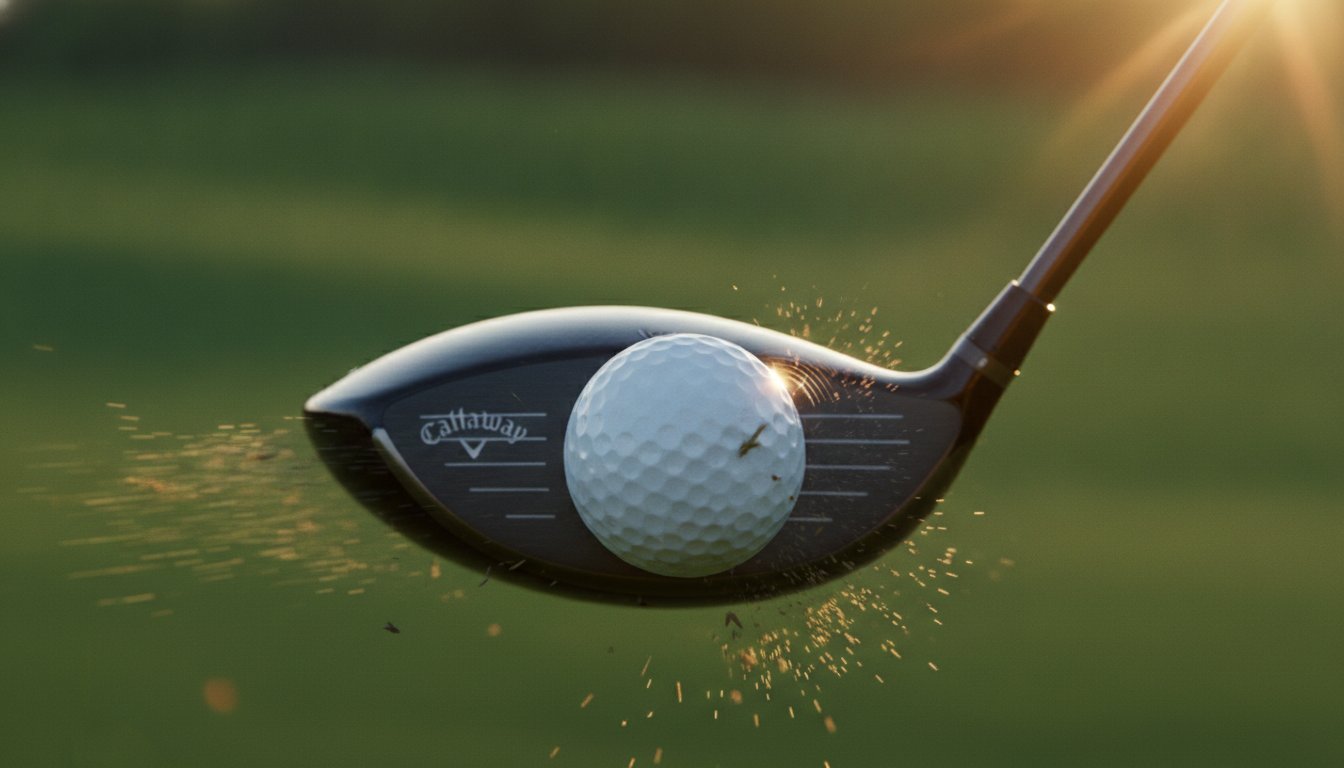
Are you actually losing 10 to 15 yards because you’re playing the wrong ball? If your driver swing is north of 105 mph, those “soft feel” balls everyone raves about are likely turning into marshmallows at impact. You’re over-compressing the core, spiking your spin, and watching your distance die in the wind. To fix it, you need high compression used golf balls for fast swing speeds that can actually handle the heat you’re bringing.
We get it. Paying nearly $58 for a dozen new premium balls feels like a gut punch every time you find the water. It’s frustrating to choose between peak performance and your bank account. This guide shows you how to snag tour-level tech like the Titleist Pro V1x or TaylorMade TP5x for 50% less than retail prices. We’ll break down why high-compression cores are your best friend, how our strict Mint 5A grading ensures like-new flight, and which specific models the Monkey recommends for your high-octane game. Stop overpaying for the same physics. It’s time to play the smart way and keep your ball speed high and your costs low.
Key Takeaways
- Stop losing yards to the “mush factor” by understanding how soft balls fail under high-velocity impact.
- Learn why high compression used golf balls for fast swing speeds are essential for maximizing energy transfer and distance.
- Identify the specific tour-level models like Pro V1x and TP5x that deliver the piercing flight you need.
- Discover why the Monkey’s Mint 5A grading is the only choice for maintaining perfect aerodynamics at high speeds.
- Master the savvy insider play to snag professional performance for 50% less than retail prices.
The Physics of Fast Swings: Why High Compression is Your Best Friend
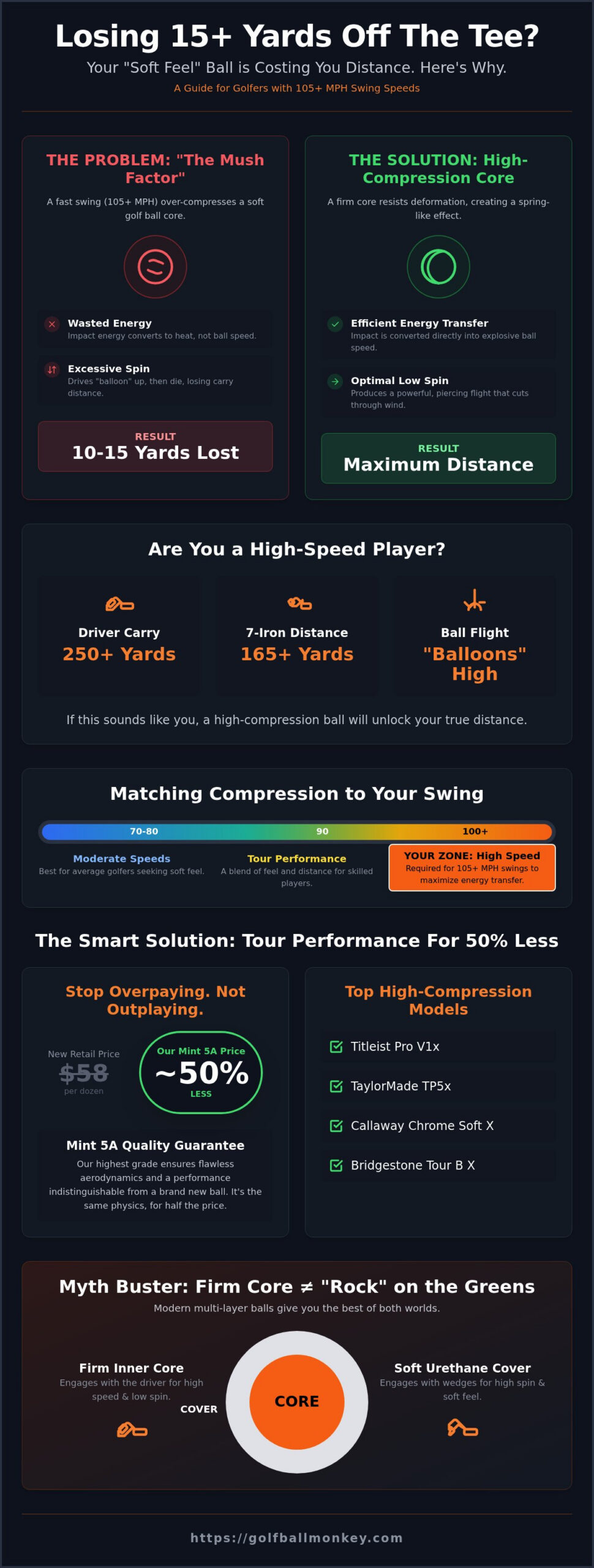
Don’t get tricked by marketing buzzwords about “soft feel.” For the heavy hitters, softness is often a speed killer. High compression (90+) isn’t just a luxury for the pros. It is a physical requirement for efficient energy transfer. When your clubhead moves at 100 MPH, the ball has to fight back. If it doesn’t, you’re leaving yards on the tee box.
Technically, golf ball compression is the measurement of how much a ball deforms under a specific load. Think of the ball as a high-tension spring. If you’re swinging fast, you need a heavy-duty spring. A soft ball will “bottom out” or over-compress against your clubface. This wastes energy as heat and excessive vibration rather than translating it into forward momentum. High compression used golf balls for fast swing speeds use a firmer core to resist this collapse and snap back instantly. This results in higher ball speeds and significantly lower spin off the driver. You get that piercing flight that cuts through the wind instead of ballooning and losing distance. It’s the difference between a crisp strike and a “mushy” impact that feels dead at the moment of truth.
Finding Your Swing Speed Without a Launch Monitor
You don’t need a $20,000 launch monitor to know you’re fast. Look at your average driver carry distance. If your ball carries 250 yards or more, you’re likely in the 100+ MPH club. Check your iron selection too. Are you hitting a 7-iron from 165 yards or more? That’s high-speed territory. The “Savvy Insider” tip: If your ball flight looks like it’s climbing a ladder and then dying, you’re over-compressing a soft ball. You’ve outgrown that equipment. It’s time to move to a firmer core that can handle your power.
Compression Ratings Explained for 2026
The 2026 market breaks down into four main tiers. 70 and 80 compression balls are for moderate speeds and “soft” preferences. 90-compression is where the “Tour” performance starts for the average competitive player. 100-compression is the gold standard for 105+ MPH swings. Premium balls are almost always high-compression because they have to handle the most violent impacts in the game. These balls don’t just fly further; they stay straighter by reducing the “side spin” that plagues softer cores at high velocities. You can find these elite models at our shop for a fraction of the pro shop price. Stop paying the retail tax and start playing the physics that fit your game.
The ‘Mush’ Factor: What Happens When Fast Swings Use Soft Balls
If you’re swinging like a beast, a soft ball is your worst enemy. It’s called the “Mush” factor. When a 110 MPH clubhead meets a 70-compression core, the ball doesn’t just bounce. It collapses. It deforms so much that the core stays on the face too long, squashing like a marshmallow instead of snapping back like a spring. This is the primary reason why elite players hunt for high compression used golf balls for fast swing speeds.
This isn’t just about “feel” at impact; it’s about thermodynamics. According to research on The Physics of Fast Swings, energy that should be propelling your ball forward gets converted into heat and structural vibration. You’re literally burning distance. For players with high clubhead speeds, this energy loss is the difference between clearing the bunker and plugging in the face. You need a core that fights back against the violence of your swing.
Beyond losing yardage, soft balls create a spin nightmare for the heavy hitters. Excessive deformation leads to high backspin and erratic side-spin. Your drives “balloon” into the air, stalling out and falling short. If you struggle with a hook or slice that seems to exaggerate itself, your ball might be the culprit. A firmer core resists that horizontal squish, keeping your flight path tighter and more predictable. It’s about maintaining control when you’re redlining the engine.
Driver Distance vs. Wedge Spin
You might worry that a firm ball feels like hitting a rock around the greens. That’s where multi-layer construction saves the day. High-end tour balls use a firm core for the big sticks and a soft urethane cover for the short game. 4-layer and 5-layer designs allow the ball to behave differently depending on the force of impact. At high speeds, the core takes over. On chips, the cover provides the “grab.” It’s the ultimate performance hack for the savvy player who refuses to compromise on touch or power.
Dispelling the ‘Soft is Long’ Myth
Marketing departments love telling you “soft is long.” They aren’t lying to everyone, just to you. Soft balls are great for the 80 MPH swing that needs help getting the ball off the ground. For you, “firm” is the engine that drives yardage. You have the power to activate a 100-compression core. Don’t waste that talent on a marshmallow. Check out our Golf Balls 101: The Ultimate Guide to Performance to see how different cores stack up against your specific swing speed.
Ready to stop the mush? Grab a dozen high-compression tour balls from our inventory and see the immediate difference in your ball flight and carry distance.
The Heavy Hitters: Top Used High-Compression Models for 2026
If you’re ready to trade in your marshmallows for real ammunition, you need to know which models actually hold up. Not every “premium” ball is built for your speed. You need the heavy hitters that stay stable when the impact from fast swings creates massive force. These high compression used golf balls for fast swing speeds have been vetted to ensure they don’t fold under pressure.
The Titleist Pro V1x remains the high-launch, high-spin king. It is designed specifically for the player who wants to maximize carry distance. If you have the speed to compress its firm core, this ball stays in the air longer than almost anything else on the market. On the other side, the TaylorMade TP5x is a 5-layer beast built for maximum velocity. It delivers a more piercing flight, making it a preferred weapon for players who play in windy conditions or struggle with shots that climb too high.
Don’t overlook the Bridgestone Tour B X. It is optimized for total distance and incredible wind stability. It feels firm and stays on a rope. Similarly, the Srixon Z-Star XV is a favorite for those who prioritize “clicky” feedback. It offers a sharp, communicative feel at impact that softer balls just can’t replicate. These aren’t just balls; they are precision tools for your high-speed engine.
Titleist Pro V1x vs. TP5x: The Speed Battle
Pro V1x flies high. TP5x flies mid. Both are incredibly fast. The choice usually comes down to your natural launch window. If you tend to hit it low, the Pro V1x will help you find that optimal apex. If you already launch it high, the TP5x will keep your trajectory under control. Want to know more about the Titleist lineup? Check out our guide on Titleist Pro V1 vs Pro V1x: Which Is for You? to find your perfect match.
The Best Value High-Compression Alternatives
Why spend $55 on a dozen new mid-tier balls when you can get Mint 5A tour performance for less? The Kirkland Signature is the budget high-compression outlier. It is surprisingly firm and holds its own against the big brands. For the absolute fastest players, the Callaway Chrome Soft X LS offers ultra-low spin to prevent those 115 MPH drives from ballooning. You can also look at the Vice Pro Plus for a firm feel with tour-level specs. The savvy play is always to buy high compression used golf balls for fast swing speeds in Mint 5A condition. You get the same physics as the pros, but you keep the “tour tax” in your pocket.
Grade Matters: Why High Swing Speeds Demand Mint 5A Quality
At 100+ MPH, aerodynamics are everything. A tiny scuff that a slow swinger wouldn’t notice can cause 10 yards of drift for you. Fast swings create massive lift and drag. Any surface imperfection acts like a tiny wing, pulling your ball off-line. This is why “shag” or “3A” balls are fine for the range but fail during high-speed play. You need the surface to be pristine to maintain that piercing flight we talked about earlier.
The Golf Ball Monkey 5A standard is the only grade we recommend for high compression used golf balls for fast swing speeds. These balls look, feel, and fly like they just came out of the box. Our 5A balls are hand-sorted to ensure zero scuffs and zero discolorations. Our professional divers reclaim these high-performance gems from the hazards before they can degrade. It’s a sustainable way to play the best tech without the environmental or financial cost of new plastic. You’re getting the top shelf without the top-shelf price tag.
The Truth About Water-Logged Balls
There’s a myth that any ball found in a pond is dead. That’s old-school thinking from the wound-core era. Modern multi-layer balls are highly water-resistant. 24 hours in a pond won’t kill your drive. Professional retrieval involves careful cleaning and sorting to ensure the core remains intact. In fact, 5A balls maintain 99.9% of their original compression. You aren’t losing performance; you’re just losing the retail markup. We don’t sell “refurbished” balls that hide damage under new paint. We sell authentic, recycled performance.
Why Used is the ‘Smart Play’ for Fast Swings
High-speed players simply lose more balls. Farther flight means more room for error. If you’re carrying it 280 yards, a five-degree miss is deep in the woods. Paying retail for “one-round” balls is a bad investment. The savvy insider knows that high compression used golf balls for fast swing speeds in 5A condition are the smart play. You can stock up on tour-level ammunition and still have money left for the 19th hole. Check out our Used Golf Balls: The Ultimate Buyer’s Guide to see how we grade every ball for peak performance.
Don’t let a scuffed ball ruin your best drive of the day. Grab your Mint 5A high-compression balls today and play the same gear as the pros for a fraction of the cost.
Scoring Tour-Level Performance Without the Pro Shop Tax
Stop donating five-dollar bills to the woods. Every time you slice a brand-new, retail-priced tour ball into a lake, you’re paying a “tax” that your game doesn’t require. You’ve spent hours refining a swing that generates massive power. That swing speed is a physical asset. Don’t waste it by over-compressing soft, cheap balls or by overpaying for the exact same physics at a pro shop. High compression used golf balls for fast swing speeds give you the elite performance your game demands without the financial gut punch at the register.
The savvy play is about consistency. Many high-speed players make the mistake of playing a premium ball during a round but practicing with low-compression “shag” balls. This destroys your feel and timing. Because our Mint 5A balls are so affordable, you can actually afford to practice with the same gear you play. Building a high-speed practice bag with bulk tour-level balls ensures that your launch angles and spin rates stay consistent from the range to the first tee. The Monkey promise is simple: we provide the gear that smart players use to stay competitive while keeping their budgets intact. We’ve vetted every ball in our inventory to ensure they meet the strict 5A standards that fast swings require for stable flight.
Ready to Load Up? Shop High Compression
Don’t wait until you’re down to your last sleeve to restock. You can easily manage your inventory by bulk ordering for the season. Whether you prefer the high-launch flight of the Pro V1x or the raw velocity of the TP5x, we keep the heavy hitters in stock and ready to ship. We’re based in Texas and offer fast national shipping, so your next batch of high-performance ammunition arrives before your next tee time. It is the most efficient way to keep your bag filled with the best tech in the game.
Join the Savvy Insider Community
It’s time to play the best ball for your swing, not the best ball for your wallet. You don’t have to choose between distance and dollars anymore. High compression equals speed and control for fast swings. It’s that simple. By choosing Mint 5A recycled balls, you’re making the intelligent play for your scorecard and the planet. Stop overthinking the marketing and start trusting the physics. Shop Golf Ball Monkey High Compression Balls now and see how much you can save while outdriving the competition.
Take Command of Your Ball Speed
Your swing speed is a weapon; don’t let a soft ball disarm you. We’ve established that high compression is a physical requirement for 100+ MPH swings to prevent the “mush factor” and keep spin under control. By switching to high compression used golf balls for fast swing speeds, you’re choosing to maximize every ounce of energy your body generates. You get the piercing flight of a Pro V1x or TP5x without the ridiculous retail markup.
The savvy play is right here. Our inventory is professional diver retrieved and put through a strict 5A mint grading scale to ensure every ball performs like it’s fresh from the factory. We offer Texas-based national shipping so you can restock quickly and get back to outdriving your group. Stop paying the “tour tax” and start playing the gear that matches your power. Grab Mint 5A Tour Balls for Your Fast Swing – Shop Now. It’s time to let that driver eat and watch your distance soar.
Frequently Asked Questions
What is considered a ‘fast’ swing speed for golf balls?
Driver speeds north of 100 MPH are the standard “fast” benchmark. If your average carry distance is 250 yards or more, you’re in the high-velocity category. At this speed, your clubhead generates enough force to fully activate a firm core. Using high compression used golf balls for fast swing speeds ensures you don’t lose energy to excessive ball deformation. It’s about matching the equipment’s resistance to your power.
Can I use a soft ball if I have a fast swing speed?
You can, but you’ll pay for it in yardage and accuracy. Fast swings cause soft balls to “bottom out” or over-compress against the face. This creates the “mush” effect, where energy is lost as heat instead of speed. You’ll likely see ballooning shots that stall in the air and drop short. High-speed players need the structural integrity of a 90+ compression core to maintain a piercing, stable flight.
Do used golf balls lose their compression over time?
Modern solid-core tech doesn’t degrade like the old wound balls did. High-quality recycled balls maintain their core integrity and compression ratings for years. As long as the ball hasn’t been submerged for an extreme duration, it will perform identically to a new one. Our professional divers reclaim these balls quickly, ensuring the high-compression response stays crisp. You get the same physics without the premium pro shop price tag.
Is the Titleist Pro V1x better than the Pro V1 for fast swings?
For most high-speed players, the Pro V1x is the superior choice. It features a higher compression rating and a firmer feel than the standard Pro V1. This construction helps high-velocity swings generate the launch and spin needed for maximum carry. If you find the Pro V1 feels a bit too soft or “clickless” at impact, the Pro V1x is the high-performance upgrade your game is screaming for.
Will a high-compression ball help me stop slicing?
It won’t cure a swing flaw, but it will reduce the damage. Soft balls squish more on the face, which can actually increase the amount of side-spin generated by a fast, glancing blow. A high-compression ball resists this horizontal deformation, potentially leading to a slightly tighter dispersion. It provides a more stable platform for your speed, ensuring your misses don’t wander quite as far into the tall grass.
How much money can I save buying used high-compression balls?
You can typically save 40% to 60% compared to retail MSRP. With new tour-level balls approaching $58 a dozen in 2026, the “tour tax” is higher than ever. Buying Mint 5A used balls allows you to play the exact same technology for a fraction of the cost. It’s the savvy insider’s secret to staying stocked with premium ammunition without draining your bank account every time you find a hazard.
What is the difference between Mint 5A and 4A used balls?
Mint 5A is our highest grade, looking and flying like a brand-new ball. It has zero scuffs or discolorations, which is critical for high-speed aerodynamics. 4A balls, or “Near Mint,” are still great for play but might have a small cosmetic blemish or a previous owner’s Sharpie mark. If you demand perfect flight and like-new aesthetics for your high-octane game, stick with the 5A “Monkey Approved” inventory.
Are high-compression balls harder to hit for beginners?
They can be if the beginner has a slower swing speed. High-compression cores require a specific amount of force to compress and “rebound” correctly. If a beginner has a slower swing, a firm ball will feel like a rock and won’t travel as far as a lower-compression model. However, if a beginner is naturally athletic and swings fast from day one, they should absolutely use a high-compression ball to avoid developing bad habits with “mushy” equipment.
- golfballmonkey@gmail.com
- (512) 593-8401
- Mon – Fri, 9:00 AM – 5:00 PM

All product and company names are trademarks™ or registered® trademarks of their respective holders.
Use of them does not imply any affiliation with or endorsement by them.