
Deep Dive: How Professional Divers Retrieve Golf Balls (and Why It Matters)
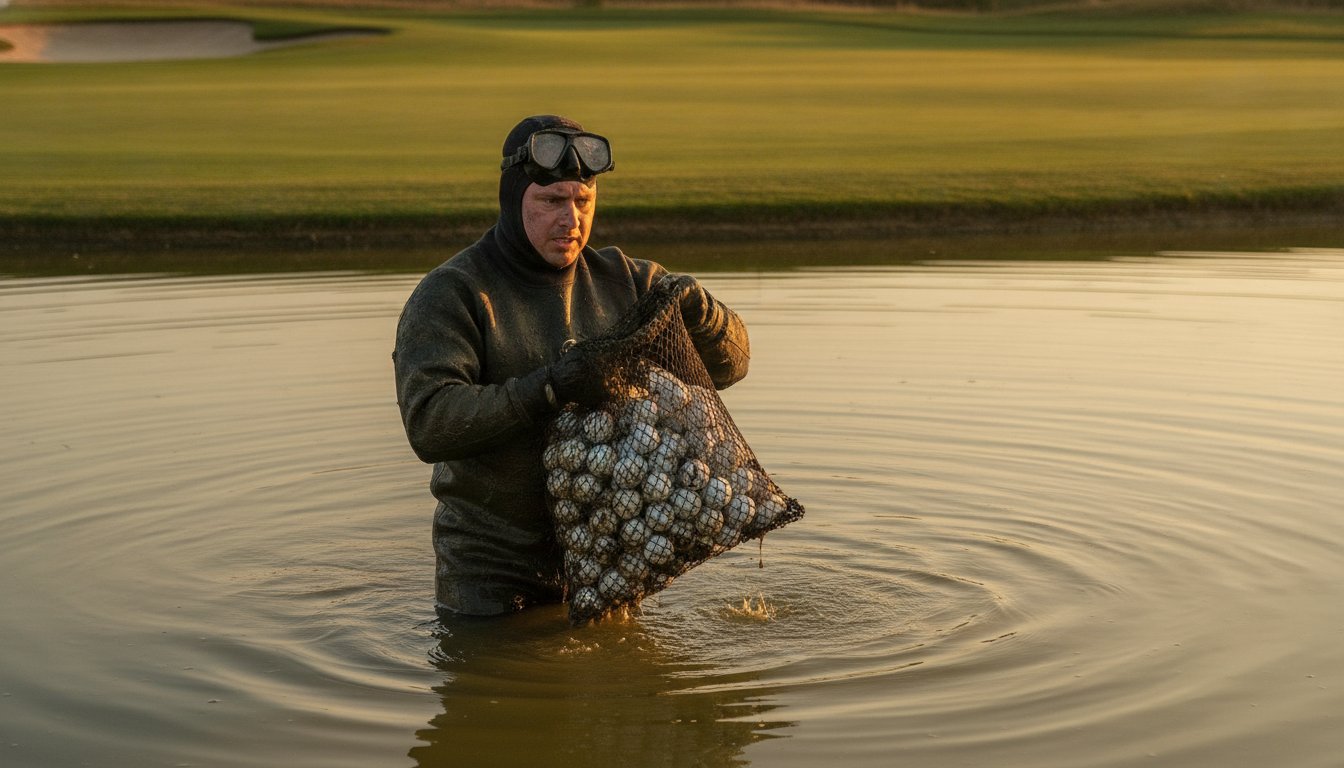
What if your next sleeve of Titleist Pro V1s cost less than a post-round beer just because someone was willing to swim with alligators to get them? It is a wild thought, but it is the reality of the secondary market. You probably hate shelling out $55 a dozen for premium balls only to watch them vanish into a murky pond on the third hole. We feel that pain. That is why learning how professional divers retrieve golf balls is the ultimate insider hack for any savvy player. These pros dive into zero-visibility hazards to rescue millions of balls every year, turning one golfer’s bad shot into your best bargain.
We are pulling back the curtain on the high-stakes world of commercial ball recovery. You will learn about the strict OSHA safety standards, the specialized gear, and the massive environmental cleanup happening beneath the surface. We will show you why a Mint 5A recycled ball performs just like a brand-new one, giving you the confidence to play the best brands without the retail sting. Get ready to see the grit, the mud, and the professional process that makes your next low-cost round possible.
Key Takeaways
- Discover the specialized gear and high-stakes grit behind how professional divers retrieve golf balls from murky course hazards.
- Learn about the dangerous wildlife and environmental risks pros face to keep millions of premium balls in play.
- Understand the rigorous sorting and cleaning process that transforms pond muck into Mint 5A performance gear.
- Stop overpaying at retail and see how professional recovery lets you play top-tier brands for a fraction of the cost.
- Support a sustainable golf ecosystem by choosing reclaimed balls that help clear plastic from delicate waterways.
The Murky Reality of Professional Golf Ball Harvesting
Millions of golf balls disappear into the drink every single year. It is a massive problem for course managers and a gold mine for those who know where to look. When we talk about how professional divers retrieve golf balls, we are not talking about some guy in a wetsuit sneaking onto the 17th hole at midnight. This is a legitimate, high-volume industry. Professional retrieval is a contracted service that turns murky water hazards into a sustainable source of premium gear.
Courses hire pros for three main reasons: liability, environmental stewardship, and revenue sharing. A random person diving into a pond is a legal nightmare. A professional team with OSHA-compliant training is a solution. We clear out the plastic that would otherwise sit for decades, and the course gets a cut of the recovery value. At Golf Ball Monkey, we treat every dive like a high-stakes treasure hunt. We know that every bag pulled from the silt contains potential Titleist Pro V1 (Mint 5A) gems that belong back on the fairway.
The Contractual Play: How Divers Get In
You can’t just show up with a tank and start swimming. Professional divers sign exclusive rights agreements with golf courses. These contracts give the diver sole permission to harvest the ponds. We time these sweeps carefully, often hitting the water right before or after major tournaments when the inventory is at its peak. It is a vital part of pond maintenance. Removing thousands of balls prevents the buildup of plastics and heavy metals, keeping the ecosystem balanced while we restock your bag with high-performance gear.
The Daily Grind: A Day in the Life
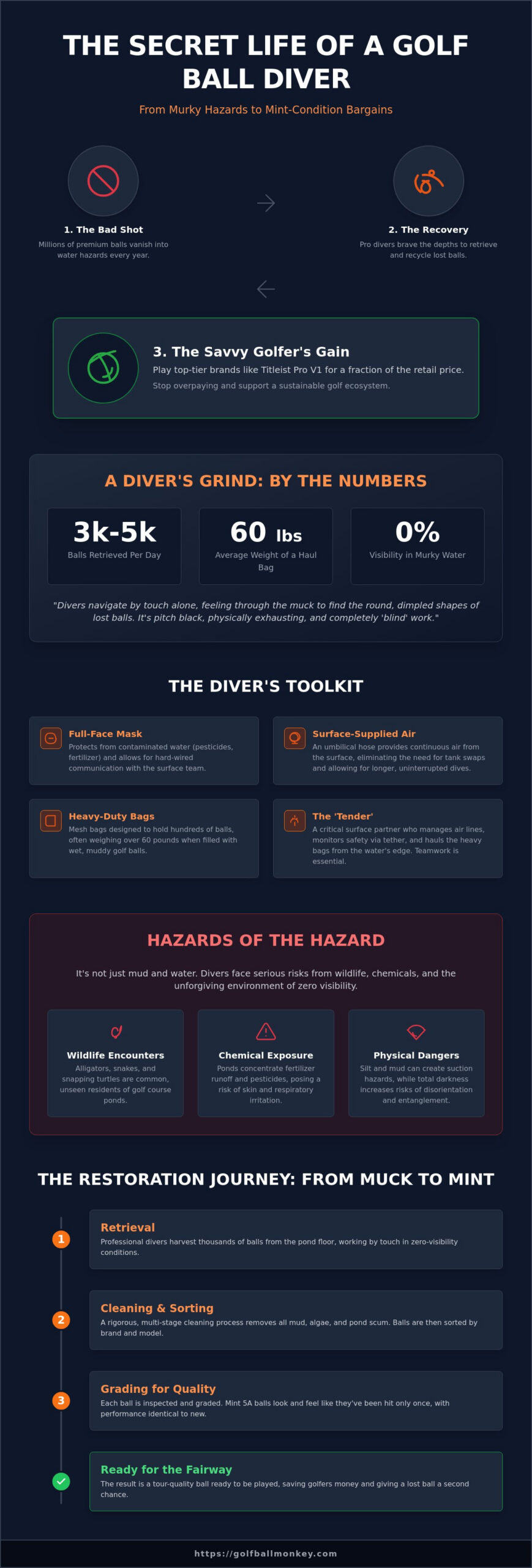
The work starts while you are still drinking your morning coffee. It is pitch black, physically exhausting, and completely “blind.” Divers often can’t see their own hands in front of their masks. They navigate by touch, feeling through the muck to find the round, dimpled shapes of lost balls. Industry standards show a pro can retrieve between 3,000 and 5,000 balls in a single day. Imagine hauling 60-lb bags of wet, muddy balls up a slippery bank for six hours straight. It takes serious grit. If you are claustrophobic or afraid of what’s lurking in the dark, this isn’t the job for you. It is a grueling grind, but for the savvy insider, it’s the secret to the best deals in golf.
The Diver’s Toolkit: Gear That Goes Beyond the Tank
Forget the colorful fins and tropical snorkels. When we look at how professional divers retrieve golf balls, the gear looks more like industrial salvage than a weekend at the beach. Standard scuba setups don’t cut it in the zero-visibility muck of a water hazard. These professional recyclers rely on commercial-grade equipment designed for survival and high-volume harvesting. It is a specialized world where durability beats aesthetics every time.
Pros use full-face masks for two critical reasons: communication and contamination. Course ponds are often concentrated with fertilizer runoff and pesticides. A standard regulator leaves your face exposed to these chemicals. A full-face mask keeps the muck out and allows for hard-wired comms with the surface support team. To move the heavy hauls, divers use heavy-duty mesh bags. A single bag can hold hundreds of balls, often weighing over 60 pounds. Once filled, lift bags use compressed air to float that weight to the surface, saving the diver’s back and energy.
Specialized Retrieval Tools
Precision matters when you are working by touch alone. While hand-harvesting is the most common method, some pros use mechanical rollers or underwater vacuums for massive volume on flat pond bottoms. The “Blind Touch” is a legendary skill in the industry. In total darkness, your fingers become your eyes. A seasoned pro can distinguish between a smooth river stone and a dimpled Titleist Pro V1 (Mint 5A) in a split second. This tactile sorting ensures only the best gear makes it into the bag while leaving the “rocks” behind.
Safety and Communication Systems
Safety is the top priority in these hazardous environments. Many professionals ditch the traditional back-mounted tank for surface-supplied air. An umbilical hose runs from a compressor on the bank directly to the diver’s mask. This setup allows for hours of continuous work without the need to surface for a tank swap. Every diver works with a “tender” on the shore. This surface partner manages the air lines, monitors the tether, and hauls the heavy bags up the bank. It is a coordinated team effort where communication prevents accidents in the silt. You can grab these pro-recovered balls and save a fortune on your next round thanks to this high-tech grit.
Hazards of the Hazard: Gators, Snakes, and Silt
Diving into a golf course pond is not exactly a spa day. While you are worrying about your slice, the pros are worrying about what is biting back. Understanding how professional divers retrieve golf balls requires looking past the gear and into the teeth of the environment. It is a high-stakes workplace where the wildlife is just the beginning of your problems. The water is often a thick, brown soup that hides everything from jagged metal to territorial predators.
The “Big Three” of wildlife are always top of mind: alligators, snapping turtles, and water moccasins. In states like Florida and Texas, these are not just myths; they are coworkers. Divers use the “tap” method, poking the pond floor with a pole or a heavy bag to check for resting gators before they descend. They also avoid certain ponds during nesting seasons to keep the peace. One of our divers once bumped into a massive snapper in zero visibility. It is a heart-pounding reality that makes our premium recycled balls feel like a hard-won prize.
Wildlife Management Underwater
- The Tap Method: Divers use tactile feedback to clear a landing zone before committing to the silt.
- Nesting Awareness: Professionals track local wildlife cycles to stay out of the way during aggressive seasons.
- Monkey Stories: Our crew has seen it all, from curious gators to snakes hitching a ride on a collection bag.
The Dangers of the “Invisible”
The things you cannot see are often the most dangerous. According to the Career Outlook for Golf Ball Divers, the environment is typically “black water,” meaning zero visibility. You aren’t just swimming; you are navigating a maze of discarded fishing lines, submerged shopping carts, and even the occasional sunken golf cart. Entanglement is a constant risk. Then there is the chemical cocktail. Fertilizer runoff and pesticides create a toxic soup that can lead to nasty infections. Professional training is the only thing that prevents accidental drowning in these “blind” conditions.
Safety protocols are the only thing standing between a successful harvest and a disaster. This is not a hobby for the weekend warrior. Professional divers follow strict standards, including standby divers and specialized decontamination procedures. They treat every hazard like a commercial job site because it is one. This level of risk management is why professional retrieval is the only safe way to reclaim these lost millions. It ensures the environment stays clean while your budget stays intact.
The Restoration Journey: From Muck to Mint 5A
The heavy lifting is over, but the factory magic is just beginning. Knowing how professional divers retrieve golf balls is only half the story. The real value for your bag happens after the dive. We take those muddy, silt-covered hauls and put them through a professional gauntlet. This ensures they perform exactly like they did the day they left the factory. We don’t just wash them; we restore their potential.
The journey starts with the initial sort. We dump the bags and immediately cull the “shag” balls. These are the ones with deep cuts, heavy discoloration, or structural damage. What remains is the high-value inventory. We focus on premium models like the Titleist Pro V1, separating them by brand and model before they ever see a drop of water. This first pass ensures only the best cores move forward.
Next comes the grading scale. This is where we define the value for your wallet. A Mint 5A ball is our top-tier standard. It looks and feels like it just came out of a fresh sleeve. It has the original gloss and perfect dimple integrity. Our Good 3A grade offers even more savings for those who don’t mind a minor surface scuff or a previous owner’s Sharpie mark. Both grades deliver the performance you need without the retail markup.
The Cleaning Process
We use proprietary, eco-friendly cleaning solutions to strip away pond grime. This process is delicate. We never use abrasive chemicals that could damage the urethane cover. Crucially, we never “refurbish” or “repaint” our inventory. Repainting a ball fills in the dimples and ruins the aerodynamics. Authenticity is our promise. If a ball doesn’t look great after a wash, it doesn’t make the cut. Every ball undergoes a final inspection to ensure it is tour-ready before it reaches your door.
The Science of Submersion
Let’s bust a major myth. Modern golf balls are not sponges. High-tech solid-core construction means they don’t “absorb” water like the old wound-center balls of the past. Professional testing shows that modern balls can stay submerged for significant periods with virtually zero loss in ball speed or distance. This is why “professional recycled” balls are a different breed than random “lake balls” you might find in a bucket at a garage sale. We only sell the ones that have maintained their structural integrity. Are Used Golf Balls Worth It? The data says yes. You get elite performance for a fraction of the cost.
Stop paying the “new ball tax” and start playing smart. Check out our latest arrivals and get back on the fairway for less.
The Savvy Play: Why Professional Recovery Wins
You have seen the mud. You have heard about the gators. You understand the high-tech gear required for the job. Now that you know how professional divers retrieve golf balls, it is time to reap the rewards of their hard work. This isn’t just about finding lost equipment; it is about making the smartest play for your game and your wallet. Professional recovery bridges the gap between the elite gear you want and the realistic budget you have. It is the ultimate win-win for the modern golfer.
The financial win is undeniable. Why pay full retail for a box of balls that might end up back in the pond on your very next hole? When you choose our reclaimed inventory, you get Titleist Pro V1 performance for a fraction of the standard retail price. It is the ultimate insider secret. You are playing the same high-compression, tour-level technology as the pros, but you are doing it at a price point that lets you swing with total confidence. No more “water ball” anxiety on those tight par threes.
Quality is never a question because our divers are the first line of defense. Since Golf Ball Monkey was founded by professional divers in 2014, we know exactly what to look for in a reclaimed ball. Our team vets the inventory before it even leaves the course. This “eyes on the ground” approach means we only harvest from the most premium courses. The Monkey personally ensures every Mint 5A ball meets our rigorous standards. We don’t just sell used balls; we sell professional-grade equipment that has been vetted by the people who rescued it.
Sustainability on the Green
Every ball rescued is a win for the environment. Golf balls are essentially chunks of plastic and rubber that do not belong in our delicate ecosystems. By supporting the way how professional divers retrieve golf balls, you are helping clear millions of these items from our waterways every year. It is a perfect circular economy. We take what was lost, restore it to its former glory, and put it back on the tee. Buying recycled is the most environmentally conscious choice any golfer can make. It reduces the carbon footprint of manufacturing new gear while keeping our ponds clean.
Join the Monkey Crew
It is time to stop overpaying for “new” gear that loses value the second you hit it. Join the community of savvy players who value performance over shiny packaging. If you are just looking to get some reps in, grab a Mixed Bag for your next practice session. It is the most cost-effective way to keep your game sharp without breaking the bank. When you are ready for the tournament or the weekend skins game, step up to the best. Shop the Mint 5A Collection Today and see why the savvy play is always the winning play.
Elevate Your Game Without the Retail Sting
You now know the grit it takes to bring elite gear back to the surface. From dodging territorial wildlife to navigating zero-visibility silt, the professional process of how professional divers retrieve golf balls is a high-stakes mission designed to save your budget. Golf Ball Monkey is proud to be professional diver owned and operated. We reclaim millions of balls annually, turning underwater hazards into your secret weapon on the fairway.
Our Mint 5A Quality Guarantee ensures you receive tour-level performance without the retail markup. You are getting the same premium models you trust, but at a price that lets you swing with total freedom. It is the smartest play in golf. You protect the environment, support a sustainable circular economy, and keep your gear bag stocked with the best brands in the game.
Stop Overpaying for Premium Balls—Shop Golf Ball Monkey Now!
Load up your bag and get back out there. The course is calling, and your next low-cost round is just a click away. We will see you on the first tee.
Frequently Asked Questions
Is it illegal to retrieve golf balls from a course pond?
It is illegal to retrieve balls without an exclusive contract from the course management. Jumping a fence to grab balls is considered trespassing or theft. Professional companies sign legal agreements to harvest hazards, ensuring the course gets a cut of the revenue. This professional approach is exactly how professional divers retrieve golf balls while staying on the right side of the law.
How much do professional golf ball divers make?
The average annual pay for a golf ball diver in the United States is $40,728. Most professionals earn between $26,000 and $49,500 per year depending on their location and experience. Some divers work on a pay-per-ball basis, typically receiving between $0.05 and $0.15 for every ball they pull from the muck. It is a grueling job, but top earners can reach over $62,000 annually.
Does staying underwater ruin a golf ball’s performance?
Modern golf balls do not lose performance from being submerged in water. High-tech solid cores don’t absorb water like the old wound-center balls did. Independent testing shows that even after weeks underwater, a premium ball like a Titleist Pro V1 maintains its distance and spin. We only sell balls that pass our strict Mint 5A grading standards to ensure you get tour-level performance.
What is the difference between a ‘recycled’ and a ‘refurbished’ golf ball?
Recycled balls are simply cleaned and graded, while refurbished balls are stripped and repainted. You should avoid refurbished balls because the extra layer of paint ruins the dimple aerodynamics and changes the ball’s flight. At Golf Ball Monkey, we only sell recycled balls. This preserves the original factory cover and ensures the ball flies exactly as the manufacturer intended.
What kind of equipment do I need to start golf ball diving?
You need commercial diving certification and OSHA-compliant gear to do this professionally. This includes a full-face mask, a surface-supplied air system, and heavy-duty mesh bags. Most importantly, you need a liability insurance policy and a signed contract with a course. It is a specialized trade that requires much more than just a standard SCUBA tank and a pair of fins.
How many golf balls are lost in ponds every year?
Millions of balls are lost in water hazards across the country every single year. A single professional diver can retrieve between 3,000 and 5,000 balls in a single day of work. This massive volume is why professional retrieval is so important for keeping course ponds clean. It is a vital part of the industry that keeps millions of pieces of plastic out of the environment.
What happens to the golf balls that are too damaged to sell?
Balls that don’t meet our high grading standards are sorted into “shag” or practice bags. These are perfect for the driving range or backyard chipping where looks don’t matter as much as the price. If a ball is structurally compromised or too damaged for practice, it is sent to a specialized recycling facility. We make sure every piece of plastic is handled responsibly.
Can you find gators in every golf course pond?
Alligators are a very real threat in Southern states like Florida, Texas, and Louisiana. While they aren’t in every pond, professional divers always assume a predator is present in warm climates. They use safety protocols like the “tap” method to check for wildlife before entering the water. Knowing how professional divers retrieve golf balls safely means understanding that wildlife management is part of the daily grind.
- golfballmonkey@gmail.com
- (512) 593-8401
- Mon – Fri, 9:00 AM – 5:00 PM

All product and company names are trademarks™ or registered® trademarks of their respective holders.
Use of them does not imply any affiliation with or endorsement by them.