
Are Lake Balls Bad for Your Clubs? The Truth About Scuffs, Water, and Your Bag
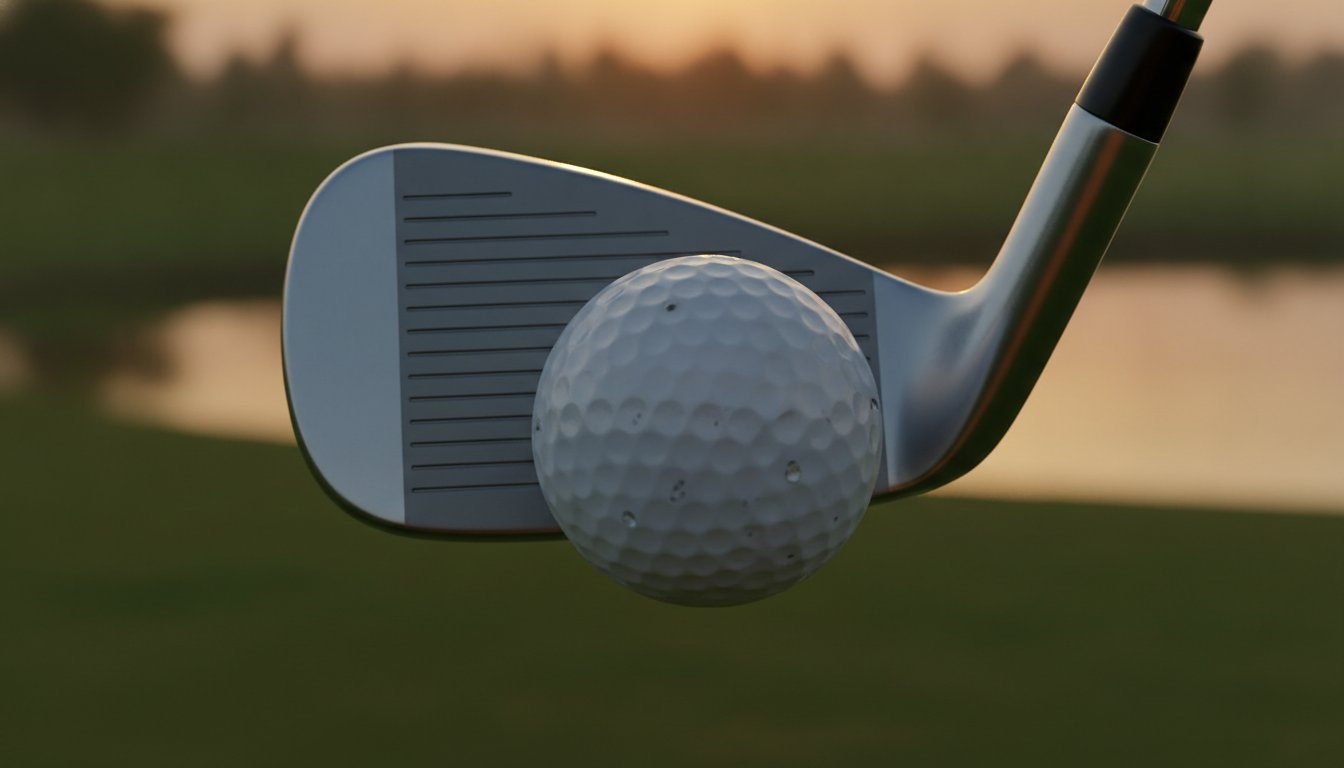
You just dropped a paycheck on a set of precision-milled irons. The last thing you want is to chew up those faces with “pond scum” specials. But are lake balls bad for your clubs, or is that just a myth cooked up by retailers to keep you paying nearly $60 for a fresh dozen? We get it. You want the massive savings, but you refuse to sacrifice your equipment’s longevity or your scorecard.
It is natural to worry about scuffs and performance loss when you are fishing for value. However, your clubs aren’t actually afraid of the water. They are afraid of grit, hidden surface damage, and the nasty chemicals used on “refurbished” balls. Discover why pro-grade recycled balls won’t wreck your bag provided you know what to look for. We are breaking down the science of cover integrity, the reality of moisture absorption, and how to spot the difference between a raw find and a Mint 5A Titleist. Get ready to save a fortune while keeping your grooves sharp and your peace of mind intact. It is time to make the intelligent play for your bag and your budget.
Key Takeaways
- Stop worrying about “water-logged” balls denting your expensive irons; modern clubfaces are far tougher than any submerged golf ball.
- Learn why water absorption actually makes a ball lose speed and feel “dead” rather than becoming a club-killing rock.
- Discover why “refurbished” balls are the real risk to your gear because they hide defects under fresh paint and clear coats.
- If you’re asking are lake balls bad for your clubs, the real culprit is surface grit and sand found on unwashed “woods” balls, not the water itself.
- Save 50-70% on premium Titleist Pro V1s by choosing professional Mint 5A recycled balls that are vetted for safety and performance.
The Million-Dollar Question: Can a Lake Ball Actually Damage Your Clubs?
You just spent a small fortune on a new driver with a face thinner than a wafer. It is designed for maximum “trampoline effect” and blistering ball speeds. Naturally, you might hesitate before teeing up a ball that spent six months at the bottom of a pond. If you are constantly asking are lake balls bad for your clubs, let’s clear the air immediately. The short answer is a resounding no. A standard golf ball, even one that has been submerged, will not dent, crack, or break a modern clubface during normal play.
The fear usually stems from the “heavy ball” myth. Some golfers believe that water-logged balls turn into literal rocks that can cave in a titanium driver face. This is simply not how physics works on the course. Modern driver faces are engineered to withstand impacts at speeds exceeding 150 mph. Adding a microscopic amount of water weight to a ball does not change the structural reality of the impact. Your clubs are built for battle. A used ball is not going to win that fight.
Understanding Clubface Durability
Think about the materials involved. On one side, you have high-grade titanium or hardened stainless steel. On the other, you have Modern golf ball construction utilizing Surlyn or Urethane covers. In every collision, the softer material deforms. The yield strength of a modern titanium driver face is significantly higher than the maximum compression force any golf ball can exert, ensuring the ball gives way long before the metal does. Whether the ball is brand new or a seasoned lake veteran, it remains the “soft” object in the equation. While you might see cosmetic scratches from dirt or sand, the structural integrity of your expensive gear is safe.
The ‘Heavy Ball’ Myth Debunked
Does water absorption make a ball heavy enough to matter? Not really. While modern balls can absorb a tiny amount of moisture if the cover is compromised, it does not turn them into lead weights. Instead of becoming “harder,” water-logged balls actually become “dead.” The core loses its elasticity, which leads to a softer feel and a massive drop in ball speed. If you hit a ball and it feels like a brick, your ears might be tricking you. The change in internal density alters the vibration and sound of the shot. This “thud” sounds dangerous, but it is just a sign of a degraded core, not an over-pressure impact. If you want to avoid that dead feel without paying retail, check out our recycled inventory where we sort out the duds for you. You get the performance of a premium ball without the “pond rock” anxiety.
The Science of Water Absorption: Weight, Hardness, and Impact
Let’s get into the nitty-gritty of why your clubs aren’t in danger. Many golfers worry that a ball sitting in a hazard becomes a “heavy” rock. It’s a common fear when asking are lake balls bad for your clubs. The reality is that moisture absorption doesn’t make a ball harder; it makes it slower. Modern multi-layer balls use hydrophilic materials in their mantle layers. These layers can draw in tiny amounts of water over long periods. This moisture interferes with the core’s ability to snap back after impact. In technical terms, the Coefficient of Restitution (COR) drops.
A ball with lower COR is a “dead” ball. It doesn’t spring off the face with the same energy. Because it’s less elastic, it actually transfers less peak force to your club than a brand-new Titleist. Your driver face is under less stress hitting a lake ball than hitting a fresh one out of the sleeve. Research into The Science of Water Absorption suggests that modern balls are incredibly resilient, even after 12 months underwater. They don’t explode. They don’t turn into grenades. They just lose a few yards of carry. The myth of the “exploding” lake ball is a relic of the past. Modern solid-core manufacturing has ended that era. Today’s balls are high-tech rubber and plastic sandwiches that stay together even if they’ve been submerged for a season.
Water and the Multi-Layer Core
After 24 hours in a hazard, the mantle layer acts as a shield. Even if moisture eventually gets through, it affects the “spring” of the ball. A loss of spring protects your club. It’s like the difference between hitting a trampoline and hitting a mattress. The mattress (the lake ball) absorbs more energy, putting less strain on the club’s “yield strength.” You’re not hitting a rock; you’re hitting a ball that has lost its mojo. This energy loss is why you might see a 3 mph drop in ball speed, but that’s a performance issue, not a club-safety issue.
Hardness vs. Density
A “heavy” ball is just a ball that has lost its zip. A lake-soaked Pro V1 will still have a lower compression rating than a brand-new, entry-level distance ball. Your swing speed generates the force, not the age of the ball. Unless you are swinging like a long-drive pro, the impact of a used ball is well within the safety limits of your gear. If you want to skip the “pond-aged” duds and get the good stuff, take a look at our curated inventory where we grade everything for you. We filter out the duds so you can play with confidence and save cash.
Recycled vs. Refurbished: Which Is Safest for Your Gear?
Not all second-hand balls are created equal. If you are still asking are lake balls bad for your clubs, the answer depends entirely on whether you are hitting a recycled ball or a refurbished one. Savvy golfers know that “refurbished” is a major red flag. These balls are the real villains in the used market. They aren’t just cleaned; they are structurally altered in ways that can actively harm your high-end equipment. Recycled balls, on the other hand, are simply found, washed, and graded. Nothing is added, and nothing is taken away. It is the difference between a professional car wash and a cheap, thick Maaco paint job that hides a rusted frame.
The Hidden Dangers of Refurbished Balls
Refurbished balls go through a brutal process. To hide scuffs and player markings, they are often sandblasted. This strip-mining of the cover alters the dimple pattern, which ruins the aerodynamics. Worse, it creates a micro-abrasive surface. When you strike a refurbished ball, you are essentially hitting your clubface with high-speed sandpaper. This “sandpaper effect” can wear down the finish of your irons and wedges over time.
There is also the risk of paint transfer. Refurbished balls use generic clear-coats and paints that aren’t bonded the same way a factory Titleist or Callaway finish is. During a high-compression strike, these cheap chemicals can smear onto your clubface. This leaves behind a stubborn residue that is a nightmare to clean and can interfere with the spin consistency of your grooves. If you value your gear, stay far away from anything labeled “refinished” or “refurbished.”
Why Recycled is the Intelligent Play
Recycled balls are the gold standard for safety and savings. At Golf Ball Monkey, our process focuses on preservation. We use ultrasonic baths and mild soaps to remove pond scum and dirt without touching the original factory finish. A study on golf ball performance after water submersion confirms that the physical integrity of the ball remains intact even after being underwater. By choosing a Mint 5A golf ball, you are getting a product that is physically indistinguishable from a new one.
Our grading system ensures you never have to worry about abrasive surfaces or hidden defects. We vet every ball to ensure the cover is smooth and the core is active. It is the ultimate way to play premium gear without the premium price tag. For a deeper look at how we protect your game and your bag, check out our Decoding Grades: What Mint 5A Really Means article for the full breakdown. Save your money, save the planet, and most importantly, save your clubs from the “sandpaper” traps of the refurbished market.
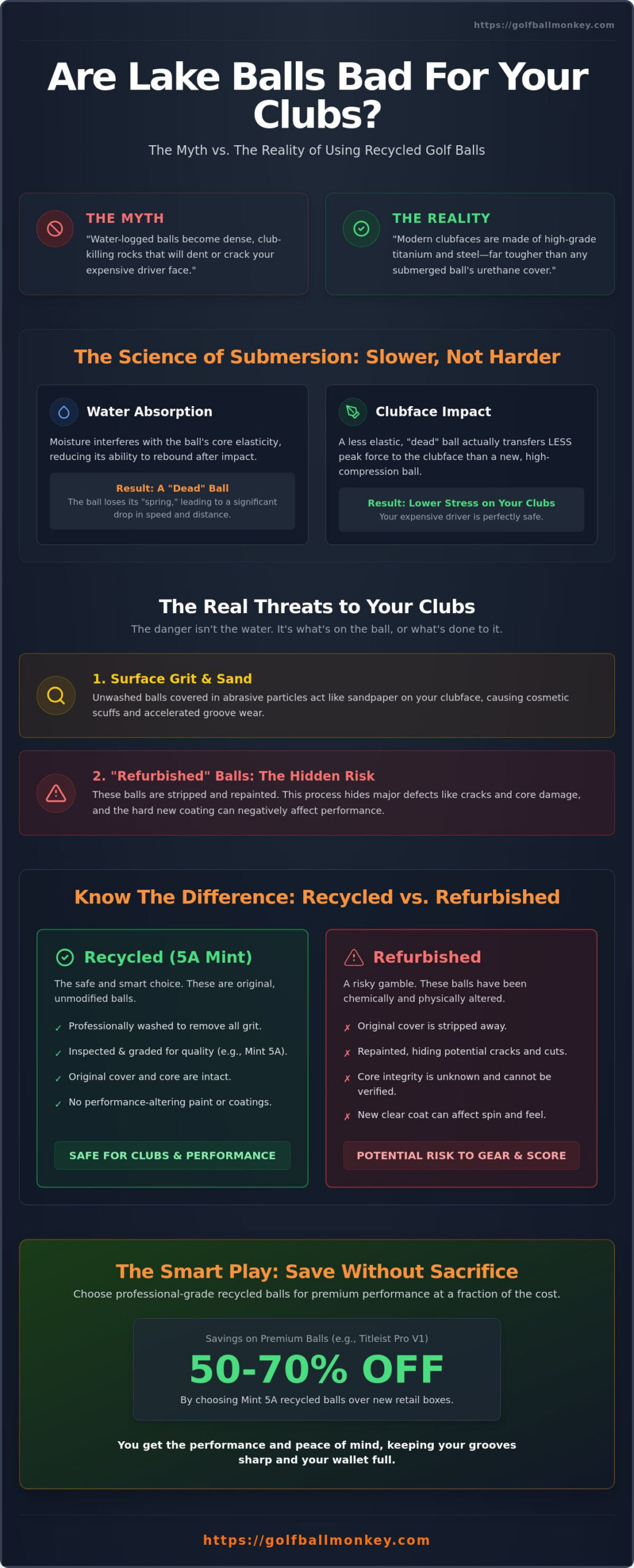
The Real Danger to Your Clubs (It’s Not the Water)
Forget the “heavy ball” scare stories. If you want to know are lake balls bad for your clubs, you need to look at what is stuck to the cover, not what is inside the core. The real enemy of your expensive irons and wedges is grit. Many golfers fall into the “Found Ball” trap. They find a ball in the woods, wipe it on their towel, and tee it up. This is far riskier than playing a professionally cleaned lake ball. A ball that has been sitting in the dirt or sand for months develops a layer of microscopic debris that acts like liquid sandpaper on your clubface.
Sand and grit are much harder than the steel or titanium on your club. When you strike a dirty ball, those tiny particles are crushed between the ball and the clubface. This creates micro-scratches that dull your finish and round off your grooves. While a lake ball has been “rinsed” by the water, a woods ball is often caked in abrasive minerals. It is the surface integrity that matters most for the health of your bag. Professional cleaning removes these hazards, but a quick wipe with a towel doesn’t.
Grit: The Groove Killer
Your wedges rely on sharp, clean grooves to generate spin. If you hit balls covered in “pond crust” or dried mud, you are essentially filing down those grooves with every swing. This grit doesn’t just scratch the surface; it builds up inside the grooves. This reduces friction and leads to inconsistent spin rates and unpredictable ball flight. Never hit a ball that hasn’t been deep-cleaned. If you want to keep your gear in top shape, check out our Golf Ball Accessories guide for the right tools to maintain a clean strike every time.
Scuffs and Surface Integrity
Scuffs and cuts are another major hazard. A deep gash from a cart path or a tree strike isn’t just an eyesore. Those jagged edges on the Urethane cover can leave microscopic scratches on your driver’s crown or the face of your shiny new irons. This is why we are so picky about our grading. While our Mixed Bag (Good 3A) balls are perfect for the shag bag or a casual practice round, they might have minor surface imperfections. For your premium gamers, stick to Mint 5A. These balls have a smooth, factory-fresh surface that glides across your clubface without leaving a mark.
Protect your investment by playing balls that have been vetted for surface quality. Grab a bag of Mint 5A Pro V1s today and stop worrying about your grooves. You get the tour-level performance without the risk of chewing up your equipment.
Smart Savings: How to Play Premium Balls Without Risking Your Bag
You have seen the science and debunked the myths. The verdict is clear. If you are still wondering are lake balls bad for your clubs, the answer is a hard “no,” provided you skip the “found” balls and the refurbished traps. The real secret to playing like a pro on a budget is knowing where your gear comes from. Professional retrieval is the game-changer. Our divers hit the hazards regularly to ensure balls don’t sit in the “soak” for years. This keeps the core snappy and the cover factory-fresh. It is the savvy insider’s way to stock a bag without draining a bank account.
Choosing high-grade recycled balls is the ultimate win-win. You get to play the world’s best equipment, like the Titleist Pro V1, while saving 50-70% off the standard retail price of approximately $58 per dozen. That is more cash for green fees and less stress when you inevitably find the water again. Beyond the savings, you are making an environmentally conscious choice. Every recycled ball played is one less piece of plastic left to degrade in a local ecosystem. You are saving your bag, your budget, and the planet in one swing.
The Golf Ball Monkey Quality Standard
We don’t just “find” balls; we curate them. Our professional divers are on a strict schedule to ensure inventory is retrieved before any significant degradation can occur. Every ball is put through a multi-stage cleaning and inspection process that removes every trace of abrasive grit. The 5A Mint promise is our verbal seal of approval. It means no scuffs, no hidden sand, and absolutely no club damage. Shop the Titleist Pro V1 (Mint 5A) collection to experience tour performance that looks and feels brand new.
Building Your Perfect Practice Bag
The smartest players segment their equipment. Don’t waste your Mint 5A gamers on the practice range or a backyard net. Instead, load up on Shag/Practice balls for your training sessions. These are the perfect cost-effective solution for grooving your swing without burning through your premium stash. Before any used ball touches your clubface, give it a quick “thumb-test.” If the cover feels chalky or you see a jagged “smile” from a previous thin shot, toss it in the shag bag. If the surface is smooth and clean, you are good to go. Your clubs are safe, the data is on your side, and the savings are massive. Now go hunt some birdies.
Play Smarter and Protect Your Bag
You’ve got the facts. Your high-end titanium and steel are built to handle the impact. The real danger isn’t the water; it’s the grit and chemicals found on low-grade “found” or refurbished balls. By choosing professionally retrieved recycled gear, you protect your grooves and your wallet at the same time. It’s about playing the smartest game possible without the retail price tag.
Thousands of savvy golfers nationwide already trust the Golf Ball Monkey process. Our professional divers retrieve inventory before it degrades. Our strict 5A/Mint grading standards ensure every ball is safe for your shiny new irons. Stop asking are lake balls bad for your clubs and start making the intelligent play for your next round. You get tour-level performance while keeping your equipment in showroom condition.
Stop overpaying and start saving. Shop Mint 5A Recycled Balls now!
Grab a bag, hit the course, and enjoy the thrill of a bargain that performs like new. Your game, your bag, and your budget will thank you. See you on the fairway.
Frequently Asked Questions
Do lake balls really lose distance?
Yes, they can, but it depends on the “soak” time. Scientific tests on Titleist Pro V1s show that balls submerged for extended periods can lose up to 3 mph in driver ball speed. This results in a distance loss of approximately 11 meters. While this affects your scorecard, it doesn’t hurt your clubs. Professional retrieval ensures you get balls that haven’t been soaking for years, keeping your carry distances consistent and your budget happy.
Can a water-logged ball dent my driver face?
No, your driver is safe. Modern clubfaces are made of high-grade titanium or steel designed to withstand extreme forces. A water-logged ball actually becomes less elastic, meaning it transfers less peak pressure to the face. It might feel like a “rock” because of the dead sound, but the ball will always deform before the metal does. You don’t have to worry about structural damage from used gear.
Is there a difference between recycled and refurbished golf balls?
There is a massive difference. Recycled balls are simply found, ultrasonic-cleaned, and graded by condition. Refurbished balls are sandblasted and repainted to hide defects. This process ruins the dimple pattern and can leave nasty paint residue on your wedge faces. If you are worried are lake balls bad for your clubs, avoid refurbished ones at all costs. Stick to Mint 5A recycled balls for total safety.
How long does a golf ball have to be in water before it’s ‘bad’?
It takes more than a quick splash. Modern golf balls are built with water-resistant covers, but moisture can seep in after 12 to 24 hours. Performance degradation usually becomes measurable after a ball has been submerged for several weeks or months. Our professional divers retrieve balls on a regular schedule to minimize “soak time.” This ensures the core stays active and the ball performs like it just came out of the box.
Will hitting dirty golf balls ruin my wedge grooves?
Yes, grit is the real club killer. Sand and microscopic debris trapped on the surface of a found ball act like sandpaper. Every strike grinds down the sharp edges of your grooves, which kills your spin rate. Professional cleaning removes this abrasive layer. Never hit a ball you just pulled out of the mud without a deep scrub. It is the best way to keep your wedges biting and your finish looking sharp.
Are Mint 5A used balls safe for tournament play?
They are 100% legal. The USGA and R&A care about whether a ball model is on the Conforming Golf Ball List, not whether it has been in a lake. Mint 5A balls are the highest grade available and are physically indistinguishable from new. Thousands of savvy golfers use them in tournaments to get tour-level performance for 50-70% less than retail prices. You get the same spin and control without the “new ball” tax.
How can I tell if a lake ball is water-logged?
It’s nearly impossible to tell with a visual check. A water-logged ball won’t look “swollen” or different on the outside. You only notice it at impact. It will have a dull “thud” sound and a “dead” feel, often resulting in a noticeable drop in distance. This is why we vet every ball in our inventory. Our grading process filters out the duds so you never have to guess on the tee box.
Why do some used balls feel harder than new ones?
It is usually a trick of the ears. When the core absorbs moisture, it changes how the ball vibrates against the clubface. This creates a different sound profile that many golfers interpret as “hardness.” In reality, the ball has likely become softer and less responsive. When people ask are lake balls bad for your clubs, they are often reacting to this sound. Rest assured, your equipment isn’t under any extra stress from these “dead” balls.
- golfballmonkey@gmail.com
- (512) 593-8401
- Mon – Fri, 9:00 AM – 5:00 PM

All product and company names are trademarks™ or registered® trademarks of their respective holders.
Use of them does not imply any affiliation with or endorsement by them.