
Color Golf Balls: The Savvy Player’s Guide to High-Visibility Performance
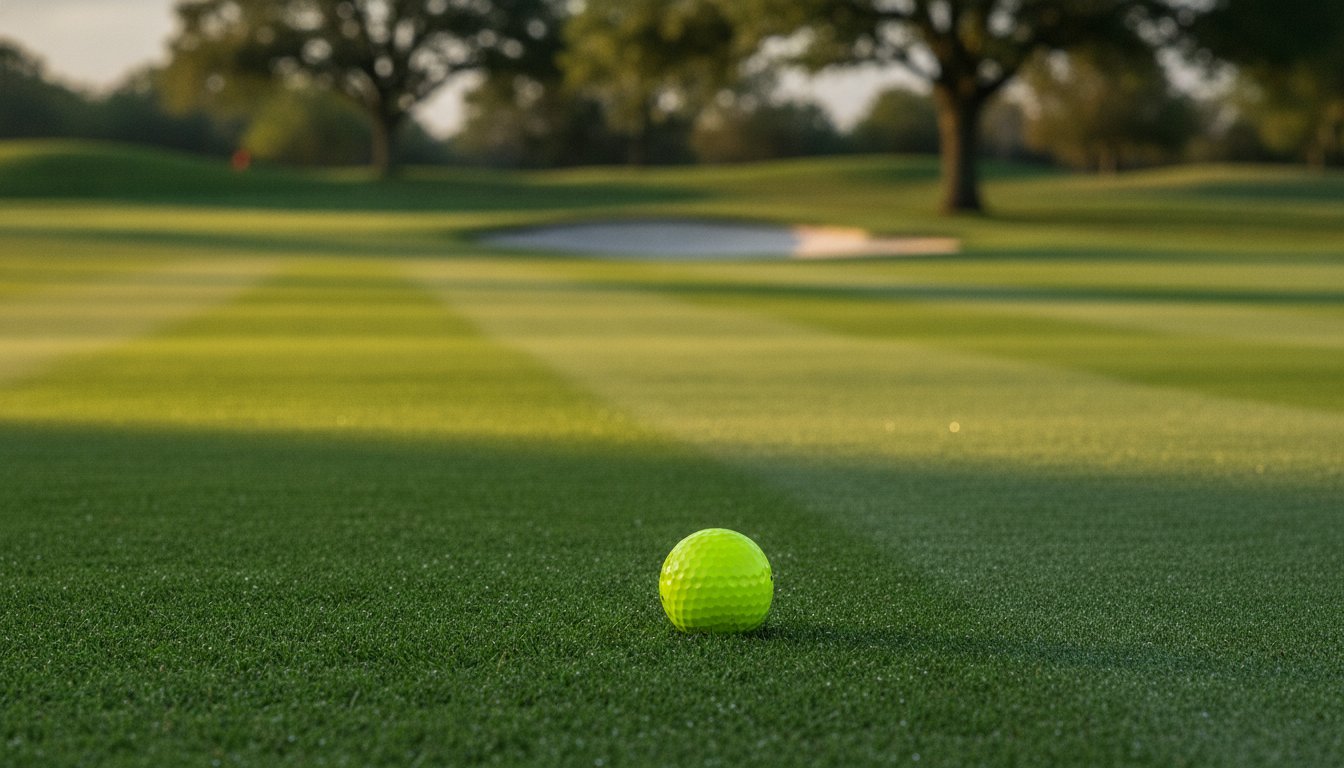
Why are you still squinting at the clouds like you’re tracking a UFO just to find your tee shot? That classic white ball is a camouflage master, hiding in gray skies and bright glare while you waste time and money. It’s time to admit that the “white balls only” tradition is a trap. Switching to high-visibility color golf balls is the tactical move you need to stop losing expensive gear in the rough and start focusing on your swing.
We know the struggle. You demand tour-level spin and distance but hate watching a premium ball vanish into the deep grass. The stigma that bright finishes are only for beginners or “mini-golf” is officially dead. As of August 2026, even the biggest names in the game are charging over $62 a dozen for yellow Pro V1s because the visibility benefits are undeniable. Color is a performance upgrade for your focus, not a downgrade for your game.
This guide shows you how to sharpen your visual tracking and find your ball faster on every hole. We will break down the USGA rules you need to know and explain why switching to high-vis gear is the smartest play for your scorecard. Get ready to discover how to maintain that 5A Mint performance while making your game a whole lot easier to see.
Key Takeaways
- Stop worrying about performance trade-offs; modern color golf balls use the exact same core and mantle technology as their premium white counterparts.
- Learn why “Optic Yellow” is the undisputed king of visibility and how it helps your brain track flight paths against challenging sky conditions.
- Discover how to pick the perfect hue for your environment, whether you’re playing on lush summer greens or dormant winter fairways.
- Master the “savvy play” by scoring Mint 5A recycled tour balls in high-vis finishes at a fraction of the standard retail cost.
What are Color Golf Balls and Why are They Trending?
Forget the old idea that neon balls belong on a mini-golf course. Modern color golf balls are high-visibility performance tools designed for serious players. They feature specialized covers or matte finishes that make them pop against the sky and grass. This isn’t just about looking different. It’s about seeing better. For a savvy player, choosing a high-vis ball is a tactical decision that affects everything from shot tracking to your final score.
The game has changed. For decades, white was the only acceptable choice for anyone with a low handicap. If you look back at the history of the golf ball, the transition from feathers and leather to modern polymers was slow. But the last decade saw a massive shift. Color moved from a novelty for beginners to a tour-level staple. When pros like Bubba Watson started bombing pink balls down the fairway, the “white-only” stigma vanished instantly. Manufacturers realized that even the best players in the world benefit from better visual feedback.
There is a real psychological edge here. Choosing a unique color helps you claim your space on the course. It builds confidence. You aren’t just playing another generic round. You’re playing your game with a ball that stands out from the crowd. It keeps your brain engaged and your eyes locked on the target. That extra bit of focus can be the difference between a birdie putt and a frustrated chip from the fringe.
The Evolution of High-Vis Tech
We’ve moved way beyond cheap paint that chips after one wedge shot. Today’s premium options use infused-color urethane shells. The color is baked into the material itself. This means your Titleist Pro V1 or Callaway Chrome Soft stays bright through every bunker shot and tree strike. Many manufacturers now offer matte finishes too. These non-glare surfaces are a game-changer on bright afternoons because they stop the sun from washing out your view of the ball. Major brands finally realized that the best players want their flagship tech in more than just standard white.
Visibility vs. Style: Finding the Balance
Tracking a ball at 150mph isn’t easy. High-vis colors help your eyes lock onto the flight path immediately. This reduces the lost ball penalty that kills your scorecard. You’ll spot your shot from the fairway while your buddies are still wandering in the tall grass. It also ends the “is this my ball?” confusion on the green. You can shop for premium used balls in these colors to get that elite performance without the retail sting. It’s the ultimate savvy move: better visibility, tour-level spin, and more money in your pocket for the 19th hole.
The Science of Visibility: Which Color is Actually Best?
Visibility is pure physics. Your eye is a biological sensor. It doesn’t see all light equally. Color golf balls work because they target the specific wavelengths our brains prioritize for motion tracking. While white reflects all visible light, it often washes out against clouds or bright haze. Tactical colors create a “visual break” that helps your brain lock onto the object instantly. This isn’t just a style choice. It’s a way to reduce eye strain and keep your focus sharp through eighteen holes.
Glossy finishes are the industry standard. They look sharp in the box. But on the course, they can be a liability. Sun glare off a glossy white ball can make it vanish at the peak of its arc. This is where matte finishes shine by not shining. They scatter light instead of reflecting it back at you. This creates a solid, flat block of color that remains visible even when the sun is directly overhead. It kills the glare and keeps your target in sight.
Yellow: The Universal Visibility King
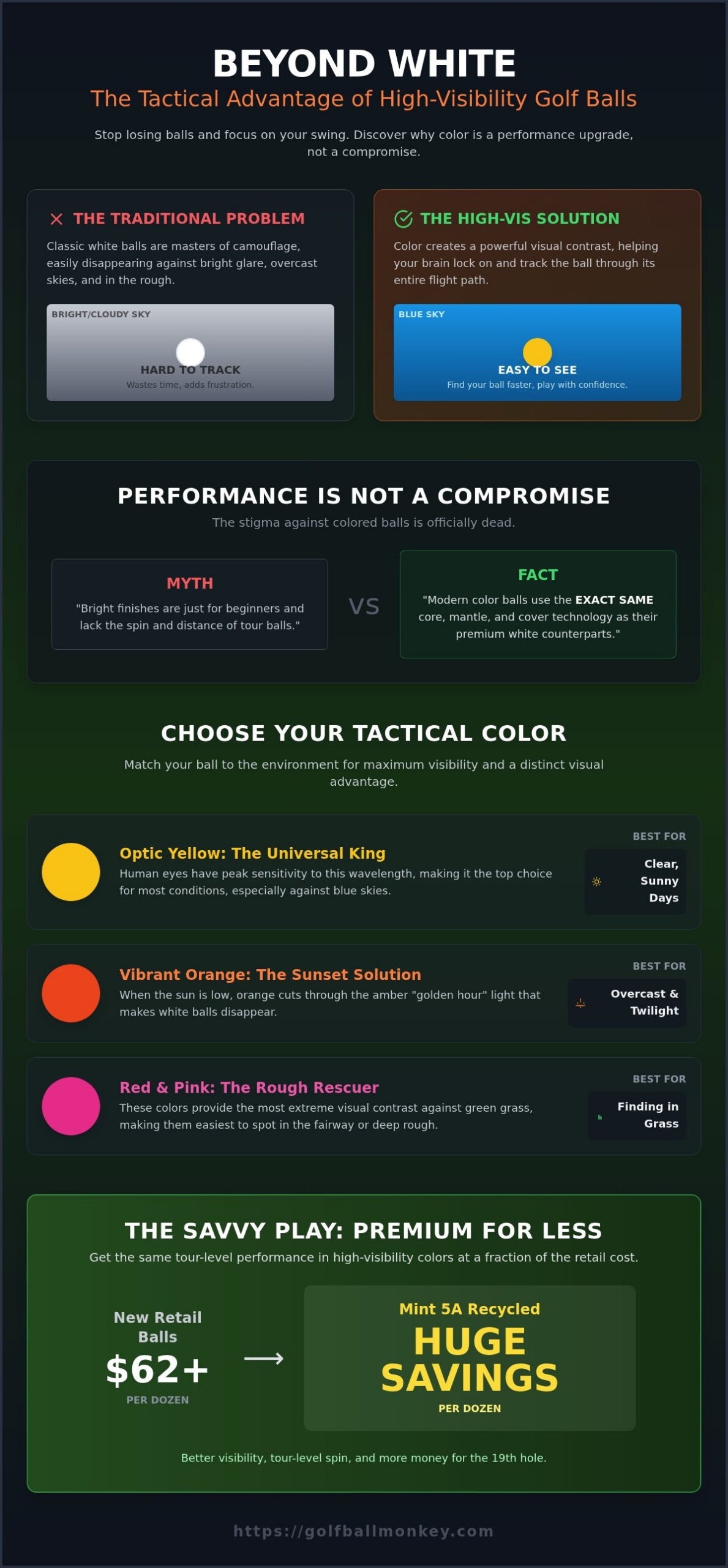
Yellow is the undisputed king of the fairway. Human eyes are biologically wired for peak sensitivity at a wavelength of 555 nanometers. This is exactly where “Optic Yellow” lives. It provides the most dramatic contrast against a deep blue sky. If you usually play under clear, sunny conditions, neon yellow is your best tactical advantage. It helps you track the ball from the moment of impact until it settles on the green. For those gray, overcast mornings, a softer pastel yellow can be easier on the eyes, preventing that “neon blur” effect.
Orange, Red, and Green: Tactical Uses
- Orange: This is the ultimate choice for “Golden Hour” rounds. When the sun dips low and the light turns amber, white balls become camouflaged. Orange stays sharp and easy to find.
- Red and Pink: These colors provide the most extreme contrast against green grass. If you tend to miss the fairway, red or pink balls are your best bet for fast retrieval in the thick stuff.
- Green: It sounds counterintuitive to play a green ball on a green course. However, neon green balls use a specific wavelength shift. They appear “electric” and much brighter than the natural greens of the turf, making them surprisingly easy to spot.
Finding the right balance between tech and visibility is the savvy move every player should make. Take a look at our selection of high-vis tour balls to see which color fits your environment. Don’t settle for white just because it’s traditional. Play the color that keeps your eyes on the prize. It’s the smartest way to lower your stress and your score.
Performance Myths: Do Color Golf Balls Fly Differently?
Let’s kill the biggest lie in golf: color is a performance killer. It’s not. If you think color golf balls are just painted-over rocks for the weekend hacker, you’re missing out on serious tech. The truth is that color is only skin-deep. Underneath that high-vis shell lives the exact same engineering that powers the world’s best white balls. Whether you’re playing a neon green or a classic white, the aerodynamics, ball speed, and spin rates are designed to be identical.
The stigma that colored balls are “soft” or “cheap” comes from an era when only low-tier manufacturers experimented with hues. That time is over. Today, the biggest brands in the sport put their best research into every color they produce. When you step onto the tee, you aren’t making a compromise; you’re making a tactical adjustment. You get the same wind-piercing flight and greenside control you expect from a premium ball, just with a much higher chance of actually finding it in the rough.
Identical Specs, Different Look
Manufacturers don’t build separate production lines for different colors. They use the exact same high-compression cores and multi-layer mantles found in their flagship white models. Take the Titleist Pro V1 for example. Whether it’s classic white or high-vis yellow, the internal specs are carbon copies of each other. Launch angle and ball speed remain unchanged by color choice. You get the same tour-level performance regardless of the hue on the cover.
The Matte Finish Factor
Then there’s the “matte drag” myth. Some skeptics claim the flat finish slows the ball down or kills distance. In reality, the difference is negligible for anyone without a tour-pro swing speed. Matte covers actually provide a unique benefit in the short game. The slightly porous texture interacts beautifully with your wedge grooves, offering a “grabby” feel that many players swear by for better spin control. While some testing suggests a tiny aerodynamic shift in heavy rain, the visibility gains far outweigh any microscopic loss in carry. Many golfers prefer the “soft” feel of a matte cover because it provides better tactile feedback on putts and chips.
What about scuffing? Modern infused-color shells are incredibly tough. They don’t chip or peel like the cheap painted balls of the 1990s. When you play Mint 5A recycled color golf balls, you’re getting a cover that has been vetted for integrity. These aren’t refurbished junk; they are professional-grade equipment that happened to take a dip in a pond. You get the same durability as a brand-new retail ball at a fraction of the cost. It’s the ultimate savvy play for your bag and your budget.
How to Choose the Right Color for Your Game
Choosing your gear shouldn’t be a guessing game. It’s about matching your equipment to the environment. You wouldn’t wear a parka in July. Why play a white ball in a sea of glare? Selecting the right color golf balls depends on three things: light, turf, and your own eyes. It’s a tactical shift. Savvy players know that the wrong hue can lead to eye fatigue and lost strokes. The right one keeps your head in the game.
Think about the season. Lush, green summer fairways are the perfect backdrop for high-vis yellow or pink. But once winter hits and the grass turns dormant and brown, those yellow balls can vanish into the tan landscape. That’s when orange or red becomes your best friend. Even your eye health matters. If you struggle with specific color-blindness, testing different wavelengths is essential. Some players find that matte finishes help them align putts better by stripping away distracting reflections on the green.
Matching Color to Lighting
Light changes everything. On those brutal, cloudless days, a glossy yellow ball can actually be too bright. It creates a halo effect. Try a matte finish to kill the glare. When the sky is “flat” or overcast, white balls become invisible against the gray. Switch to orange or neon green to cut through the haze. If you’re a dusk specialist squeezing in nine holes after work, neon is non-negotiable. These balls practically glow as the sun goes down, making ball retrieval a breeze even in the shadows.
Focus and Mental Game
Color is a powerful mental trigger. Use it to lock into your pre-shot routine. A bright ball acts as a visual anchor. It forces your brain to narrow its focus. Instead of seeing the whole ball, try focusing on a single dimple or a specific part of the logo. This level of concentration is what separates the pros from the hackers. Just be careful of “color fatigue.” If a neon ball starts to feel like it’s vibrating after four hours, keep a few classic white Pro V1s in the bag to give your eyes a rest. It’s all about balance.
Ready to upgrade your visual game? Don’t pay retail prices for pro-grade tech. You can grab Mint 5A color golf balls like the Callaway Chrome Soft or TaylorMade TP5 for a fraction of the cost. Get the performance you need and the visibility you want. Make the smart play today.
The Savvy Move: Get Premium Color Balls for Less
Let’s be real. Paying $60 or more for a dozen yellow tour balls is a total rookie mistake. It’s the kind of play that makes your wallet hurt before you even reach the first tee. Retail prices for premium color golf balls have skyrocketed. As of August 2026, some top-tier yellow models are hitting the $63 mark. That is a lot of cash to watch vanish into a water hazard. The savvy insider knows there is a better way to get that high-vis performance without the retail sting.
The secret is simple: Used Golf Balls. We aren’t talking about scruffy range rocks. We mean professional-diver-recovered gems from the best courses in the country. Our divers go where the balls are, pulling premium gear out of the hazards so you can put them back in play. It’s a sustainable cycle that keeps the planet clean and your bag stocked with elite equipment. You get the same multi-layer tech and high-vis covers at a fraction of the cost.
Grading is everything. If you want tour-level results, Mint 5A is the only way to play. This is our verbal seal of approval. A 5A ball looks and performs like it just came out of the box. There are no refurbishing tricks or fake covers here. It is just pure, recycled performance that has been personally vetted for quality. It’s the smartest play you can make in practice or on the scorecard.
Premium Brands in Color
You don’t have to settle for off-brand gear to save money. You can find the Callaway Chrome Soft in that electric high-vis yellow you love. We also carry TaylorMade TP5 color options that offer that signature five-layer flight for the savvy shopper. If you need maximum distance paired with visibility, the Srixon Z-Star color advantage is hard to beat. These are the same balls the pros use, just at a price point that makes sense for your budget.
Stock Up and Save
The best way to commit to the high-vis lifestyle is to stock up. Buying in bulk ensures you never have to panic-buy at the clubhouse pro shop. It also reduces the environmental impact of your game. Every recycled ball you play is one less piece of plastic sitting in a pond. It’s a win for the planet and a win for your wallet. Stop overpaying for gear that is just going to end up in the rough anyway. Ready to brighten your game? Shop our Mint 5A Color Golf Balls now!
Brighten Your Scorecard and Your Budget
You have seen the science. High-visibility gear is not just for show. It is a tactical tool that helps you track flight paths and find your ball faster in the thick rough. We have debunked the myths: modern color golf balls offer the same tour-level compression, aerodynamics, and spin as their classic white counterparts. Whether you choose optic yellow for clear skies or orange for the golden hour, you are making a smart play for your focus and your final score.
Why pay retail prices for gear that might end up in a pond anyway? The savvy insider knows that recycled is the smartest play for both the planet and the wallet. Our 5A Mint condition balls are recovered by professional divers from the best courses; this ensures you get like-new performance on every single shot. We even offer free shipping on bulk orders to make stocking up easier than ever. It is time to stop squinting at the sky and start swinging with total confidence. Score Mint 5A Color Golf Balls for a Fraction of Retail! Your game is about to get a whole lot brighter.
Frequently Asked Questions
Are yellow golf balls easier to see than white ones?
Yes. Optic yellow is the most visible color to the human eye. It sits right at the peak of our visual sensitivity. This makes it pop against blue skies and green grass. You’ll track your shot better and find it faster in the rough. It is a tactical upgrade for anyone tired of losing track of their ball mid-flight.
Do colored golf balls fly as far as white golf balls?
Yes. They fly exactly the same distance as white versions. The core, mantle, and dimple patterns are identical. Color is just a pigment in the cover or paint. You won’t see any drop in ball speed or carry. It is the same tour-level tech, just with a high-vis finish.
Is it legal to play color golf balls in tournaments?
Yes. USGA and R&A rules allow any color as long as the ball is on the conforming list. Just keep the “One Ball Rule” in mind for serious events. If that rule is in effect, you must play the same brand, model, and color for the entire round. For casual weekend games, play whatever color you want.
What is the best color golf ball for someone who is color blind?
Yellow is usually the winner. For red-green color blindness, yellow provides the best contrast against the turf. Some players find bright orange or neon pink works better depending on their specific vision. Matte finishes are also a great choice. They reduce glare that can make identification harder for color-blind golfers.
Do matte golf balls get dirty faster than glossy ones?
They can hold onto dirt a bit more than glossy balls. The matte surface is slightly more porous. This means mud or grass stains might stick a little better. However, a quick scrub with a wet towel usually brings that neon glow right back. It is a small trade-off for the massive reduction in sun glare.
Can I mix white and colored balls in my bag?
Go for it in casual rounds. There is no rule against having a rainbow in your bag for a Saturday morning game. It is a great way to test which color golf balls work best for your eyes. In competitive play, just verify if the “One Ball Rule” is active before you tee off.
Why are some colored golf balls more expensive than white ones at retail?
It comes down to manufacturing volume. White is the industry standard and produced in massive quantities. Adding pigments or matte finishes requires separate runs and specialized dyes. This often bumps the retail price up by a few dollars. It is why buying Mint 5A recycled balls is the smartest way to play color.
Which pro golfers use colored golf balls?
Bubba Watson is the most famous for his pink ball. Jerry Kelly and Fred Funk have also rocked yellow on the Champions Tour. You will see high-vis balls all over the LPGA tour as well. Pros realize that better visibility is a tactical advantage. If it works for them at the highest level, it will work for you.
- golfballmonkey@gmail.com
- (512) 593-8401
- Mon – Fri, 9:00 AM – 5:00 PM

All product and company names are trademarks™ or registered® trademarks of their respective holders.
Use of them does not imply any affiliation with or endorsement by them.