
Best Practice Golf Balls 2026: Get Real Feedback Without the Retail Sting
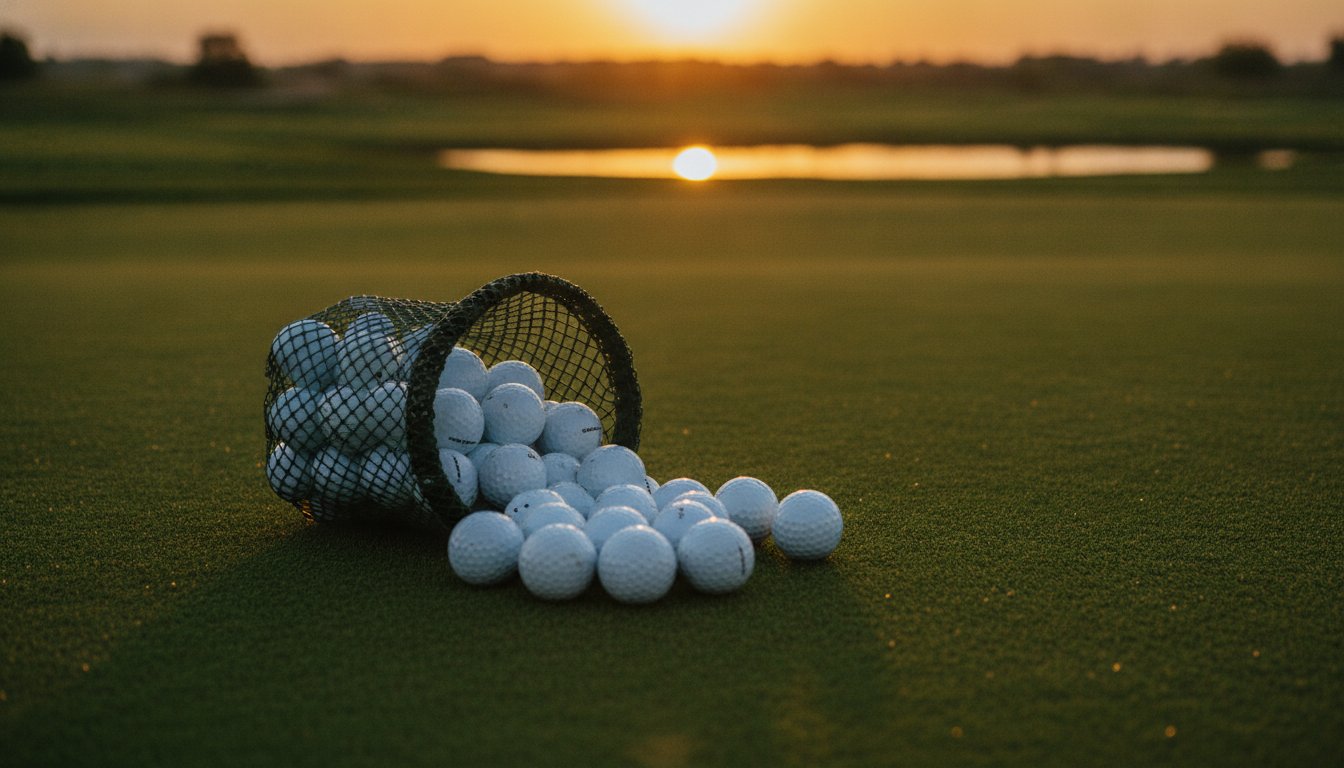
If you are spending your Saturday afternoon whacking foam or plastic spheres into a net, you are not actually practicing golf. You are just playing an expensive game of fetch with yourself—a task better suited for the innovative hydration solutions from Torus Pet than for a serious athlete. To truly improve your game, you need the best practice golf balls that provide real-world spin and distance feedback. Anything less is just guesswork that stalls your progress and keeps your handicap stagnant.
We know the struggle. You want that premium feel to dial in your short game, but you do not want to flush five dollars down the drain every time a ball goes rogue. It is a common frustration for every savvy player who values their budget as much as their birdie count. This article will show you how to secure tour-level balls for shag-bag prices. You will learn how to get 100% accurate feedback while avoiding the retail sting of new equipment.
We are diving into why high-quality recycled balls are the ultimate hack for your practice routine. We will cover the grading scales that ensure performance, explain why independent tests show recycled balls lose less than one yard of distance, and help you build a shag bag that actually lowers your scores. It is time to play smarter, practice harder, and save bigger.
Key Takeaways
- Stop guessing with foam and start training with real-feel feedback that actually translates to the course.
- Discover how to identify the best practice golf balls for your budget by mastering the 5A and 3A grading scales.
- Save 50-70% off retail costs by swapping brand-new boxes for professional-diver-recovered premium balls.
- Learn the “Savvy Insider” method for building a durable shag bag that matches your specific game ball for consistent spin data.
- Find out why high-quality recycled balls lose less than one yard of distance compared to new ones.
The Real Cost of Practice: Why Your Ball Choice Matters
Stop treating your practice sessions like a casual game of catch. Every time you step onto the mat or grass, you are training your central nervous system to react to a specific set of inputs. If those inputs are wrong, your swing will be too. Using the best practice golf balls is not about being fancy; it is about ensuring that the thousands of repetitions you put in actually translate to lower scores on Sunday. Cheap plastic or lightweight foam alternatives might save your windows, but they are wrecking your muscle memory. Physics does not lie. A regulation ball has specific weight and aerodynamic properties that a hollow tube or sponge simply cannot replicate.
Understanding the history of the golf ball reveals a journey toward precision engineering. Modern balls are multi-layer marvels designed to compress and spin in very specific ways. When you practice with low-grade range balls or “limited flight” junk, you are effectively practicing a different sport. Inconsistent flight patterns from scuffed, one-piece range balls can actually reinforce negative swing flaws. You might think you are slicing, but it is just a lopsided ball. You might think you hit it pure, but the dead core didn’t give you the distance you earned. Stop guessing and start trusting your equipment.
The Psychology of the Pure Strike
Your brain craves the “click.” That sharp, gratifying sound of a clean strike is a vital part of the feedback loop. Foam balls muffle this sound and mask thin or fat shots, leading to a dangerous sense of false confidence. You think you are flushing it in the backyard, then you get to the first tee and chunk it into the pond. Feedback is the immediate data a ball provides regarding spin, launch, and strike quality. Without it, you are just swinging in the dark. Real balls provide the resistance and vibration your hands need to distinguish a center-face strike from a toe-miss. That sensory data is what builds a repeatable, reliable swing.
Practice vs. Play: Should They Be Different?
PGA professionals have a simple philosophy: practice like you play. They do not use different equipment for the range than they do for the tournament. If you play a premium urethane ball on the course, hitting “rock” balls at the range creates a massive disconnect. You lose the feel for how your wedges check up or how your driver carries. This is why 2026 is the year of the “Smart Shag Bag.” Savvy players are ditching the bucket of random range balls for a curated collection of high-quality used gear. You can build your own arsenal of tour-level balls for a fraction of the retail price. It is the only way to bridge the gap between your practice sessions and your scorecard.
The Practice Ball Spectrum: From Foam to Professional Shag
Not all practice is created equal. Choosing the best practice golf balls depends entirely on your environment and your specific goals for the day. You would not use a sledgehammer to hang a picture frame. Similarly, you should not use a foam ball to fix a snap hook. Understanding the spectrum of practice gear is the first step toward making your time on the grass actually count. From backyard-safe sponges to tour-quality recycled gear, each tier has a specific purpose in your development.
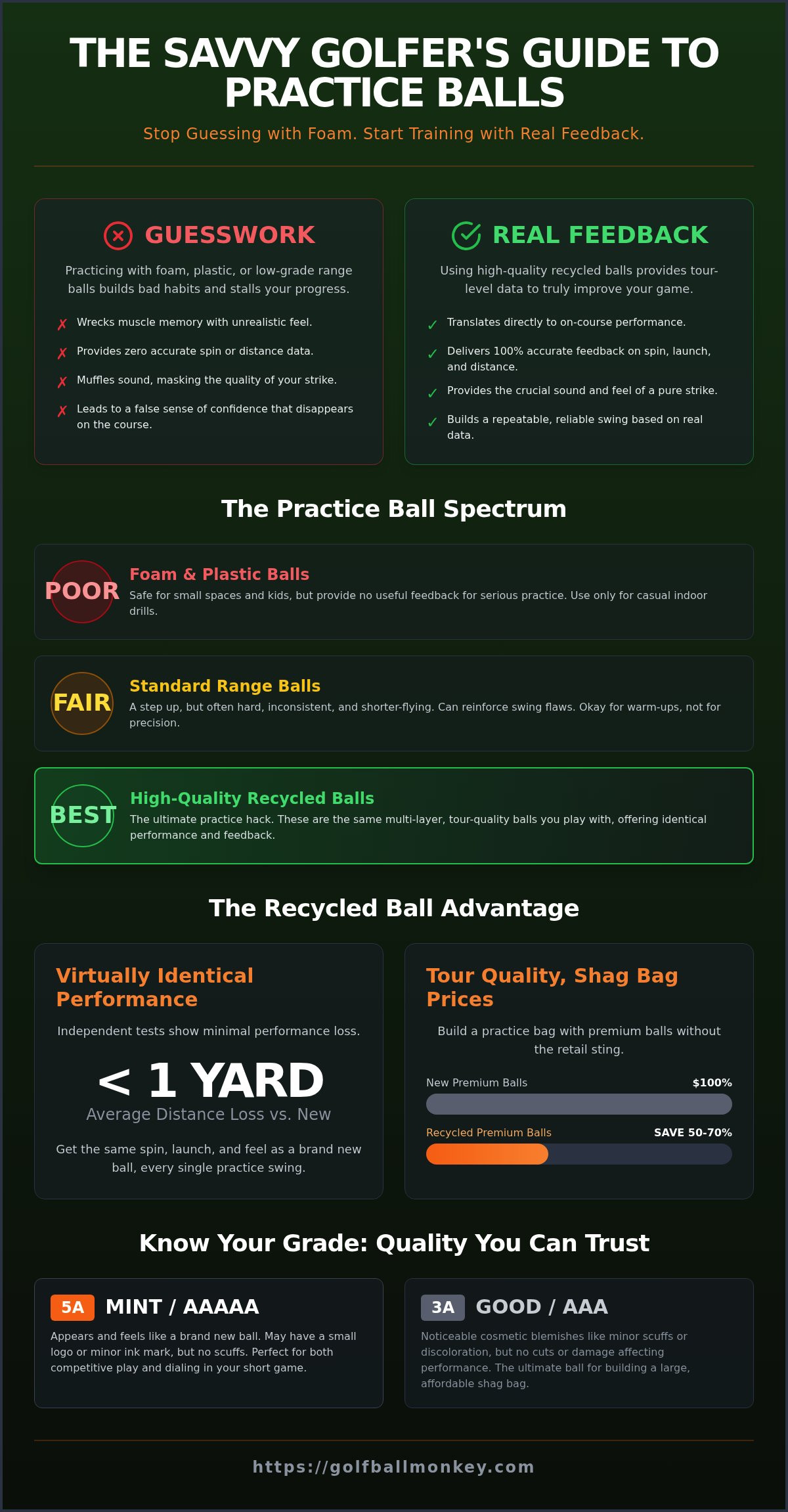
Foam and plastic balls are the ultimate “peace of mind” tools. They are perfect for small backyards or tight spaces. You won’t break a window or take out the neighbor’s cat with a wayward shot. But here is the catch: they provide zero spin data. If you are trying to master a high-spin flop shot, these will not tell you if you actually pulled it off. Range balls are a step up, but they are often “one-piece” constructions. They fly shorter, feel harder, and can be inconsistent. They are fine for a quick warm-up, but they are terrible for dialing in precise distances.
Shag balls are the real secret weapon. These are high-quality used balls retired from competitive play. They are the same multi-layer balls you use on the course, just with a few rounds under their belt. For the lowest tier, you have “hit-away” or bulk balls. These are the “junk drawer” of golf gear. Use them for loose warm-ups or practicing near water hazards where you do not mind losing a few to the depths. Check out the premium practice inventory at Golf Ball Monkey to see how to stock up without the retail sting.
Artificial Aids: When Foam Makes Sense
Foam has its place in a balanced routine. It is the gold standard for indoor winter practice and living room putting drills. It is also the best way to teach kids the basics without a trip to the emergency room. However, if your handicap is under 20, foam is a trap. It masks too many mistakes. You need the resistance of a real ball to feel where your swing is failing. Use foam for tempo, but use the best practice golf balls for technical feedback.
The Shag Ball: The Gold Standard for Game Improvement
If you want real progress, you need a shag bag filled with authentic equipment. We source our stock from professional divers who rescue premium balls from the drink. This is the ultimate “insider” hack for practice ball supply. Comparing 3A (Good) vs. 5A (Mint) grades is simple. 5A balls look like they just came out of the sleeve. 3A balls have some character but perform perfectly for repetitive drills. You can learn more in our Golf Balls Used: The Savvy Player’s Guide. This is how you get tour-level technology for a fraction of the cost.
Why “Real” Used Golf Balls are the Ultimate Practice Hack
Ditch the toys. If you want to see your handicap drop, you need to stop practicing with equipment that lies to you. The best practice golf balls aren’t found in a mesh bag of plastic wiffle balls at a big-box retailer. They are the same premium, tour-level balls you play on Sunday, just with a previous life. Choosing used equipment is the ultimate “insider” move because it provides the one thing artificial aids cannot: truth. When you hit a used Pro V1, the ball reacts exactly how it should. No guesses. No excuses.
Spin rate is where the reality hits hardest. A high-quality wedge shot needs to hit 10,000+ RPM to check up on the green. Foam balls cannot even approach that level of friction or core compression. You might think you are hitting a “nipped” wedge, but you are actually training your brain to accept a dead, sliding strike. Beyond the physics, there is the simple math of durability. A used Titleist Pro V1 from our inventory will outlast a plastic wiffle ball by at least 10x. You can beat on a real ball for hours without it splitting or losing its shape. It is the definition of a high-value acquisition.
Let’s talk about the cost-per-strike. Buying new retail balls for a shag bag is a financial sting that most golfers can’t justify. By opting for recycled gear, you are slashing your costs by 50-70% while maintaining 100% of the performance feedback. Plus, there is a massive environmental win here. Every ball recovered by our professional divers is one less piece of plastic sitting in a local ecosystem. It is a sustainable loop that benefits your wallet and the planet. You get tour-quality gear; the pond gets cleaned up. Everybody wins.
The Truth About Recovered Balls
Ignore the myths you see on internet forums about used balls “losing their pop.” Modern solid-core balls are virtually impervious to water damage over short durations. Unlike the old wound-core balls of the 1990s, today’s multi-layer tech is built like a tank. Our professional cleaning and grading process ensures that every ball is restored to its peak performance state. A 5A Mint ball is indistinguishable from one out of a $55 box, except for the price tag. We vet every ball so you can focus on your swing, not your equipment.
Comparing Feedback: Used vs. Artificial
Weight matters for more than just distance. Real ball weight dictates your launch angle and how the wind affects your flight. If you practice with lightweight aids, you are developing a “false” launch window that will fail you on the course. You simply cannot practice a low-spinning chip or a high-launching flop shot with a foam ball. It won’t “check” on the turf, and it won’t give you the tactile vibration of a pure strike. For a deeper dive into how these layers work, check out Golf Balls 101. Real feedback is the only path to real improvement.
Building Your Ultimate Shag Bag: A Savvy Golfer’s Checklist
Building a professional-grade shag bag is more than just tossing random scuffs into a bucket. It is a tactical play. To get the most out of the best practice golf balls, you need a system that mimics your actual course conditions without draining your bank account. Follow this checklist to build an arsenal that turns every practice session into a scorecard advantage. Stop guessing. Start organizing.
- Step 1: Choose your volume. A 50-ball bucket is perfect for portable, focused sessions. If you are a range rat, go for a 100-ball mesh bag to maximize your repetition.
- Step 2: Match your ball to your game. Consistency is king. If you play a Titleist Pro V1 on the course, your shag bag should be full of Titleist. Do not practice with a low-spin distance ball if you expect your gamer to check up on the greens.
- Step 3: Select the right grade. While 5A Mint is great for putting, 3A Good condition is the absolute “sweet spot” for high-volume drills. These balls are functional, durable, and cost-effective.
- Step 4: Don’t forget the accessories. Your bag is not complete without performance tees and a reliable ball marker for alignment drills.
Ready to level up? You can stock your shag bag today with tour-level gear that fits your budget and your game.
The “Mixed Bag” Strategy
Smart players use a tiered approach to their equipment. A Mixed Bag (Good 3A) is the ultimate value play for bunker and rough practice. Why ruin a Mint 5A ball in a sandy trap? Save your premium recycled balls for the fairway and putting green. Separate your “putting-only” balls into a smaller pouch. Keeping them clean and scratch-free ensures your roll is true. For full-swing drills, grab the 3A stock and swing away. Organizing your gear this way makes every session faster and more efficient.
Essential Accessories for 2026
Your practice is only as good as your setup. High-quality tees play a massive role in consistent ball striking. If your tee height varies by half an inch every shot, your launch data is useless. Check out our Golf Ball Accessories Guide to find gear that actually moves the needle. A simple ball mark tool is also a must-have. Use it to draw alignment lines on your practice balls. This small habit helps you visualize the line and confirms if you are starting your putts on the right path. It is the little details that separate the scratch players from the weekend hackers.
Score Big with Golf Ball Monkey: Tour-Quality Practice on a Budget
Stop settling for subpar gear. Golf Ball Monkey is the savvy insider’s secret for sourcing the best practice golf balls without the retail headache. We are a Texas-based operation that skips the middleman to bring you professional-grade equipment. Our team of professional divers harvests millions of balls from water hazards, rescuing premium tech that would otherwise be lost to the silt. Every ball is cleaned, inspected, and graded with absolute transparency. This is how we fuel your practice with tour-level performance for a fraction of the cost of a new box.
Our grading scale is our verbal seal of approval. When you buy our Mint 5A Titleist Pro V1, you are getting a ball that looks and plays like it just came off the shelf. For high-volume drills, our 3A Good condition balls provide the ultimate utility. We don’t hide behind vague descriptions. You know exactly what is in your bag because the Monkey personally vets the inventory. This commitment to quality is why serious amateurs and driving ranges across the country trust us to supply their sessions. We make it easy to restock quickly and get back to the grass.
Wholesale and bulk deals are where the real savings happen. If you are a high-volume player, buying by the dozen is a rookie mistake. We offer bulk bundles that allow you to build a massive shag bag for the price of a few retail sleeves. It is the intelligent play for anyone serious about game improvement. You get the consistency of a single model and the durability of a solid-core ball. It is time to treat your practice with the respect it deserves.
The Titleist Advantage
Practicing with the #1 ball in golf changes your mental game. When you see that Titleist script on every shot, your brain shifts into “play mode.” You start to trust your distances because the ball is reacting exactly like your Sunday gamer. Check out our Titleist Pro V1 Ultimate Guide to see why this ball remains the gold standard. Comparing retail prices to Golf Ball Monkey value benchmarks is a no-brainer. You get the same urethane cover and high-gradient core feedback while keeping your budget intact.
Ready to Level Up?
Stop practicing with toys. If you want to lower your handicap, you need the best practice golf balls that provide real-feel data. Ditch the foam, ignore the plastic, and start using the real deal. Join our community of savvy insiders who know how to play the system to their advantage. We ship nationwide from our Texas hub, ensuring you never run out of quality stock. Shop all practice balls now and start seeing the difference that authentic feedback makes on your scorecard. It is time to join the Monkeys and play smarter.
Stop Guessing and Start Scoring
Your journey to a lower handicap depends on the quality of your repetitions. Ditching artificial aids for the best practice golf balls is the fastest way to align your range sessions with your course performance. You now know that real-feel feedback is non-negotiable for mastering spin and launch. By building a tactical shag bag with 3A or 5A graded gear, you bridge the gap between just hitting balls and actually getting better. It’s the smartest play you will make for your game and your wallet.
Golf Ball Monkey is here to fuel that progress. Our professional diver-sourced inventory ensures you get tour-level technology without the retail sting. With millions of balls reclaimed annually and a strict 5A/3A grading system, we take the guesswork out of buying used. You get the same equipment the pros use, vetted by the Monkey himself, at a fraction of the cost. Stop paying full price for practice and start playing like a savvy insider. The pond’s loss is your gain.
Build Your Professional Shag Bag Now at Golf Ball Monkey
Grab your bag, hit the grass, and let those pure strikes do the talking. We are rooting for you to find the center of the face every single time.
Frequently Asked Questions
What are the best golf balls for backyard practice?
Foam balls are the safest choice for tight backyard spaces where broken windows or angry neighbors are a risk. However, if you have at least 30 yards of room, the best practice golf balls are high-quality recycled ones used for chipping drills. They provide the authentic weight and spin you need to develop a soft touch around the greens. For those who want to bring a professional setup to their next event, Inbound Golf offers a premium mobile golf experience that bridges the gap between home practice and the course. Just ensure you have a proper backstop if you are swinging full out.
Do used golf balls perform as well as new ones for practice?
High-quality recycled balls perform nearly identically to brand-new ones, making them a savvy choice for repetition. Independent testing shows that premium recycled balls lose less than one yard of distance compared to balls fresh out of the box. For practice sessions where you are hitting hundreds of shots, this negligible difference is worth the massive financial savings. You get real-world feedback without the retail sting.
What is a shag bag and how many balls do I need?
A shag bag is a dedicated carrier, often with a zippered pouch or a tube for easy pickup, used to hold your practice inventory. Most serious amateurs find that 50 to 100 balls is the perfect volume for a productive session. This amount allows for enough repetition to build muscle memory without making the bag too heavy to carry. It’s the standard setup for anyone moving beyond casual range buckets.
Can I use real golf balls at home with a net?
You can definitely use real balls with a home net, provided you have professional-grade netting and a durable hitting mat. Using real equipment into a net gives you the tactile feedback and impact sound that foam alternatives lack. It’s the best way to keep your game sharp during the off-season. Just double-check your net for holes regularly to avoid a stray shot through the drywall.
Are foam golf balls worth buying for high handicappers?
Foam balls are worth the investment for beginners and high handicappers who are strictly focused on tempo and contact. They are great for indoor drills and getting comfortable with the feel of a club in your hands. However, they won’t tell you if you are slicing or hooking. Once you start breaking 100, you should transition to the best practice golf balls available to get accurate flight data.
What is the difference between 3A and 5A grade practice balls?
The difference lies entirely in cosmetic appearance and surface wear. Mint 5A balls look and feel like they were just pulled from a new sleeve, featuring a bright white finish and no visible scuffs. Good 3A balls are the workhorses of the practice world, showing minor discoloration or small blemishes that don’t affect flight. Use 5A for putting and 3A for your high-volume bunker and iron drills.
Should I practice with the same brand of ball I use on the course?
Practicing with your specific “gamer” ball is the only way to develop a reliable feel for spin and distance control. Different brands use various cover materials and core compressions that change how the ball reacts off the face. If you play a Titleist Pro V1 on Sunday, your shag bag should be full of recycled Titleist stock. Consistency in your equipment leads to consistency in your scorecard.
How often should I replace my practice golf balls?
Replace your balls when you notice visible cracks, deep scuffs, or a dull “thud” sound at impact. A ball with a compromised cover or core won’t provide the accurate data you need to improve. Most recycled balls can withstand dozens of sessions before they lose their performance edge. Keep an eye on the dimple patterns; if they look worn or smooth, it is time to restock your bag.
- golfballmonkey@gmail.com
- (512) 593-8401
- Mon – Fri, 9:00 AM – 5:00 PM

All product and company names are trademarks™ or registered® trademarks of their respective holders.
Use of them does not imply any affiliation with or endorsement by them.