
The Best Way to Store Golf Balls: Keep Your Game Fresh in 2026

Is your garage secretly killing your distance? It’s a brutal realization when premium balls start behaving like range rocks because they spent a summer baking in your trunk. You want the best way to store golf balls to ensure every shot delivers the exact spin and speed you expect. We get it. Nobody likes flushing money down the drain or dealing with a cluttered mess of gear that feels like a chore instead of a hobby.
Stop monkeying around with messy trunks and inconsistent gear. You deserve equipment that’s tour-ready every time you step onto the first tee. We are going to reveal the science-backed secrets to maintaining ball integrity. We’ll cover everything from temperature control to the latest 2026 storage trends that pros use to stay ahead. You’ll learn how to organize your stash like a savvy insider, maximize the ROI on your bulk purchases, and keep your game fresh. Here’s how to protect your performance and keep your setup clean.
Key Takeaways
- Protect your yardage by learning how extreme heat creates permanent compression loss in the ball’s core.
- Avoid the “trunk trap” and garage spikes that turn your high-performance gear into expensive paperweights.
- Discover why a climate-controlled space is the best way to store golf balls to maintain that fresh, off-the-shelf pop.
- Master the pro system for sorting 5A Mint Titleist Pro V1s from your backyard shag bag stash.
- Double the lifespan of your bulk purchases with simple airtight storage hacks that keep your gear tour-ready.
The Science of Ball Performance: Why Storage Actually Matters
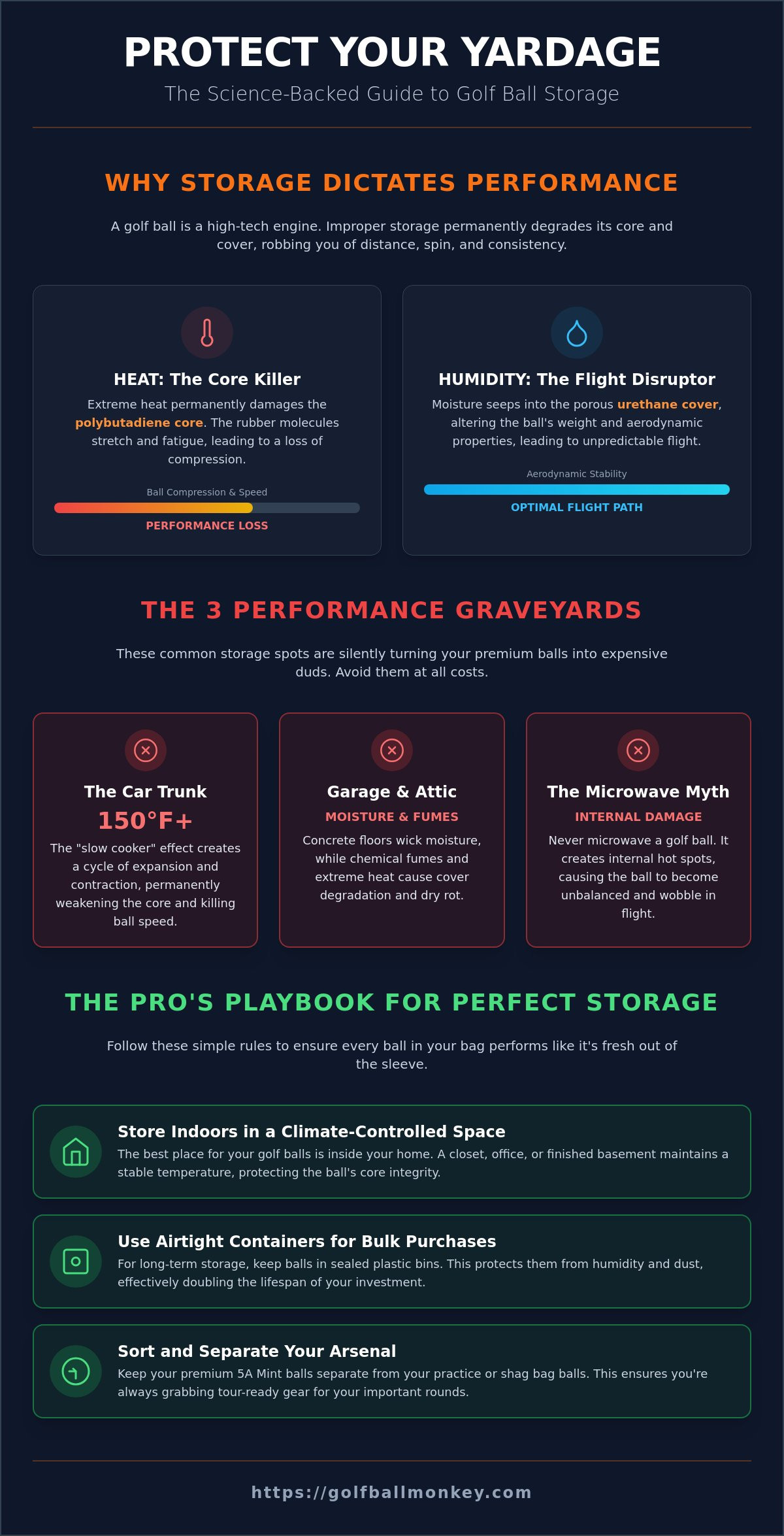
You spent top dollar on a box of tour-level spheres. They look like shiny white gems, but inside, they’re high-tech engines. The polybutadiene core is the heart of your distance. It’s a synthetic rubber designed for maximum energy transfer. When you leave your bag in a roasting car, that core expands. The molecules shift. If they stay hot too long, they don’t just snap back to their original state. You lose compression. You lose ball speed. Suddenly, your 280-yard drive is a 265-yard struggle. Finding the best way to store golf balls isn’t just about being tidy; it’s about protecting that molecular engine.
The Core Chemistry of Distance
Heat is the enemy of consistency. At a molecular level, high temperatures cause the rubber chains in the core to vibrate and stretch. This leads to permanent structural fatigue. In the science of golf ball design, the coefficient of restitution measures the efficiency of energy transfer between the clubhead and the ball. When storage conditions are poor, that efficiency drops. High-compression balls, like the ones pros use, are even more sensitive. They rely on tight tolerances to deliver that massive pop off the face. If the core is compromised by a 120-degree garage, the ball becomes dead. It won’t compress or rebound correctly. It looks perfect, but it feels like hitting a brick.
Cover Integrity and Moisture
It’s not just about the heat. Humidity is a silent performance killer. Urethane covers are premium for a reason; they offer incredible spin and feel. However, they’re also slightly porous. Long-term exposure to damp environments allows moisture to seep into the cover and the mantle layers. This extra weight, even if it’s microscopic, wreaks havoc on aerodynamics. Water ingress can actually change how the dimples move through the air. Your flight path gets unpredictable. Mint 5A golf balls have been vetted for quality, but they still need a dry home. Short-term exposure to rain on the course is fine. Leaving your gear in a soggy basement for six months is a recipe for disaster. The best way to store golf balls involves keeping them in a stable, low-humidity environment to ensure the cover stays tacky and the flight stays true.
The 3 Storage Sins: Where NOT to Keep Your Gear
Your car is a performance graveyard. On a typical summer day, the temperature inside a trunk can skyrocket past 150 degrees. This creates a “slow cooker” effect for your equipment. The polymer compositions in golf balls are designed for high-velocity impact, not long-term heat baths in a parking lot. Every day your bag sits in that heat, the core undergoes a “cycling” effect. It expands in the afternoon and contracts at night. This constant molecular stress weakens the structural integrity of the ball. The best way to store golf balls is to bring them inside immediately after you finish your round. Don’t let your gear bake while you grab a post-round burger.
The Car Trunk Death Spiral
Leaving your balls in the trunk is the fastest way to turn a 5A Mint ball into a practice rock. The 150-degree heat doesn’t just make the ball warm. It actually changes the compression rating over time. When the core cycles through extreme temperature swings, it loses its “memory.” This means it won’t rebound with the same force when you strike it. You’ll notice a distinct lack of “pop” and a shorter flight path. Take the extra thirty seconds to haul your bag into the house. Your scorecard will thank you.
The Garage and Attic Problem
Garages seem like a logical choice for storage. They aren’t. Concrete floors are moisture magnets. They wick humidity straight up through cardboard boxes and into your gear. This leads to cover degradation and “aging” before you even tee off. Attics are even worse. They trap stagnant, dry heat that causes dry rot in the mantle layers. If you’ve already noticed your gear feeling “clicky” or hard, it might be time to restock with a fresh stash of quality balls from a trusted source.
Also, keep your arsenal away from the lawnmower. Chemical fumes from gasoline, oil, and paint thinners are highly reactive. Since golf ball covers are porous, they can absorb these vapors. This chemical exposure can alter the tackiness of a urethane cover, ruining your greenside spin. The best way to store golf balls in a garage is to keep them elevated. Use a shelf or a simple wooden pallet. Never let your boxes sit directly on the raw concrete. If you can’t control the temperature, the garage is just a slow-motion version of the trunk trap.
The Microwave Myth
Let’s kill the microwave myth right now. Some golfers suggest “warming up” their balls in the microwave before a cold-weather round. This is a disaster. Microwaves heat unevenly. You will create internal hot spots in the core that cause the ball to wobble in flight or even crack on impact. If you want warm balls for a winter round, keep a couple in your pocket between holes. Never use kitchen appliances on your gear.
The Best Way to Store Golf Balls for Long-Term Freshness
Consistency is the secret sauce to a low handicap. If you want your gear to perform exactly the same way in October as it did in April, you need a controlled environment. The best way to store golf balls is to target the “Sweet Spot”: a steady temperature between 65 and 75 degrees Fahrenheit with low humidity. This isn’t just about comfort. It’s about stability. When you keep your balls in this range, you prevent the core from expanding and the cover from becoming brittle. Think of it as a preservation chamber for your distance.
Light is another silent performance thief. UV rays can break down the chemical bonds in a urethane cover, leading to yellowing and a loss of that premium, tacky feel. A dark closet is your best ally here. It provides a double layer of protection: consistent temperature and zero light exposure. If you’ve stocked up on bulk supplies of 5A Mint balls, don’t just leave the boxes stacked by a sunny window. Tuck them away where the sun doesn’t shine to keep that factory-fresh finish.
Creating a Climate-Controlled Zone
The best rooms in a standard house for storage are interior closets or finished basements. These areas are shielded from the wild temperature swings of exterior walls. To level up your storage game, use airtight plastic bins. A simple plastic tote with a locking lid is a golfer’s best friend because it creates a micro-environment that shields your gear from humidity spikes. Toss a few silica gel packets into the bin. These packets pull moisture out of the air, ensuring your balls stay bone-dry and ready for the tee. Finally, use the First-In, First-Out (FIFO) method. Always grab the oldest sleeve first to ensure your entire arsenal stays fresh and you never leave a “vintage” box at the bottom of the pile for years.
The Freezer Debate: Fact vs. Fiction
You might have heard the old-school tip about keeping balls in the freezer. It sounds like a myth, but there’s some weight to it. A USGA expert has stated that storing golf balls in a freezer is not harmful and may even slow their natural decay over time. The catch? You must bring them back to room temperature before you play. Despite this, most manufacturers still advise against it. They worry about the cover becoming brittle or the core reacting poorly to the sudden thaw. Our verdict? Unless you’re living in a literal sauna, the freezer is overkill. Stick to a cool, dry closet. It’s safer, easier, and keeps your gear tour-ready without the risk of a frozen core crack on the first hole.
Organizing Your Arsenal: Bulk Storage and Shag Bag Tips
A massive haul of recycled balls is a beautiful sight. But if your 5A Mint gear is mixed with your backyard beaters, you’ve got a problem. Organizing is the best way to store golf balls to ensure you always grab the right tool for the job. Sorting by grade is the first step. You don’t want to accidentally tee up a scuffed rock when you think you’re hitting a high-performance Titleist Pro V1. Keep your “gamers” and your “shaggers” in separate zones. This saves time and protects your investment.
Managing Your Premium Stock
Your top-tier balls deserve better than a loose bucket. If you have the original sleeves, use them. Sleeves act as individual bumpers that prevent the balls from clattering together and causing tiny surface scratches. Organize your bins by brand and model. It makes restocking your bag a five-second task. If you’re looking for specialized bins or dividers, check out our guide on Golf Ball Accessories. Labeling is the pro move here. Mark each bin with the purchase date. This helps you follow the FIFO method we mentioned earlier, ensuring no ball sits at the bottom of the pile for years.
The Shag Bag Essentials
Your practice golf balls need their own system. These are the ones that see heavy use in the backyard or at the local park. A dedicated shag bag is the gold standard. It is portable and keeps your chipping practice organized. Before you toss used balls back into the bag, give them a quick wipe. Dirt and grass stains can hold moisture, which we already know is a silent killer of ball integrity. While you’re at it, do a quick quality check. If a ball is cracked or deeply scuffed, toss it. There is no sense in practicing with a ball that won’t fly straight. Ready to upgrade your practice sessions? Grab a fresh batch of practice gear and start training like a pro.
For high-volume storage, boxes beat buckets every time. Square boxes stack efficiently and don’t waste space in your closet. Buckets are awkward and often lead to “bottom-of-the-barrel” syndrome where the balls at the base never see the light of day. By using stackable, labeled totes, you create a library of performance. It is the ultimate savvy play for the golfer who buys in bulk and wants to keep their game sharp without the clutter.
Smart Storage Meets Smart Buying: Keeping Your Monkey Balls Mint
Treating used golf balls with the same respect as retail-fresh boxes is the hallmark of a savvy player. You’ve already made the smart play by skipping the $58-per-dozen retail markup. Now, you need to protect that margin. Proper climate control is the best way to store golf balls to ensure your 5A Mint gear stays tour-ready for multiple seasons. When you treat recycled gear like the high-tech equipment it is, you’re not just saving money. You’re securing performance that rivals any brand-new box on the shelf. High-performance urethane doesn’t care if it’s been hit before; it only cares how you treat it now.
Protecting Your Recycled Investment
Used balls are a secret weapon for golfers who want premium spin without the premium price tag. Our rigorous grading system ensures you start with a product that meets exacting standards. However, the work doesn’t stop at delivery. The “Monkey Way” of gear management is simple: acquire the best equipment for the lowest possible price, then protect that investment with pro-level storage habits. By following the temperature and humidity guidelines we discussed, you essentially pause the clock on material degradation. This turns a bulk purchase into a long-term arsenal that performs consistently from the first ball to the last.
Final Checklist for the Savvy Golfer
Maintaining your gear doesn’t require a laboratory. It just takes a bit of discipline. Follow this quick routine to keep your bag fresh and your distance peaked. Consistency at home leads to confidence on the course.
- The Post-Round Ritual: Wipe down any damp balls and move your bag from the trunk to a climate-controlled room immediately.
- The Bin Check: Ensure your bulk stash is in an airtight container with silica packets to fight off moisture ingress.
- The Seasonal Audit: Once a season, sort through your bins. Move older stock to the top and retire any balls with visible cover fatigue to the shag bag.
The ROI on proper storage is massive. You’ve seen the data. Extreme heat and humidity can rob you of 10 to 15 yards of carry. By spending five minutes organizing your gear, you’re effectively buying back that distance for free. It is the ultimate insider tip: buy bulk, store smart, and play the best for less. Ready to restock your supply with vetted, high-performance gear? Grab a bucket of Mint 5A balls today! A little effort at home means more “birdie” and less “bogey” when you’re standing on the tee. Play smart, save big, and keep those balls mint.
Lock In Your Distance Today
You have the blueprint. Stop letting the trunk trap rob your game of precious yardage. Protecting your core chemistry with a cool, dark closet is the best way to store golf balls and ensure your gear stays tour-ready. Sort your stash, use the FIFO method, and keep those premium sleeves separated from the shag bag rocks. It is the savvy play that turns a smart purchase into a long-term performance advantage. Consistency at home leads to pure strikes on the course.
Ready to load up? We have done the dirty work so you don’t have to. Stock up on Tour-quality balls for a fraction of the price at Golf Ball Monkey! Every ball in our inventory is professional diver-retrieved quality. We use a standardized Mint 5A grading scale that acts as a verbal seal of approval for every shipment. Plus, we offer fast national shipping across the US to get you back on the tee in no time. Grab a bucket, follow these storage rules, and play the best for less. You’ve earned the savings; now go protect the “pop.”
Frequently Asked Questions
Do golf balls actually expire or go bad over time?
Golf balls don’t have a hard expiration date like a carton of milk, but they aren’t immortal. Modern multi-layer balls retain peak performance for about three to five years if kept in a cool, dry place. After that, the chemical bonds in the core can begin to lose their elastic snap. If you’re playing with a decade-old stash, you’re likely leaving yards on the fairway.
Is it okay to store golf balls in the garage during winter?
Avoid unheated garages in the winter. Extreme cold causes the internal materials to contract, which can lead to micro-cracks in the mantle or cover. Plus, the humidity spikes in a typical garage are the best way to store golf balls if you want them to lose their pop quickly. Keep them in a spare closet inside your home instead.
Does soaking golf balls in water to clean them damage the core?
A quick dip in soapy water won’t hurt, but don’t leave them submerged for hours. Urethane and ionomer covers are slightly porous. Prolonged soaking allows water to seep into the inner layers, which adds weight and ruins the ball’s balance. Scrub them, dry them immediately with a towel, and get them back in their storage bin.
Can I store my golf balls in a wine cooler or mini-fridge?
Storing your gear in a wine cooler is actually a genius move. Wine coolers usually stay around 55 to 65 degrees, which is perfect for preserving the polybutadiene core. It’s a consistent, vibration-free environment that keeps your 5A Mint balls in peak condition. Just make sure you aren’t sacrificing your favorite bottle of wine for a box of Pro V1s.
How long can a golf ball stay in my bag before it loses performance?
Your bag is a safe home for months as long as it stays inside your house. The trouble starts when the bag lives in a humid mudroom or a hot car trunk. If your bag stays in a climate-controlled room, those balls will be just as fast next season as they are today. Move the bag inside after every round to be safe.
What happens if a golf ball gets too cold?
Cold balls become rigid and lose their ability to compress against the clubface. This results in lower ball speeds and a harsh, clicky feel on impact. If your balls have been sitting in a cold environment, let them sit at room temperature for at least 24 hours before your tee time to restore their natural elasticity.
Should I keep my golf balls in their original packaging?
Keep them in the original sleeves whenever possible. It’s the best way to store golf balls because the cardboard prevents the balls from rubbing against each other. This stops tiny surface scratches from forming. Keeping them sleeved protects the aerodynamics and ensures your spin rates stay consistent shot after shot.
Does the sun damage golf balls if they are left outside?
Direct sunlight is a cover killer. UV rays break down the polymers in the ball’s cover, causing it to turn yellow and lose its tackiness. A ball left in the sun for a few weeks will feel harder and offer significantly less greenside control than one kept in a dark, airtight bin.
- golfballmonkey@gmail.com
- (512) 593-8401
- Mon – Fri, 9:00 AM – 5:00 PM

All product and company names are trademarks™ or registered® trademarks of their respective holders.
Use of them does not imply any affiliation with or endorsement by them.