
Best Value Used Golf Balls: The Savvy Player’s Guide to Tour Performance for Less
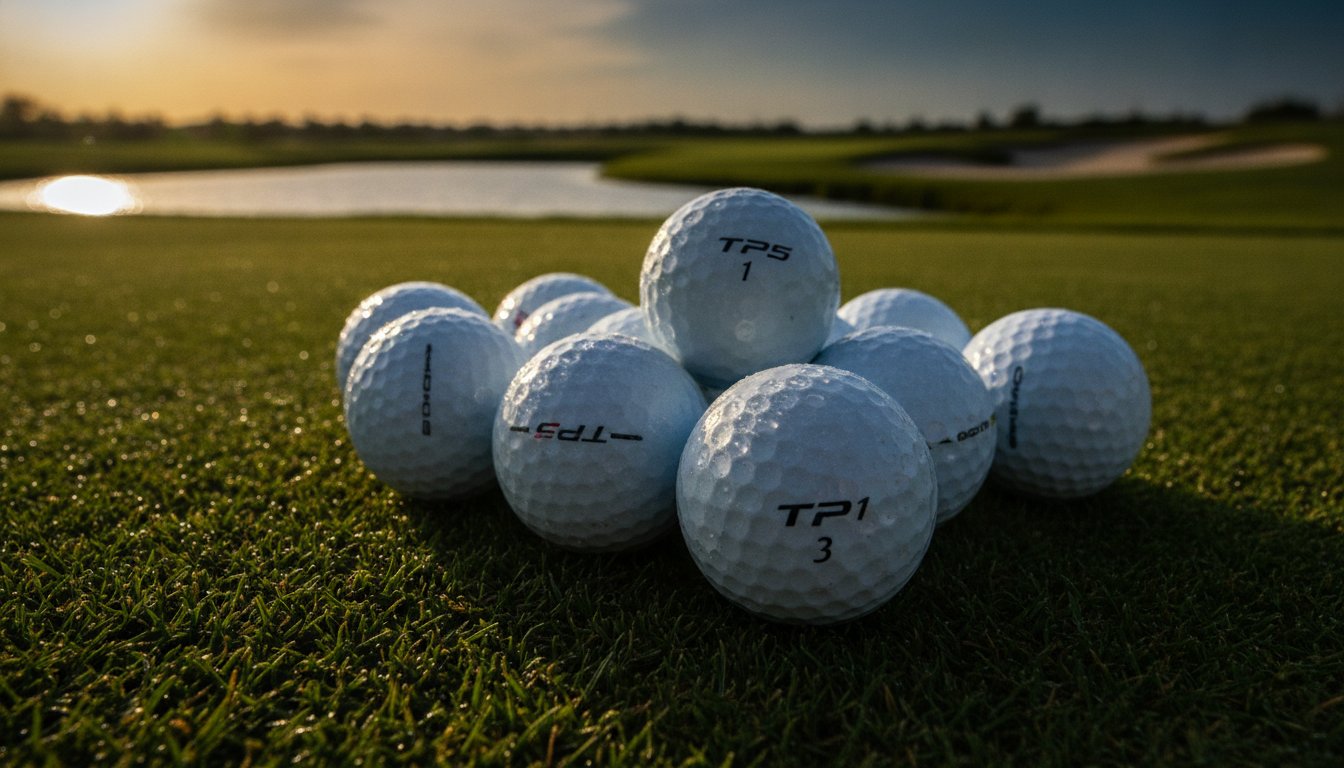
Watching a brand-new, five-dollar ball splash into a water hazard shouldn’t feel like watching your lunch money sink into the abyss. We’ve all been there. You want the elite greenside spin of a Titleist Pro V1 or the piercing flight of a TaylorMade TP5, but the retail price makes every swing feel like a high-stakes gamble. Finding the best value used golf balls is the ultimate shortcut to playing like a pro without the pro-shop tax.
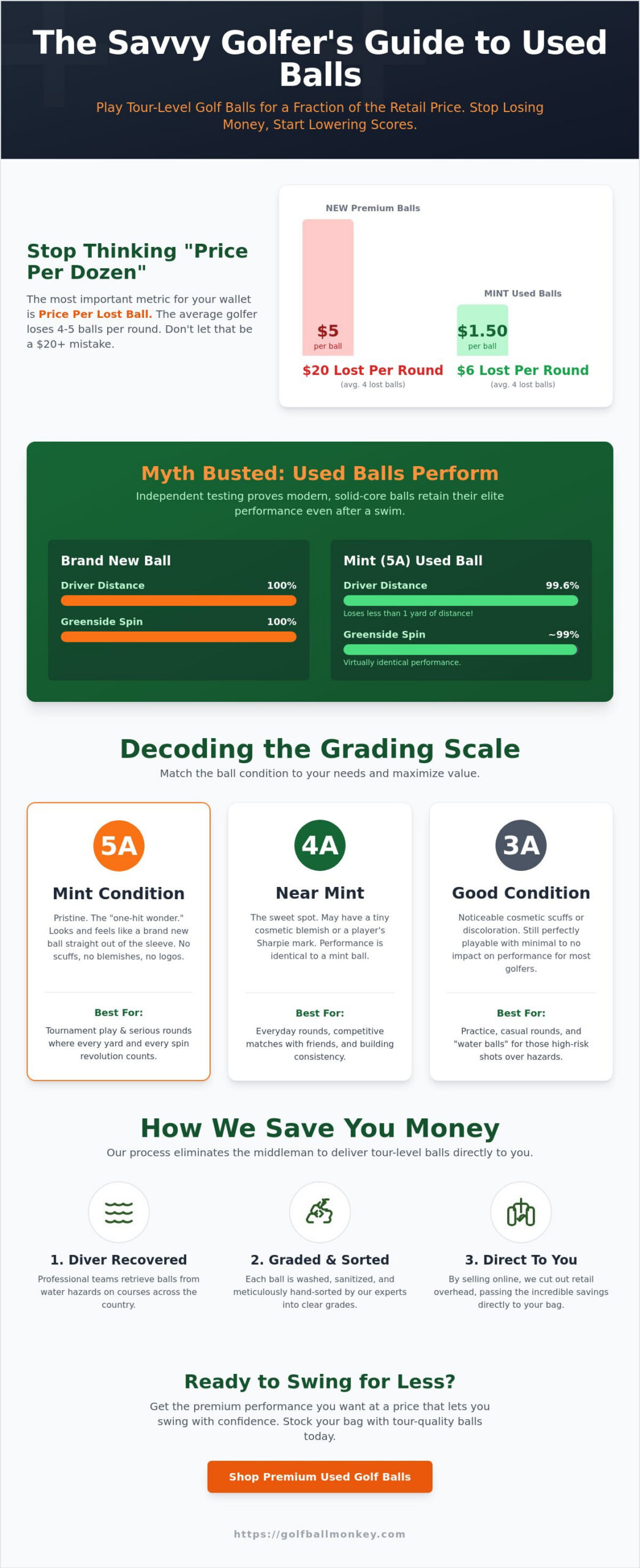
You probably worry that recycled gear means compromised performance. It’s a fair concern, but the data says otherwise. Independent testing shows that Mint 5A balls lose less than one yard of distance compared to brand-new ones. Even balls submerged for months perform almost identically to what you’d find in a fresh sleeve. You don’t have to choose between your budget and your birdie putt.
This guide is your roadmap to snagging premium urethane covers for a fraction of the cost. You’ll learn which grading scales actually matter, why 4A might be your new best friend, and how to restock your bag in bulk. It’s time to stop paying retail and start swinging with total confidence.
Key Takeaways
- Stop measuring by price per dozen and start tracking “price per lost ball” to find your true equipment sweet spot.
- Decode the 5A through 1A hierarchy to confidently snag the best value used golf balls for tournament play or casual practice.
- Trust the science that proves modern solid-core balls retain their tour-level flight and spin even after a dip in the hazard.
- Master the “Monkey Math” of bulk buying to secure premium gear from Titleist, Callaway, and TaylorMade for a fraction of retail.
- Learn how professional diver teams and direct-to-consumer sorting eliminate the middleman to save your golf budget.
Defining ‘Best Value’ in the Used Golf Ball Market
True value isn’t just the lowest price tag on a clearance rack. It’s the sweet spot where tour-level performance meets a price that doesn’t make you wince when you thin a wedge. Most golfers think “value” means buying the cheapest box of hard, distance-only balls at the supermarket. That’s a mistake. A cheap Surlyn ball won’t stop on a green, no matter how hard you hit it. Real value comes from playing the best value used golf balls; premium urethane models that usually cost a fortune, but now cost less than a cup of coffee.
The only metric that actually matters is your price per lost ball. The average golfer loses four to five balls per round. If you’re playing new Pro V1s at five dollars a pop, you’re literally flushing twenty dollars down the hazard every weekend. Used balls bridge the gap, letting you play the same Titleist or TaylorMade models the pros use for a fraction of the cost. You get the spin, the feel, and the distance without the financial sting of a lost ball.
The Performance-per-Dollar Ratio
Calculating the real cost of your game changes everything. Playing a round with five-dollar balls vs. one-dollar-and-fifty-cent balls is the difference between a stressful walk and a relaxed afternoon. Best value usually means a Mint 5A premium ball rather than a brand-new budget ball. A recycled tour ball maintains its integrity because golf ball regulations ensure these high-end cores are built to last. Golf ball value is the specific ratio of greenside spin-control to the total acquisition cost per unit. You can see the difference in our shop, where the performance stays high while the price stays low.
Why Premium Balls Matter for Your Score
There’s a common myth that high-handicappers don’t need “good” balls. In reality, players who struggle to hit greens need the extra spin of a urethane cover more than the pros do. A premium used ball provides the greenside control necessary to stop a chip shot near the hole. If you play a “mixed bag” of random new balls, your distances will vary on every swing. Consistency is the hidden value in used gear. Playing the same used model every round builds a predictable short game. You’ll know exactly how your ball will react, whether you’re hitting a full seven-iron or a delicate flop shot. Stopping the “ball-of-the-day” lottery is the fastest way to shave strokes off your handicap.
Decoding the Grading Scale: From Mint 5A to Shag
The used ball market can feel like the Wild West if you don’t know the code. Retailers throw around terms like “Mint,” “Near Mint,” and “Grade A” without always explaining what you’re actually putting in your bag. Understanding the 5A through 1A hierarchy is the secret to finding the best value used golf balls. It’s about matching the condition to your mission. Are you playing in the club championship or just grooving your swing in the backyard? Knowing the difference saves you serious cash.
The Mint 5A Gold Standard
Think of Mint 5A as the “straight out of the sleeve” equivalent. These are the one-hit wonders of the golf world. A player buys a fresh dozen Titleist Pro V1s, tees one up, and promptly slices it into the first pond. Our divers find it ten minutes later. It’s pristine. It has that factory luster. There are no scuffs and no signs of wear. For tournament play or serious rounds where every revolution of spin matters, this is your go-to. You can dive deeper into the specifics in our guide on Decoding Grades: What Mint 5A Really Means.
When to Drop to 4A or 3A
Not every round requires a flawless pearl. Near Mint 4A is the real sweet spot for the daily grinder. These balls might have a tiny cosmetic blemish or a previous owner’s Sharpie mark, but they fly true. When you move down to “Good” 3A condition, you’ll see more noticeable scuffs. These imperfections might hurt your ego, but they rarely hurt your score. A comprehensive experiment showed that these minor surface marks don’t significantly impact distance or greenside spin for the average player.
Use 3A or 4A balls for “Water Ball” rounds. If you’re staring down a long carry over an island green, don’t risk a five-dollar retail ball. Reach for a 3A Mixed Bag. It’s the ultimate value for beginners losing several balls per round. You get the technology of a premium brand without the heartbreak when it splashes. If you want to play the best value used golf balls without overthinking the aesthetics, 4A is your best friend. Grab a bag of premium recycled gear and stop worrying about the hazards.
The Shag Bag Reality
Then there’s the Shag or Practice grade. These are the veterans. They’ve seen some things. They might have significant discoloration or heavy scuffing. Keep these for the backyard, the local park, or warming up your chips. Never use them for a scored round. Keep your game balls high-quality and your practice balls cheap. It’s the smartest way to manage your inventory. You can always browse our current inventory to find the exact grade that fits your game today.
The Science of Savings: Do Used Balls Actually Perform?
Let’s talk physics. Most golfers are terrified of “lake balls.” They have this vision of the ball core absorbing water like a kitchen sponge. That might have been a valid fear in the 1980s when balls had wound cores and liquid centers. Modern solid-core balls are tanks. They are built with high-density polybutadiene rubber designed to withstand 120mph swing speeds. A little dip in a pond isn’t going to change the molecular structure of that core. When you hunt for the best value used golf balls, you’re buying modern engineering that is surprisingly resilient.
Our professional diver teams aren’t just picking up trash. They are harvesting high-performance gear. Every ball retrieved undergoes a rigorous sorting and cleaning process to ensure the integrity of the cover and the core. We’ve seen it all. A ball that spent a few hours in a hazard is indistinguishable from one that stayed in your bag. This isn’t just a hunch. Peer-reviewed university research on used ball performance shows that balls submerged for up to a year show no significant degradation in distance or launch conditions. The science is on your side.
Debunking the Submersion Fear
Modern urethane covers are virtually non-porous and require several months of constant submersion before you see even a 1% drop in ball velocity. This is the “24-hour rule” in action. Most used balls are found shortly after they are lost. If the ball looks Mint 5A, it likely performs like it just came out of the box. For those who want the deep data on compression and core resilience, check out the Truth About Water-Logged Balls. The “pop” in a 5A used ball stays consistent for years because the materials are designed for extreme durability.
Cover Integrity and Spin Rates
Aerodynamics matter, but probably less than you think. A tiny cosmetic scuff won’t ruin your flight path. However, a major gash will. That’s why we sort so aggressively. A Mint 5A used Pro V1 will out-spin a brand-new “Value” Surlyn ball every single time. The urethane cover is what generates that crucial greenside friction. If the cover is clean and the dimples are sharp, the spin is there.
When you’re looking for the best value used golf balls, learn to spot the difference between dirt and damage. Dirt washes off. Sun damage is the real enemy. If a ball looks yellowed or has a chalky feel, the cover has oxidized. That’s a ball for the shag bag. If the luster is there, the performance is too. You get tour-level control for the price of a budget ball. It’s the smartest play in the game.
How to Maximize Your ROI: Bulk Buying and Brand Selection
Stop buying three-packs at the clubhouse counter. It’s a rookie move that drains your wallet before you even hit the first tee. If you’re serious about finding the best value used golf balls, you have to master the “Monkey Math.” Bulk buying is the ultimate power move for the savvy player. It turns a premium equipment habit into a sustainable strategy. When you commit to a 48 or 96-ball order, you’re doing more than just filling a bag. You’re hacking the retail system to play elite gear at a price that lets you swing freely.
The Power of the Bucket
Bulk purchasing is where the real savings hide. Moving from a single dozen to a 48-ball bucket typically slashes the price-per-ball by another 15 to 20 percent. It’s the most efficient way to restock. We pass the logistical savings directly to you. Check out our Shop page for the latest 48-ball bucket deals to see the price gap for yourself. Once your haul arrives, keep it in Mint condition by storing it in a cool, dry spot. Don’t leave your bulk stash in a hot trunk for weeks. Extreme temperature swings can eventually impact the core’s resilience. A shelf in the garage is the perfect home for your season’s supply.
Best Value Brands for Every Swing
Choosing the best value used golf balls for your specific swing speed is about maximizing your performance ROI. Titleist Pro V1 remains the king of consistency and resale value. It’s the gold standard for a reason. Callaway Chrome Soft is the savvy choice for players who prioritize a softer feel and greenside control. If you need maximum spin to hold firm greens, the TaylorMade TP5 is your budget-friendly weapon. Each of these brands maintains its flight characteristics through the recycling process. For a deeper dive into the technical specs, check out Which Golf Ball Should I Play? to find your ideal match.
Then there’s the “Kirkland Factor.” Used Kirkland Signature balls offer incredible urethane performance for a price that almost feels like cheating. They are perfect for the high-handicapper who wants tour tech without the tour price. However, stay away from “Refurbished” or “Refinished” labels. These balls are the wolves in sheep’s clothing of the industry. They are often sandblasted and repainted, which destroys the original dimple aerodynamics and masks hidden scuffs. You want recycled balls that are cleaned and graded, not cosmetically altered. Stick to the factory finish to ensure your ball flies exactly how the engineers intended. Score your next bulk haul of premium used balls and stop overpaying for your equipment.
Score More for Less with Golf Ball Monkey
We aren’t some faceless corporate entity sitting in a boardroom. We’re the guys in the wetsuits. Our Texas-based diving teams are the secret weapon for your wallet. By managing the entire process from the bottom of the pond to your front door, we eliminate the middleman markups that drive retail prices sky-high. This direct-to-consumer model is exactly how we deliver the best value used golf balls without any compromise on quality. You get the tour-level gear you crave at a price that actually makes sense for the average player.
The “Monkey Guarantee” is our promise of total transparency. We don’t sell refurbished or refinished junk. As we discussed earlier, those balls are a trap for the unwary. We believe in honest grading because we’re enthusiasts too. We know the frustration of opening a box of “mint” balls only to find scuffed-up pebbles. When you buy from us, you get exactly what you paid for. Every ball is a testament to our commitment to the sport and your budget. Plus, you’re making the green choice. Every recycled ball you put back into play is one less piece of plastic sitting in a water hazard or a landfill. It’s a win for your score and a win for the planet.
Professional Divers, Professional Standards
The journey of a ball from a Texas hazard to your bag is a rigorous one. It starts with our professional retrieval teams who harvest thousands of balls every week. These aren’t just rinsed off and tossed in a box. Each one undergoes a high-pressure cleaning followed by a strict 5-point grading inspection. We check cover integrity, luster, and dimple depth with a critical eye. Our mascot personally ensures that “Monkey Mint” means exactly what it says on the tin. If a ball doesn’t look and feel like it just came out of a fresh sleeve, it doesn’t get the 5A label. We live in the hazards so you don’t have to.
Join the Savvy Insider Club
Stop overpaying for your mistakes on the course. We’ve all felt the sting of a five-dollar ball splashing into a pond. It ruins your rhythm and your mood. It’s time to embrace the freedom of the “Monkey Swing.” This is the confidence that comes from swinging hard, knowing that a lost ball costs you pennies, not dollars. When the financial pressure is gone, you can finally focus on your target. You’re not just buying equipment; you’re buying the ability to play the game without fear. It’s time to restock like a pro and stop letting retail prices dictate your strategy. Head over to our Shop today and find the best value used golf balls for your next round. Your wallet, and your scorecard, will thank you.
Stop Paying the Pro-Shop Tax
Ready to restock? Grab a bucket of Mint 5A Pro V1s and start saving today! Go out there, swing hard, and enjoy the game with total confidence.
Frequently Asked Questions
Are used golf balls actually as good as new ones?
Yes, high-quality used balls perform nearly identically to brand-new ones. Independent tests show Mint 5A balls lose less than a single yard of distance off the tee. You get the same tour-level technology for a fraction of the retail cost. It’s the most efficient way to secure the best value used golf balls for your game.
Do golf balls lose distance if they have been in the water?
Modern solid-core balls are incredibly water-resistant. Research shows that balls submerged for up to five months show no discernible loss in performance. Even after a full year in a pond, the distance loss is typically less than two yards. Our divers find them long before they reach that point.
What is the difference between recycled and refurbished golf balls?
Recycled balls are simply found, cleaned, and graded by condition. Their original factory finish remains untouched. Refurbished balls are sandblasted and repainted, which can ruin the dimple aerodynamics and hide structural damage. We only sell recycled balls because we value your performance over a fake paint job.
What does Mint 5A condition mean?
Mint 5A is the highest grade available in the used market. These balls look and feel like they just came out of a fresh sleeve. They maintain their original luster and have no scuffs or blemishes. They might have a tiny player mark or a corporate logo, but the performance is 100 percent intact.
How many rounds can I play with a used golf ball before it dies?
You can play a used ball until it meets a hazard or takes a heavy hit from a cart path. Modern cores don’t have a “shelf life” that ends after a few holes. As long as the cover is smooth and the ball is round, it will fly true. Most players lose them long before the performance actually degrades.
Is it better to buy used premium balls or new cheap balls?
Used premium balls win every time because of their urethane covers. A used Pro V1 provides significantly more greenside spin and control than a brand-new “value” ball made of hard Surlyn. You are essentially trading a shiny box for better scores on the scorecard.
How much can I save by buying golf balls in bulk?
Moving from a single dozen to a 48 or 96-ball bucket is the ultimate power move. Bulk purchasing usually drops your price-per-ball by an additional 15 to 20 percent. It’s the most reliable way to find the best value used golf balls while ensuring you never run out of gear mid-round.
Does the cover material (Urethane vs Surlyn) matter on a used ball?
Cover material is the most important factor in ball performance. Urethane covers on used tour balls provide the friction needed for “stop and drop” control on the greens. Surlyn is durable but lacks that professional feel. Always prioritize the material over whether the ball is used or new.
- golfballmonkey@gmail.com
- (512) 593-8401
- Mon – Fri, 9:00 AM – 5:00 PM

All product and company names are trademarks™ or registered® trademarks of their respective holders.
Use of them does not imply any affiliation with or endorsement by them.