
Eco-Friendly Golf Balls: The Savvy Player’s Guide to Sustainable Swings
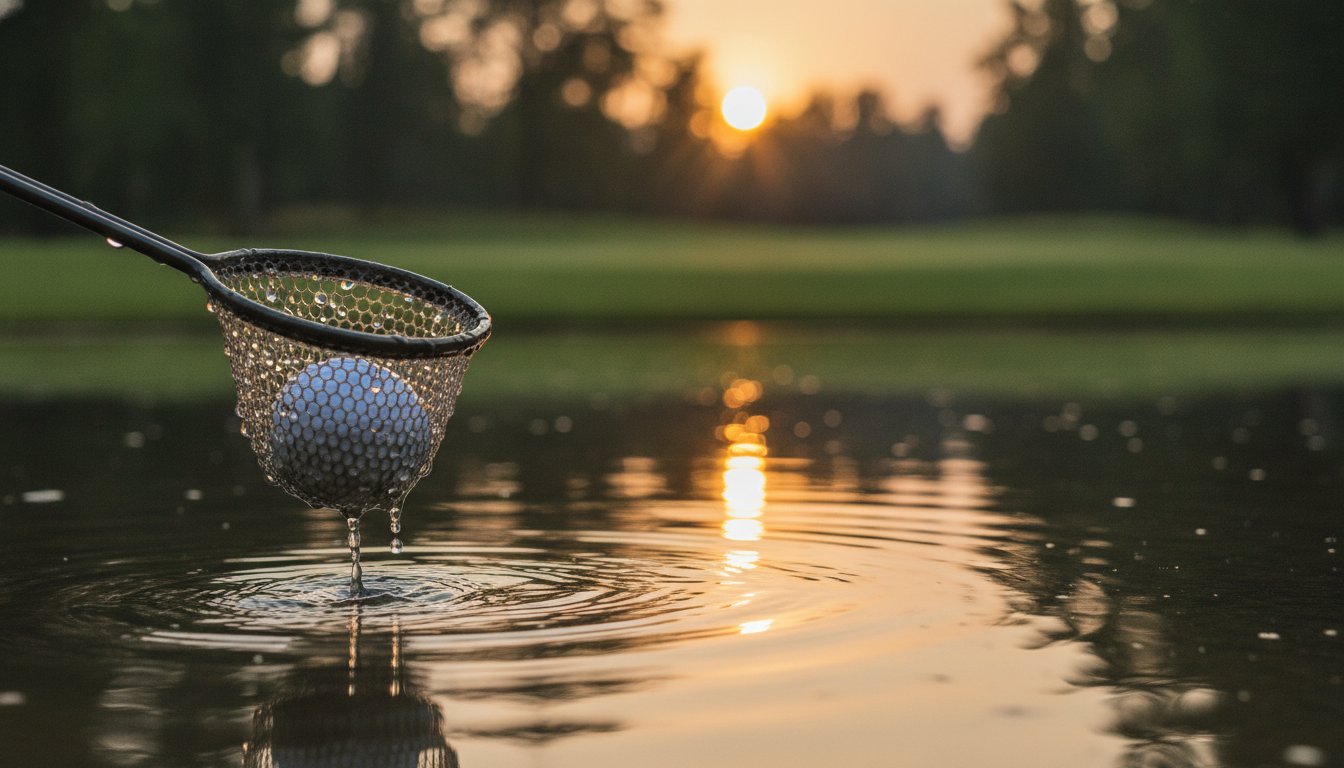
Around 300 million golf balls vanish into the rough and water hazards every single year. That is a staggering amount of plastic left to sit in our ecosystems. Most players want to fix this; however, nobody wants to settle for a biodegradable ball that feels like hitting a stale marshmallow. You need a solution that protects the planet without killing your handicap. Finding the right eco-friendly golf balls shouldn’t mean compromising on the elite performance you expect from top-tier brands.
We get it. You want to ditch the guilt of lost sleeves while keeping your spin rates high and your costs low. The secret to a sustainable swing isn’t actually buying something new that dissolves in the pond. It is about reclaiming the premium tech that has already been manufactured. This guide breaks down why choosing recycled, high-grade balls is the smartest play for your bag. We will show you how to maintain 5A performance, save serious cash on brands like Titleist or TaylorMade, and slash your environmental footprint one rescued ball at a time.
Key Takeaways
- Learn the difference between dissolvable novelties and high-performance, recycled eco-friendly golf balls.
- Compare compression and trajectory stats to keep your distance and spin exactly where they belong.
- Master the grading system. Identify Mint 5A quality and snag tour-level performance at a fraction of retail prices.
- Reduce plastic waste. Discover how reclaimed equipment cleans up water hazards and cuts factory demand.
- Build a sustainable bag. Prioritize your score and your wallet without ditching the premium brands you trust.
The Environmental Impact of Golf: Why We Need Eco-Friendly Options
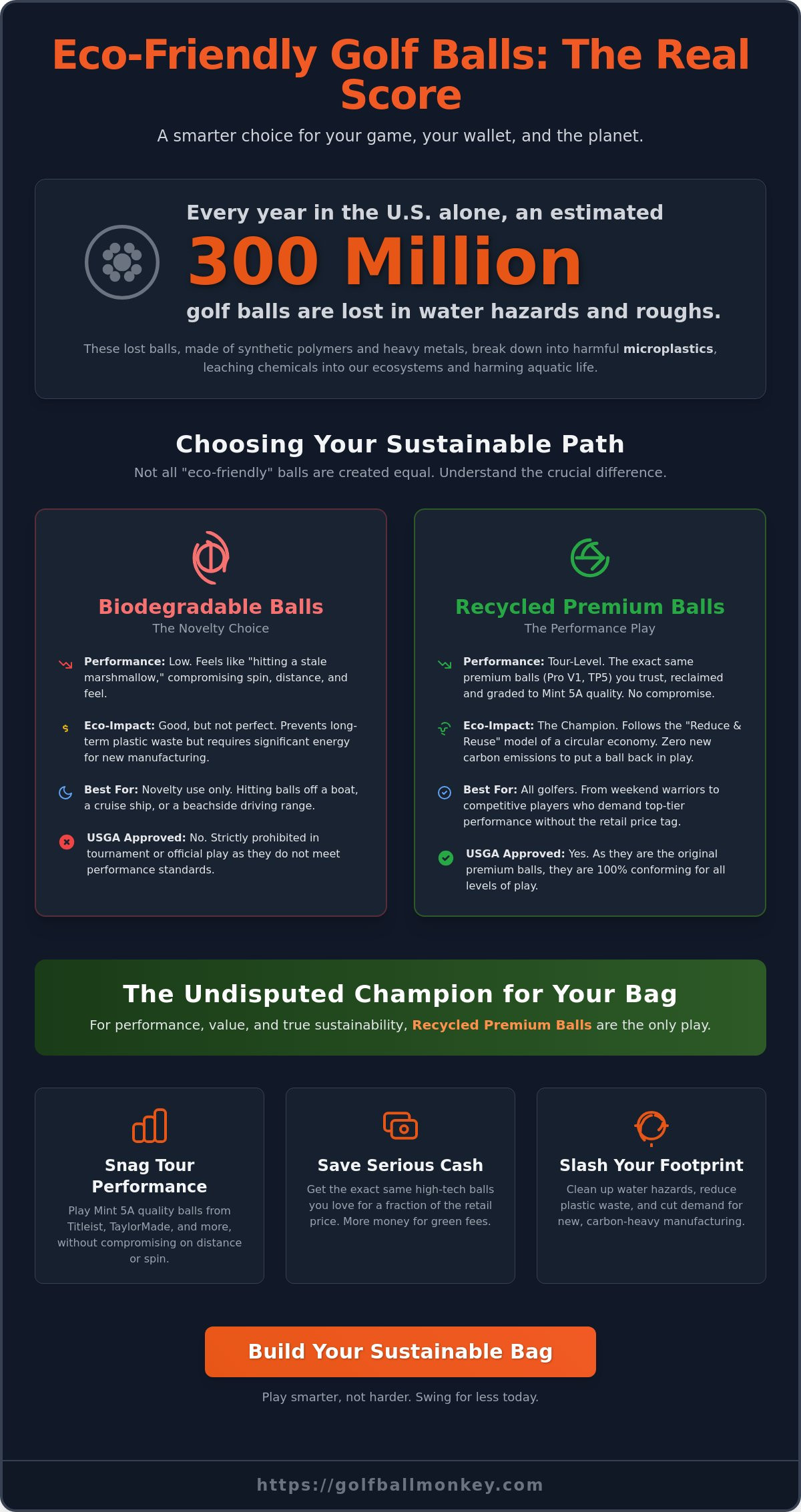
Every year, golfers in the United States lose approximately 300 million balls. That is not just a hit to your wallet; it is a massive burden on the environment. Most of these lost rounds end up at the bottom of water hazards or buried deep in the rough. When we talk about eco-friendly golf balls, we are looking at products designed to minimize plastic waste and stop chemical leaching into our local ecosystems. It is about making sure the game we love doesn’t leave a toxic legacy behind.
Standard golf balls are marvels of engineering, but they are also made of synthetic polymers and heavy metals like zinc. When a ball sits in a pond for a decade, it doesn’t just disappear. It slowly breaks down into microplastics. These tiny particles enter the food chain, affecting aquatic life and water quality. Looking back at the history of the golf ball shows how we moved from wooden or leather “feathery” balls to the plastic-heavy designs of today. Now, the trend is shifting back toward sustainability. In 2026, savvy players are demanding gear that respects the course as much as they do.
Decomposition vs. Circularity
There is a common misconception that “biodegradable” is the gold standard for the planet. While dissolvable balls prevent long-term plastic buildup, they often fail the performance test. They can also require significant energy to produce. True sustainability often looks like a circular economy. This means keeping existing materials in use for as long as possible. Reclaiming a high-performance ball from a pond is often greener than manufacturing a brand-new “eco” ball from scratch. You save the energy of production and prevent a perfectly good piece of equipment from becoming waste.
The Hidden Cost of New Equipment
Manufacturing new urethane and synthetic rubber involves high carbon emissions. Every time you buy a fresh sleeve of tour-level balls, you are supporting a heavy industrial process. Reusing what is already out there is the ultimate power move. By choosing “pre-loved” gear, you offset your carbon footprint and keep your game sharp. If you want the full breakdown on how to pick the best second-hand options, check out our Used Golf Balls: The Ultimate Buyer’s Guide. It is the smartest way to play eco-friendly golf balls without sacrificing a single yard of distance. Stop paying retail for a footprint you don’t want. The Monkey has you covered.
Biodegradable vs. Recycled: Choosing Your Sustainable Path
Choosing eco-friendly golf balls is a smart move for your game and the planet. However, you need to know which path you are taking. There are two main categories: novelty dissolvable balls and recycled premium balls. One is for fun; the other is for the scorecard. Understanding the difference helps you avoid wasting money on equipment that doesn’t fit your needs.
Standard dissolvable balls usually consist of Polyvinyl Alcohol (PVA), calcium carbonate, and glycerin. They are designed to vanish in water. Recycled balls are a different breed entirely. These are the same high-performance models you love, such as the Titleist Pro V1 or TaylorMade TP5. They are professionally retrieved from water hazards, thoroughly cleaned, and sorted by condition. This process gives you a eco-friendly golf balls solution that actually performs on the fairway.
Recycled equipment is the undisputed champion of the sustainability pyramid. It follows the “reduce and reuse” mantra perfectly. By playing a reclaimed ball, you are not just preventing plastic waste; you are stopping the demand for new manufacturing. It takes zero new carbon emissions to put a Mint 5A ball back into play. You get the same aerodynamics and spin rates without the environmental cost of creating new urethane covers from scratch.
The Novelty Trap: When to Use Dissolvable Balls
Dissolvable balls have their place, but it isn’t on a standard course. If you are hitting off the back of a boat or a beach-side driving range, they are perfect. Some brands even market a “fish food” core, though you should always check the ingredients to ensure they are truly safe. Don’t try to bring these to your local club. They are strictly prohibited in tournament play because they don’t meet USGA standards. For a list of the Best Biodegradable Golf Balls for your next lake party, do your research, but keep them away from the tee box on a Saturday morning.
The Performance Play: Why Recycled Premium Wins
This is where real golfers live. Playing recycled premium balls keeps high-performance urethane covers out of landfills and waterways. You get to play the best tech in the game without the manufacturing guilt. Our divers act as environmental cleaners. They pull millions of balls out of the muck, restoring the health of local course ponds. It is a win-win. You save money and the planet gets a breather. If you are ready to restock your bag with gear that won’t let you down, check out the shop for tour-level options that feel brand new.
The Performance Gap: Can Eco-Friendly Balls Actually Fly?
Let’s talk turkey about physics. You want eco-friendly golf balls, but you don’t want your drives falling out of the sky at 180 yards. Most 1-piece biodegradable balls made from PVA or cornstarch are effectively round rocks. They lack the sophisticated multi-layer construction found in a Titleist Pro V1 or a TaylorMade TP5. When you hit a novelty ball, the compression is all wrong. It doesn’t spring off the face; it just thuds. For a savvy player, that lack of “pop” is a total dealbreaker.
Spin rates are another scorecard killer. High-quality recycled balls are engineered for low driver spin and high wedge spin. Novelty eco-balls often do the opposite. They spin like crazy off the tee, which magnifies your slice and kills your total distance. Around the green, they have zero “bite.” Trying to stop a biodegradable ball on a fast green is like trying to stop a marble on a kitchen floor. It simply won’t happen. Plus, durability is a major concern. While a premium recycled ball can last several rounds, many eco-novelties start to scuff or even crack after just a few high-velocity impacts. They aren’t built for 95 mph swing speeds.
Testing the Distance: Recycled Pro V1 vs. Eco-Novelties
A Mint 5A recycled ball performs within 99% of a brand-new ball. That is a verified fact. Many golfers worry that a ball pulled from a pond has lost its “pop.” Science says otherwise. Research into modern urethane covers shows that the “24 hours in a pond kills distance” claim is a total myth. Unless a ball has been submerged for years and shows visible cover damage, the internal core remains perfectly intact. Recycled urethane balls retain their performance characteristics far longer than any dissolvable alternative. You get the same launch angles and ball speeds as the guys buying $50 dozens at the pro shop.
Why Serious Golfers Choose Recycled
Consistency is the king of the scorecard. If you switch between different novelty balls, your yardages will be a mess. Playing a recycled Chrome Soft or Srixon Z-Star gives you the predictable “bite” and soft feel you need for scoring. You get the tour-level tech without the retail price tag or the environmental guilt of buying new plastic. For a deep dive into the industry standard, check out our Titleist Pro V1 Guide to see why it remains the benchmark for performance. Stick with what works. Your game deserves better than eco-friendly golf balls that dissolve mid-round. Trust the tech that is already proven.
How to Build a Sustainable Golf Bag Without Sacrificing Score
Going green on the course doesn’t mean you have to play with gear that feels like a rock. Building a sustainable bag is about making the intelligent play. First, audit your game. If you are playing for a low score, you need the compression and spin of a tour ball. Reclaiming these high-performance models is the ultimate way to use eco-friendly golf balls without trashing your handicap. Second, choose the right grade. You don’t always need brand-new equipment to get brand-new results. You just need a source that knows quality.
Third, support the circular economy. Skip the mass-manufacturers who pump out millions of new plastic spheres every month. Instead, buy from retrieval specialists who pull existing inventory out of the hazards. This keeps the cycle moving and reduces the demand for new petroleum-based products. Finally, recycle your own. If you find a ball in the woods that isn’t yours, don’t leave it. Pick it up. Keep the course clean. Ensure those lost balls get back into the system where they can be cleaned and reused by another savvy player. It is a simple habit that protects the environment and the game.
Decoding the Grading System
Understanding Mint 5A quality is a game-changer for your carbon footprint. A 5A ball is the top tier. It looks and plays like it just came out of the sleeve. By choosing these, you are getting 100% of the performance with 0% of the manufacturing waste. Buying in bulk is another smart move. Snagging a 96-pack or a 144-pack reduces shipping emissions and cuts down on unnecessary packaging waste. Check out our guide on Decoding Grades: What Mint 5A Really Means to see how we vet every ball. It is the best way to maintain a pro-level bag on a beer-budget footprint.
Eco-Friendly Accessories
Your sustainability journey shouldn’t stop at the ball. Swap out those old plastic pegs for bamboo or performance recycled tees. Bamboo grows incredibly fast and biodegrades naturally, making it a far better choice for the tee box. When it comes to maintenance, skip the expensive chemical sprays. A simple wet towel and some elbow grease will keep your eco-friendly golf balls shining without leaching toxins into the turf. For more green gear, explore our collection of Golf Ball Accessories. Ready to make the switch? Grab a bag of Mint 5A recyclables today and start saving the planet while you save par.
Why Golf Ball Monkey is the Ultimate Eco-Friendly Play
At Golf Ball Monkey, we don’t just sell gear. We are on a mission to clean up the game. Our professional divers spend their days in the muck, pulling millions of lost balls out of water hazards across the country. This isn’t just about finding inventory. It is about environmental restoration. Every ball we rescue is one less piece of plastic leaching into a local ecosystem. By reclaiming these eco-friendly golf balls, we are directly reducing the demand for new factory production. It is the purest form of the circular economy in sports. We take what was lost and make it found.
You want the best brands. We have them. You can play tour-level equipment from Titleist, Callaway, and TaylorMade without the retail sting or the environmental guilt. We are based in Texas, but our reach is national. We use efficient logistics to get your “pre-loved” gear to your door with minimal fuss. This direct approach builds trust with players who value efficiency and results. It is the savvy insider’s secret to a better bag and a cleaner planet. Stop supporting the endless cycle of new manufacturing when the world’s best tech is already sitting at the bottom of a pond.
The Monkey Mission: Sustainability You Can Feel
Our retrieval process is the gold standard for the industry. We don’t just fish them out; we restore them to their former glory through a meticulous cleaning and sorting process. The Monkey personally ensures that every ball in our inventory meets our strict, standardized condition ratings. When you buy from us, “used” never means “second-rate.” It means you are making the intelligent play. You get 5A performance that has been vetted for quality and consistency. Join the troop and start making choices that benefit both your wallet and the planet. It is time to stop overpaying for new plastic when the best tech is already out there waiting for a second chance.
Shop Sustainable Now
Ready to restock your bag? Head over to our Shop to find the best recycled deals on the market. If you want the peak of performance, look no further than the Titleist Pro V1 (Mint 5A). It is our flagship choice for players who refuse to compromise on distance or spin. This is the ultimate way to play eco-friendly golf balls because you are using a premium product that already exists. You get a ball that looks and plays like it just came out of a fresh box, but with a much smaller footprint. Play better. Save money. Save the planet. The Monkey has your back.
Take Control of Your Game and Your Footprint
Playing the best equipment doesn’t have to cost the earth. You now know the real secret to a sustainable bag. Reclaiming premium tech beats buying dissolvable novelties every time. You get the tour-level spin and distance you need while keeping plastic out of our waterways. It is the ultimate win for your scorecard and the environment. By choosing eco-friendly golf balls that have been professionally rescued, you are supporting a circular economy that actually makes an impact on the course.
Golf Ball Monkey is leading the charge. Our professional divers reclaim over 1 million balls annually, preventing massive waste one pond at a time. Every single ball goes through our Texas-based quality control process to ensure it meets our strict grading standards. You get the performance of a Titleist or TaylorMade at a fraction of the retail price. It is the smartest play you can make. Stop overpaying for new plastic and start making the savvy choice for your bag and the planet. Stop paying retail and start saving the planet, Shop Mint 5A Recycled Balls now! Let’s keep the fairways green and your drives long. See you at the tee box.
Frequently Asked Questions
Are biodegradable golf balls legal for tournament play?
No, biodegradable balls are almost never legal for sanctioned tournament play. They typically fail to meet the strict USGA and R&A standards for weight, size, and initial velocity. Since they aren’t on the Conforming Ball List, you can’t use them in official competitions. Stick to recycled premium balls if you want to keep your score official and your game green.
How long does it take for a standard golf ball to decompose in water?
A standard golf ball can take between 100 and 1,000 years to decompose. They don’t truly break down; they just fragment into microplastics and leach heavy metals like zinc into the soil and water. Switching to eco-friendly golf balls that have been reclaimed from hazards stops this pollution cycle. You are literally cleaning up the course with every purchase.
Do recycled golf balls lose distance compared to new ones?
Not at all. High-quality recycled balls in Mint 5A condition perform within 99% of a brand-new ball. Modern urethane covers are incredibly resilient. Unless a ball has been sitting in a pond for several years and shows visible signs of tanning or cover damage, you won’t see a drop in ball speed or carry distance. It is pure performance for less.
What are ‘fish food’ golf balls and do they actually help fish?
‘Fish food’ balls are novelty items with a core made of actual nutrients for aquatic life. While they are a fun choice for hitting off a boat or a beach, they aren’t meant for a real round of golf. They lack the aerodynamics and durability for the course. They are better than plastic for the fish, but they won’t help your handicap.
Can I use water-soluble golf balls at a regular driving range?
No, you cannot use water-soluble balls at a standard driving range. These balls are designed to dissolve and are far too fragile for the heavy-duty machinery used at ranges. They will crack or turn to mush inside the ball-picking machines, which won’t make you any friends with the range owner. Use recycled practice balls for your training sessions instead.
Is buying used golf balls better for the environment than buying new eco-friendly brands?
Reusing existing balls is significantly better for the environment. Producing new eco-friendly golf balls still involves manufacturing energy, raw materials, and carbon emissions from shipping. By choosing recycled premium gear, you are opting into a circular economy. You prevent new plastic from being made while rescuing what is already in the hazards. It is the ultimate green play.
How does Golf Ball Monkey ensure the quality of retrieved balls?
We use a strict multi-step vetting process. It starts with professional divers who retrieve the inventory by hand. Every ball is then cleaned and subjected to a rigorous inspection. The Monkey ensures each ball is sorted according to our standardized grading scale. This means our Mint 5A balls look and feel like they just came out of a fresh sleeve.
What is the best eco-friendly alternative to a Titleist Pro V1?
The best sustainable alternative is a recycled Titleist Pro V1 in Mint 5A condition. There is no reason to switch to a lower-performing brand just to be green. Reclaiming a Pro V1 gives you the same elite spin and feel while reducing the need for new production. It is the savvy insider’s way to play the best ball in the world sustainably.
- golfballmonkey@gmail.com
- (512) 593-8401
- Mon – Fri, 9:00 AM – 5:00 PM

All product and company names are trademarks™ or registered® trademarks of their respective holders.
Use of them does not imply any affiliation with or endorsement by them.